
“The only thing necessary for the triumph of evil
is for good men to do nothing.”
— Edmund Burke
Jack the Ripper
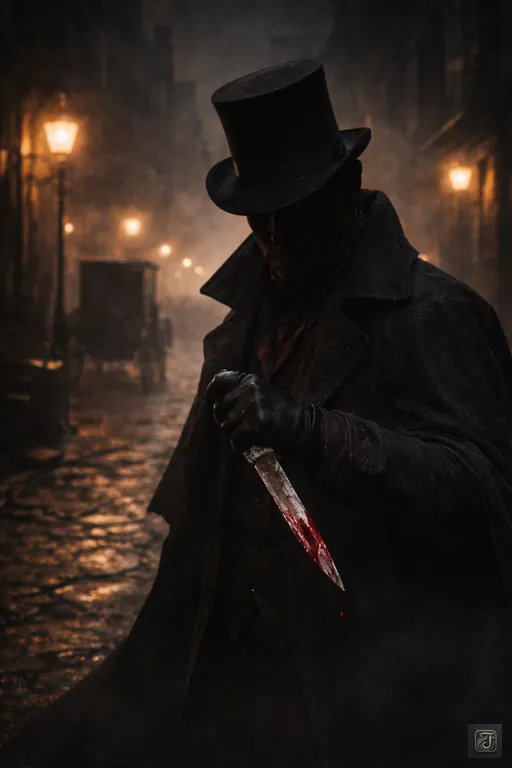
A mysterious serial killer who terrified London in the 19th century.
His crimes lasted only a few months in 1888.
Yet even today, the case remains one of the most famous unsolved mysteries in the world.
The Setting: Whitechapel
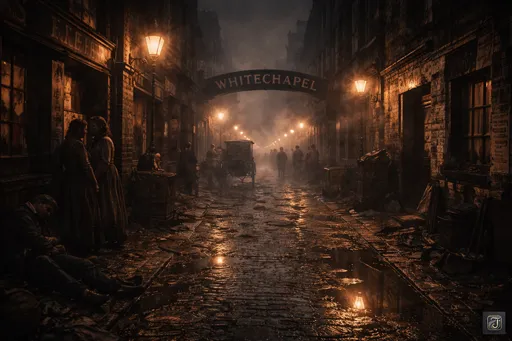
The location was Whitechapel, an area of extreme poverty in London’s East End at the time.
Unemployment, alcoholism, prostitution, and overcrowded housing—
a place where the “dark side” of the Industrial Revolution was painfully concentrated.
At night, only the faint glow of gas lamps lit the streets.
The air carried the smell of fog and sewage.
And there, one woman after another began to die.
The “Canonical Five” — The Official Victims
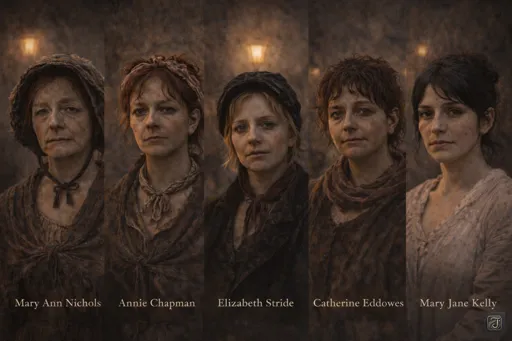
The victims generally regarded as “certain” number five.
Mary Ann Nichols
- Found around 3:40 a.m. on August 31, 1888.
- Her throat had been deeply cut, and her abdomen slashed open.
- The attack took place outdoors.
- Relatively little blood was found, suggesting her throat may have been cut quickly.
Annie Chapman
Found before 6:00 a.m. on September 8, 1888.
Her throat had been severed.
Her abdomen was opened.
Her uterus had been removed.
This was the first confirmed case in which an internal organ was taken, giving rise to the theory that the killer possessed medical knowledge.
Elizabeth Stride
- Found around 1:00 a.m. on September 30, 1888.
- Her throat had been cut.
- However, there was no abdominal mutilation.)
This led to the theory that the killer was interrupted—possibly by someone approaching the scene.
Catherine Eddowes
Found about 45 minutes later at another location.
Her abdomen had been severely mutilated.
Her left kidney had been removed.
Her face had been cut repeatedly.
Two murders occurred on the same night.
The killer’s boldness appeared to escalate dramatically.
Mary Jane Kelly
Killed indoors, inside her own room.
The mutilation was the most extreme of all the victims.
Her body was almost completely dismembered.
Her heart had been removed.
The killings had moved from the streets to a private room.
It was the peak of the escalation.
And then—
It stopped.
The final victim, Mary Jane Kelly, was murdered indoors, and records state that her body was so mutilated that it was barely recognizable.
Did the killer possess medical knowledge?
Or was it simply practical experience in dissection?
This question has remained a point of debate for more than a century.
The Name “Jack the Ripper”
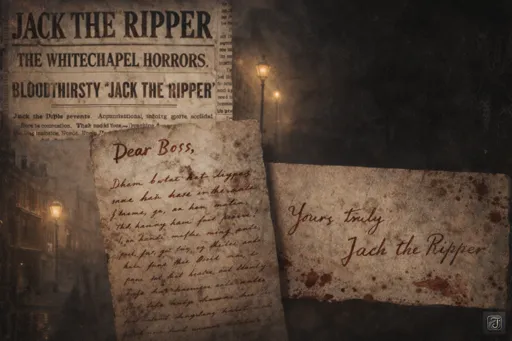
The name spread from a letter that was said to have been written by the killer.
The most famous of these was the “Dear Boss” letter.
However—
Many researchers believe it was likely a hoax created by journalists.
The media fueled the panic, built the legend, and helped create the monster.
Because of this, Jack is sometimes called the first “media-made serial killer.”
Major Suspects
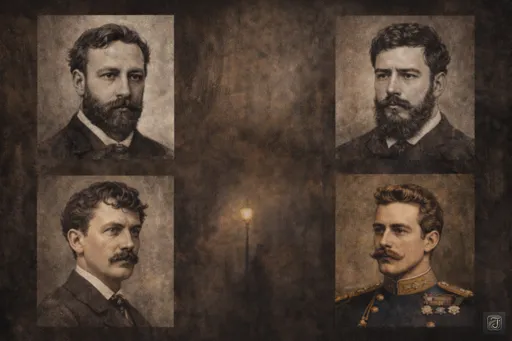
Hundreds of individuals were suspected. The most notable include:
- Montague John Druitt (a barrister who later died by suicide)
- Aaron Kosminski (a barber with a history of mental illness)
- George Chapman (later executed as a poisoner)
- Prince Albert Victor (the subject of a royal conspiracy theory)
There have also been attempts at DNA analysis,
But issues such as degraded evidence and possible contamination have prevented any conclusive results.
In other words, the identity of the killer remains unknown.
Why the Murders Stopped
After November 1888, no further murders matching the same pattern were confirmed.
Possible explanations that have been suggested include:
- Suicide
- Arrest for an unrelated crime
- Commitment to a mental asylum
- Escape abroad
- Or simply ceasing the killings
But none of these theories has ever been proven.
Why Is Jack the Ripper So Famous When Other Killers Have Killed More People?
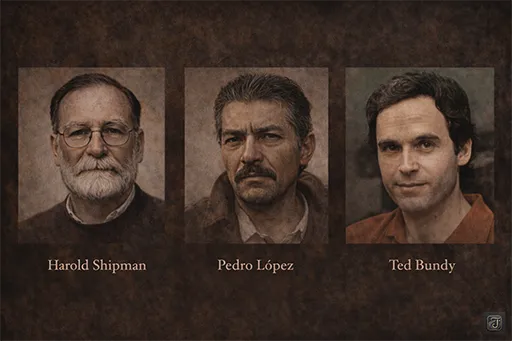
Jack the Ripper became famous despite the relatively small number of victims because the case was almost too perfect as a story.
There have been many killers who murdered far more people.
For example:
- Harold Shipman (over 200 victims)
- Pedro López (believed to have killed more than 100)
- Ted Bundy (more than 30 victims)
But in those cases, the killer was eventually identified.
Jack was different.
① The Ultimate Brand: An Unknown Identity
Jack the Ripper
He was never caught.
His face was never identified.
Even his name remains unknown.
People are irresistibly drawn to the unfinished.
✔ Unknown identity
✔ Unknown motive
✔ Unknown disappearance
These unanswered questions have fueled discussion for more than 130 years.
A mystery ends the moment it is solved.
Jack the Ripper never was.
② The Timing Was Perfect
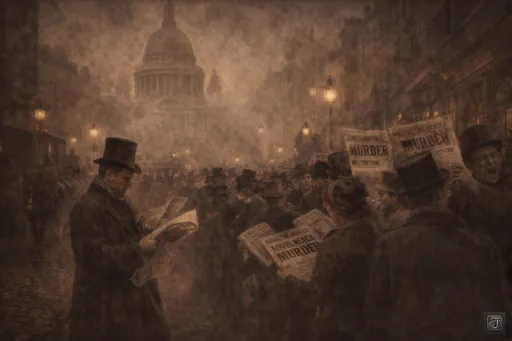
1888.
- Newspapers were spreading rapidly.
- The age of mass media was just beginning.
- London was the largest city in the world.
- The poverty and dark side of the Industrial Revolution had become impossible to ignore.
He became what many consider the first media-driven serial killer.
Newspapers fueled the fear every day.
Readers became obsessed.
The monster was created.
If the same crimes had taken place in a rural village,
they likely would never have become this famous.
③ The “Staging” Was Striking
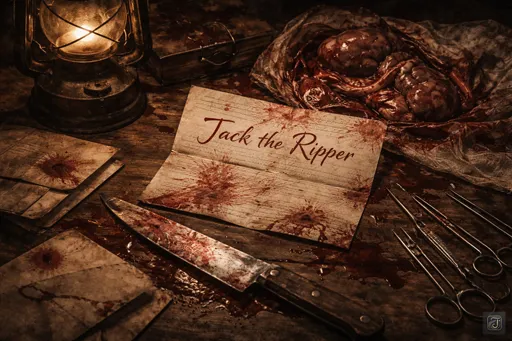
✔ Throats cut
✔ Organs removed
✔ Letters sent to the press
✔ The name “Jack the Ripper.”
It was almost a form of brand creation.
In modern terms,
it resembles the prototype of a horror story.
The visual impact was simply too powerful.
④ London as the Stage
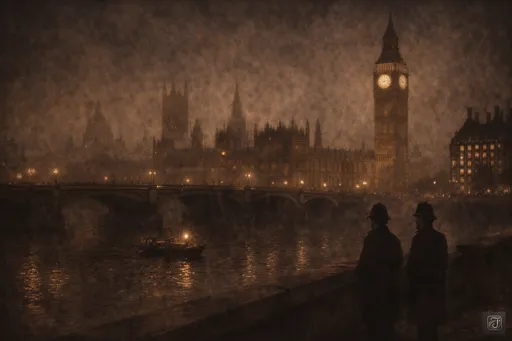
It happened in the capital of a global empire.
London at the time symbolized the pinnacle of civilization.
And yet, at its very center,
the police proved powerless.
It was a humiliation on a national scale.
That is why the story was etched into history.
⑤ The Victims Were Symbolic
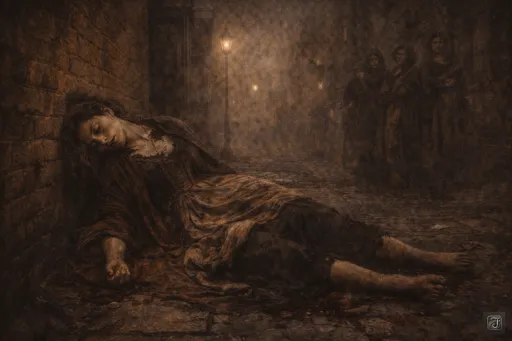
The victims were women from the very bottom of society.
Poverty, misogyny, and the corruption of the city.
Jack became more than a murderer—
He became a symbol of the disease within Victorian society.
⑥ Easy to Turn Into a Story
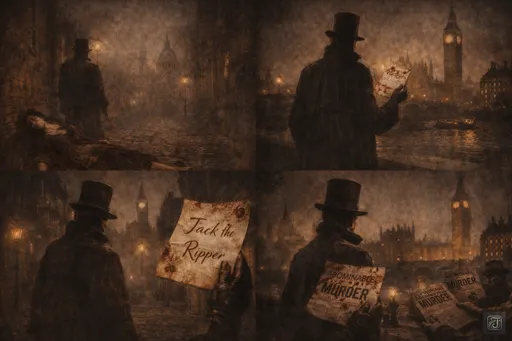
- The killer was never identified
- A gothic setting
- Fog-covered London
- Gas lamps in the night
- Mysterious letters
It was almost the perfect material for storytelling.
In fact, the case has appeared in:
- Films
- Novels
- Manga
- Games
Hundreds of works across different media.
Conclusion
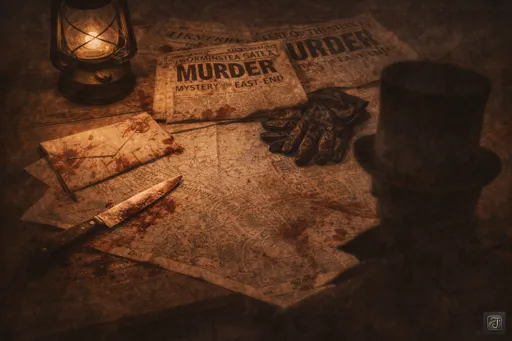
His fame was never about the number of victims.
✔ Unsolved mystery
✔ Media amplification
✔ Urban legend status
✔ Powerful visual imagery
✔ A national scandal
Everything was there.
Harsh as it may sound,
He became the first globally branded criminal.
But monsters are not born in a single moment.
They grow slowly,
in the murmurs of a restless city.
And so—
This story begins
before the monster was born.
Jack the Ripper: The Nature of Fear and the End of an Ideal
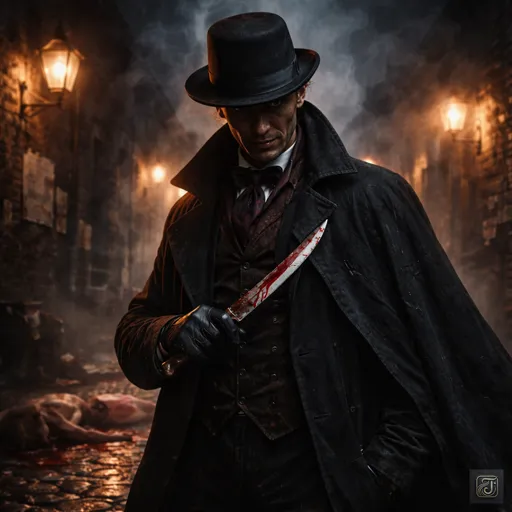
Prologue: The Murmur
The monster does not yet exist.
And yet the city is already afraid.
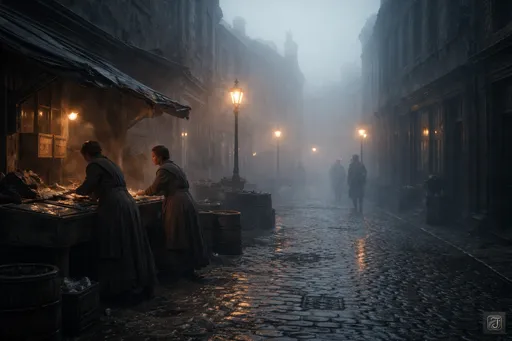
Morning in Whitechapel begins with fog.
The cobblestones are wet, the air is cold, and every breath turns white.
Even after the sun rises, the light takes a long time to reach these streets.
This district lies on the underside of the city—
a place no one is in a hurry to truly see.
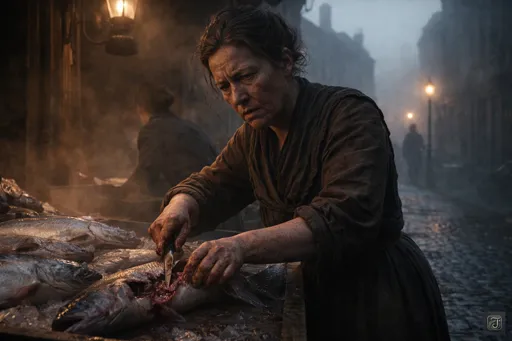
A woman at the market splits open the belly of a fish.
The sound of the blade tearing through its insides is dry, almost hollow.
Her hands are used to it. Used to blood.
But her face carries the quiet thought that she never wants to grow used to human blood.
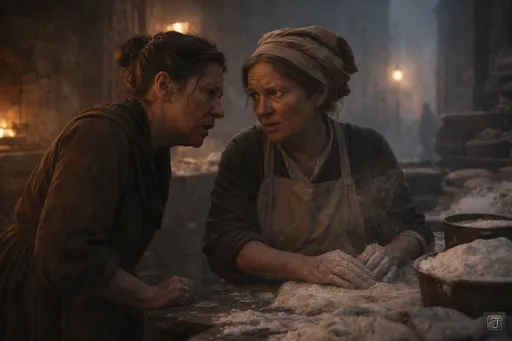
“Did you hear? Another one, they say.”
“Another? Wasn’t that yesterday’s story?”
“No. This morning. An alley in the East End. Her throat… they say.”
The baker’s wife stops what she is doing.
Flour drifts into the air, forming a pale haze.
“Is it true?”
“Who knows what’s true? But once people start walking around saying ‘so they say,’ it begins to look like the truth.”
So they say.
Rumors grow a face long before facts do.
By the time the truth catches up, the rumor has already moved on.
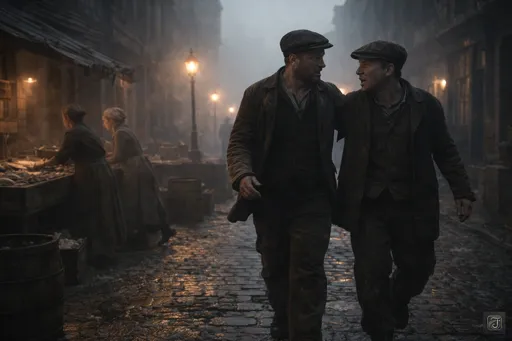
Two laborers push through the market, shoulders brushing against one another.
The soles of their boots scrape against the cobblestones.
They carry no newspapers.
But they carry the news.
The city brings it to their mouths.
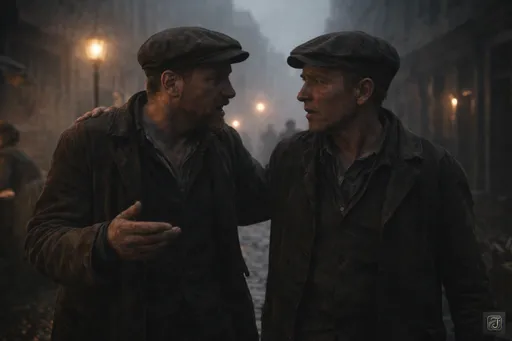
“Hey, I heard a woman’s dead.”
“That’s what they’re saying. That part of town’s finished. Can’t walk there at night anymore.”
“Then don’t walk there. Decent people don’t go out at night.”
The word decent makes the air tighten, just a little.
When people are afraid, they like to draw lines.
To reassure themselves they are decent, they need someone who isn’t.
The woman at the market cuts into the conversation.
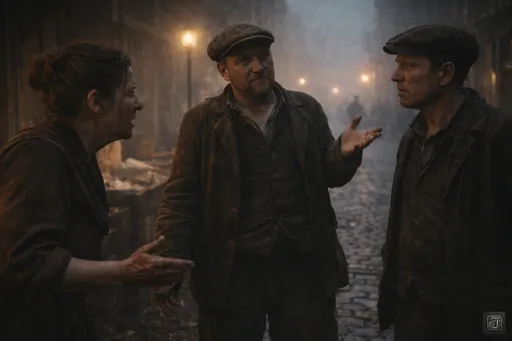
“But some people have to go out at night just to eat.”
“That’s their problem.”
In that moment, fear turns into someone else’s responsibility.
And by doing so, they save themselves.
To endure fear, people cut someone out of the circle.
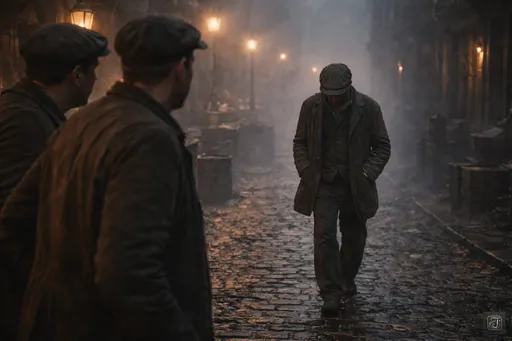
From across the street, an immigrant man walks by.
His shoulders are hunched, the brim of his hat pulled low.
He works here.
Yet he is not seen as someone who belongs here.
One of the laborers mutters under his breath.
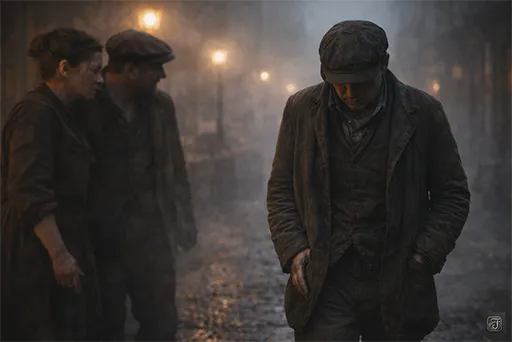
“Maybe it’s them.”
The woman at the market frowns.
“Stop that. There’s no proof.”
“Proof? If we wait for proof, there’ll just be another victim.”
The immigrant pretends not to hear.
Pretending not to hear is how you survive.
But his hands tremble—just slightly.
He can feel it.
The sense that he might become the answer.
Fear does not create understanding.
Fear creates a culprit.
—or more precisely, it demands someone to play the role.
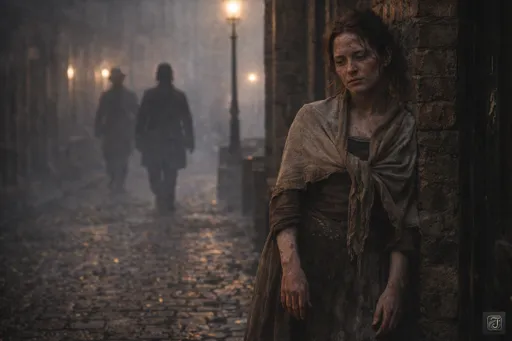
At the mouth of the alley stands a young woman, leaning against the wall.
A thin shawl.
A stained hem.
Fingertips reddened and raw.
Only her eyes are strangely clear.
Her name is Eliza.
She does not meet anyone’s gaze.
If she does, the price drops.
If she does, the insults multiply.
If she does, her chances of getting through the night grow thinner.
And yet she listens.
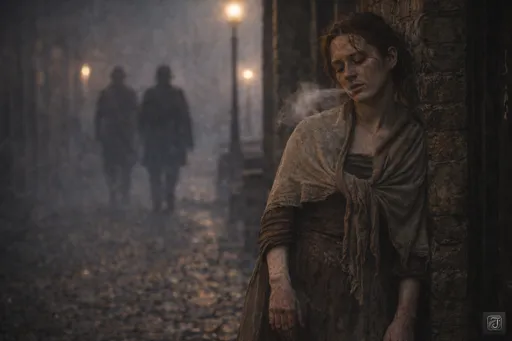
“Another one… they say someone died?”
The market rumors drift toward her on the wind.
She exhales.
A cloud of white breath dissolves into the fog.
—It’s frightening.
But fear does not fill an empty stomach.
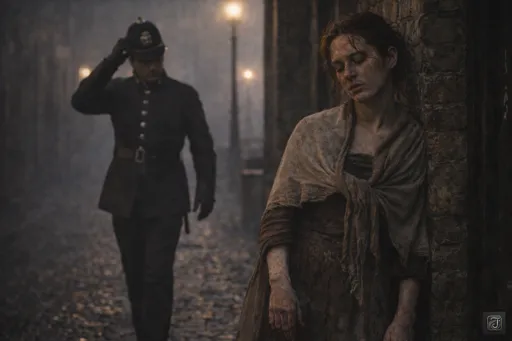
A policeman steps out of the alley.
He adjusts his hat, pulls on his gloves, and walks on without urgency.
Even with Eliza standing right in front of him, he says nothing.
He passes as though no one is there.
Unprotected.
That does not mean violence will never come.
It means that when it does, no one will be held responsible.
Eliza murmurs quietly.
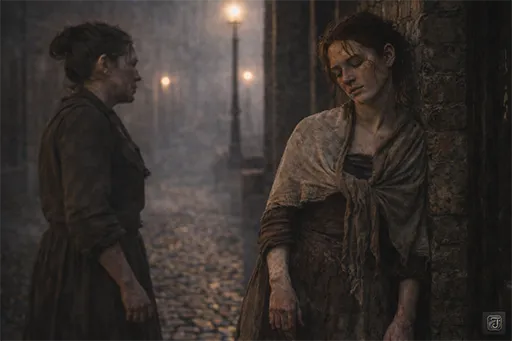
“…Our nights belong to no one.”
The woman at the market glances over.
“Did you say something?”
Eliza shakes her head.
“No. Just talking to myself.”
She doesn’t smile.
If she smiles, the rumors will swallow her.
If she smiles, fear will win.
At the edge of the market, a man is selling newspapers.
But today, the rumors are faster than the paper.
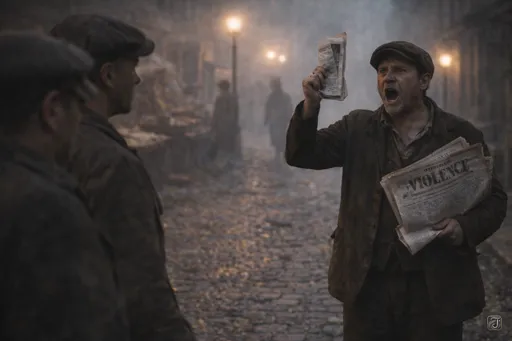
“Did you hear? A murder!”
“Who was it?”
“No idea! But someone’s dead!”
The city has confirmed nothing.
And yet it already believes something.
Fear moves faster than facts.
It isn’t that the facts are slow.
Fear is simply too fast.
But why is it so fast?
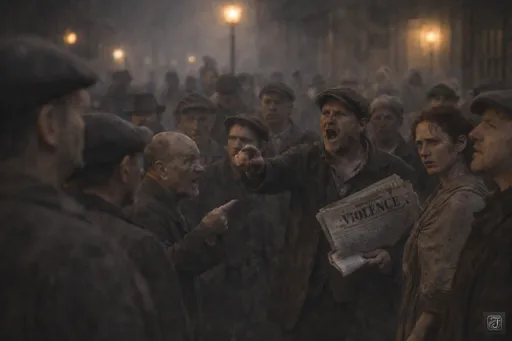
When people are afraid, they look for reasons.
And when they want a reason, they create the answer first.
“The night is dangerous.”
“The East End is filthy.”
“They look suspicious.”
“The woman must be at fault.”
Each word pushes fear outward.
And when fear is pushed outward, something inside feels a little safer.
That is why rumors run.
That is why crowds talk.
The monster does not yet exist.
Jack does not yet exist.
There is no name.
No blade.
And yet the city is already creating the air that needs a monster.
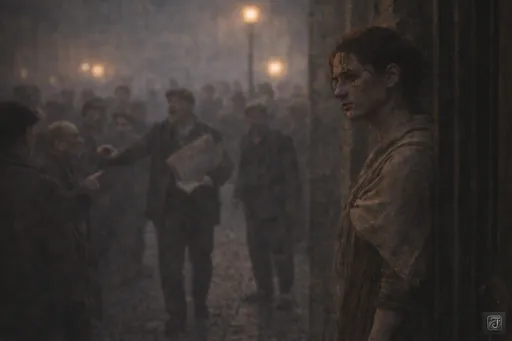
From the shadows of the alley, Eliza watches the murmur of the crowd.
No one is looking at her.
And yet the rumors fall upon her all the same.
“They say women are being targeted.”
Someone says.
“Then they shouldn’t be out at night.”
Someone else replies.
That simple, convenient righteousness tightens around her throat.
Fear does not come from the outside.
It does not walk out of the fog.
It is not born suddenly in the dark.
Fear lives inside people.
The refusal to admit one’s own helplessness.
The desire to feel safe by making someone else the villain.
The urge to reduce a complicated reality to a single sentence.
When those things come together,
the city prepares a place for a monster.
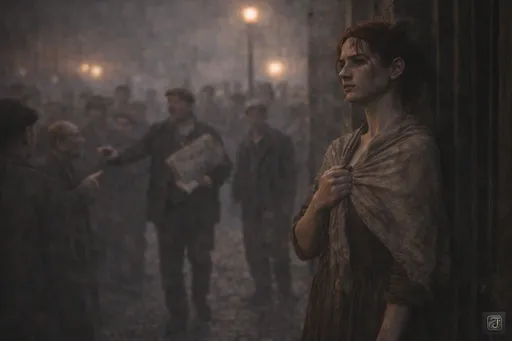
Eliza tightens her grip on the shawl and straightens her back, just a little.
Tonight, she will stand here again.
Unprotected, and still she stands.
The monster does not yet exist.
But the city—
The city has already finished preparing for its arrival.
And so the story begins
before the monster is born.
Chapter 1: The One Who Sees
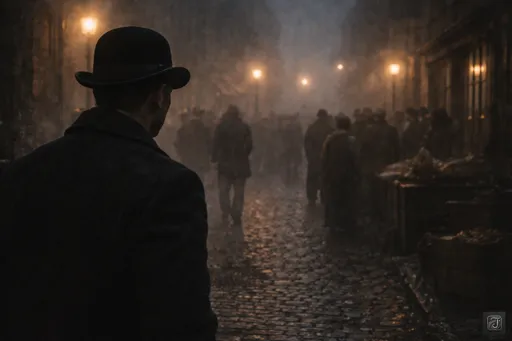
The man watches Whitechapel.
He is not simply walking.
He is observing.
Fog hangs low, dissolving the outlines of the buildings.
The cobblestones are wet, the alleys narrow, the air heavy.
But it is not the fog he is watching.
It is the people.
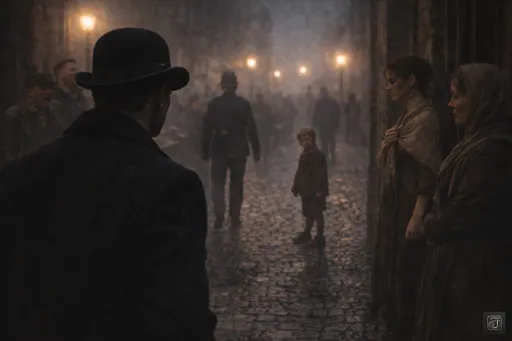
Women standing against the walls.
Children with mud on their shoes.
Laborers with faces flushed from drink.
A policeman making his rounds.
—And the fact that none of it fits together.
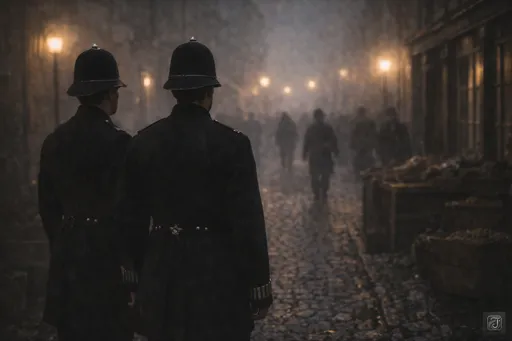
At the edge of the market, two policemen stand.
Their backs are straight.
Their uniforms are neat.
Their badges catch the light.
But their gaze is distant.
They are watching order—
not people.
The man approaches.
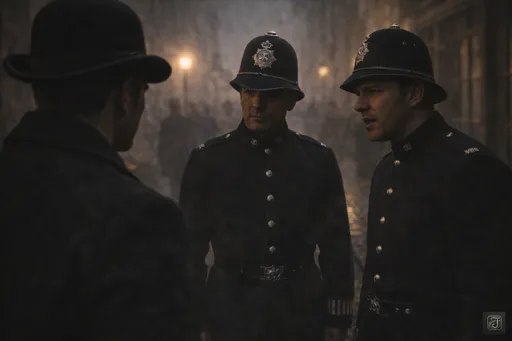
“What about last night?”
“It’s under investigation.”
“What exactly are you investigating?”
“The situation.”
The situation.
A convenient word.
Vague, and free of responsibility.
“Are the women protected?”
“Protected? Those types choose that life themselves.”
The words strike the man in the chest.
Those types.
The woman is no longer a person.
She has become a category.
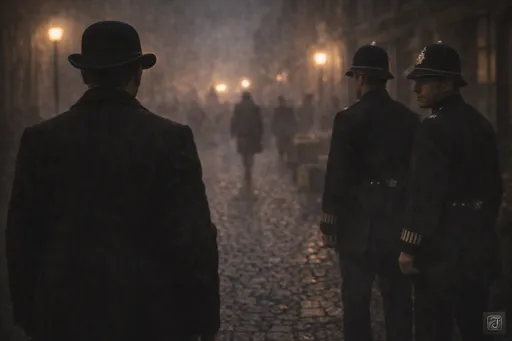
The man leaves without a word of thanks.
Anger rises in him.
But it is not a simple anger.
He does not hate the policemen themselves.
He hates the immaturity of the system that governs this district.
Crimes are happening, yet the police are divided, information is not shared, the streets remain dark, and evidence disappears into the night.
The city is expanding, but the mechanisms meant to protect its people have not kept pace.
And still, the newspapers say nothing.
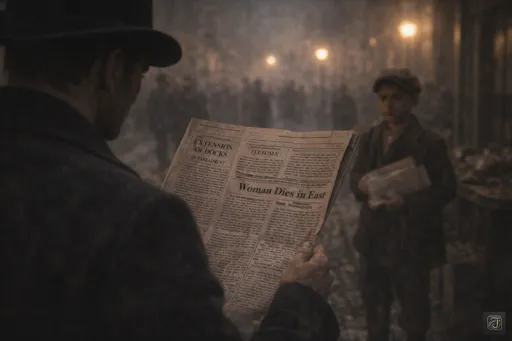
He buys a paper from a newspaper boy.
The front page.
The prosperity of the Empire.
The expansion of the docks.
A speech in Parliament.
And in a small column, a woman from last night.
No name.
“A woman found dead in the East End.”
Dead.
Not murdered.
Dead.
The word drains away the heat.
The man tightens his grip on the paper.
The city is prosperous.
But light chooses where it shines.
Whitechapel is dark by design.
A voice echoes from deep within the alley.
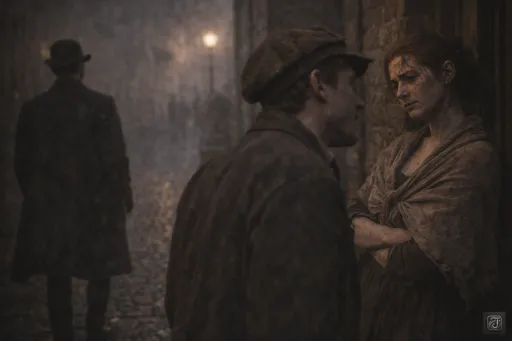
“How much?”
“Two shillings.”
“Too much.”
“It’s cold.”
The man stops walking.
It’s Eliza.
A shawl draped over her shoulders, leaning against the wall.
Her eyes measure the customer.
The man is young. Drunk. Bargaining.
“Isn’t it dangerous around here? They say there’s a killer.”
A rumor without even a name has already lowered her price.
Eliza replies calmly.
“Rumors don’t fill an empty stomach.”
The man watches the exchange from a short distance away.
The customer snorts and walks off.
Eliza lets out a quiet sigh.
The man approaches.
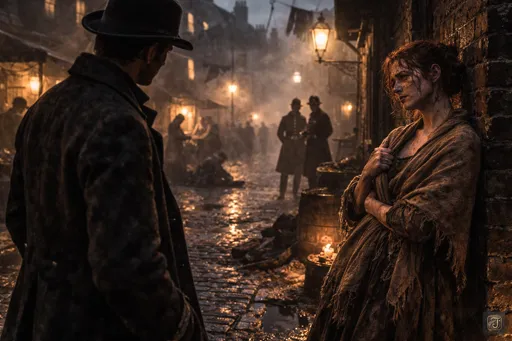
“It’s cold tonight.”
Eliza looks at him with guarded eyes.
“A customer?”
“No.”
“Then what?”
The man searches for words.
“…Just watching.”
“Watching what?”
“This city.”
Eliza lets out a short laugh.
“And what does watching change?”
The man has no answer.
Watching, after all, is not yet an act.
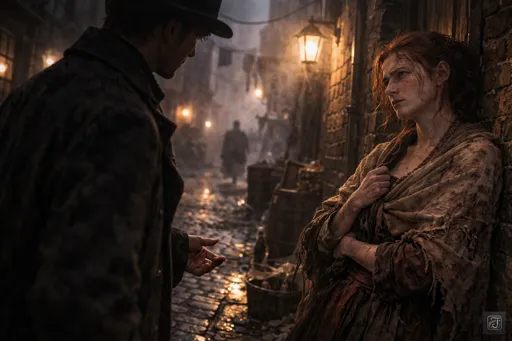
Eliza says,
“Everyone watches. But they all walk past. No one does anything.”
“You’ll walk past too, won’t you?”
The man cannot deny it.
He is nothing more than a bystander.
He has anger.
He has reasons.
But he has taken no action.
In the distance, a policeman whistles.
The market murmurs.
The man asks,
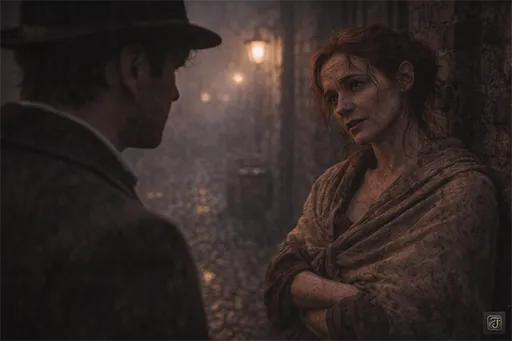
“Aren’t you afraid?”
“Of course I’m afraid.”
“But even if I am, no one will protect me.”
“I have to deal with it myself.”
It isn’t the language of resignation.
It’s the language of reality.
Something stirs deep within the man’s chest.
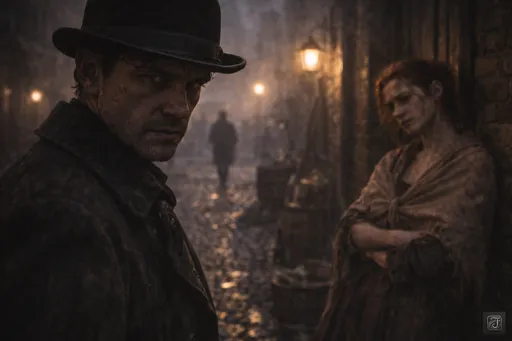
“If no one will see it, if no one will help—then I’ll make them see.”
He tells himself,
“To change this world, it will take something powerful. A shock.”
“A shock—something the city cannot ignore.”
“A shock big enough for the newspapers to print on their front page.”
“A shock strong enough to force the police to rethink their system.”
“A shock Parliament will be unable to ignore.”
Eliza suddenly asks,
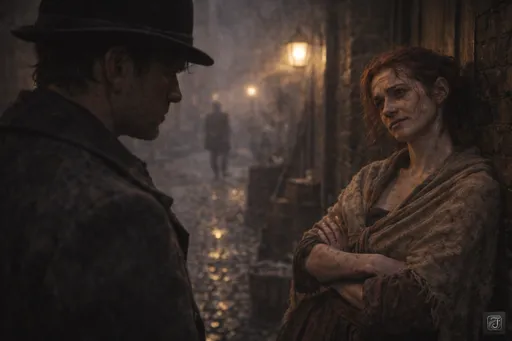
“What are you thinking about?”
The man does not answer.
To answer would be dangerous.
She shrugs.
“Well, whatever.“
“Some people just think.“
“I just stand here.”
She leans back against the wall again.
The man begins to walk away.
The fog grows thicker.
And within that fog, his thoughts become strangely clear.
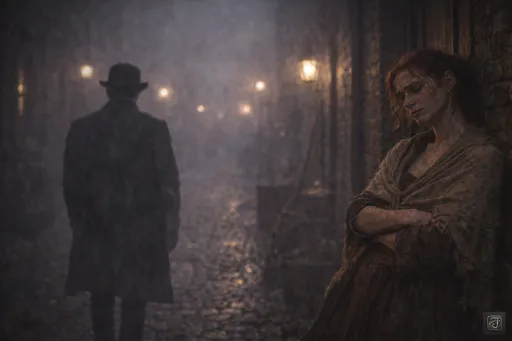
“The city is dull.”
“And dull things do not change unless they are shaken.”
“The newspapers do not write about poverty.”
“They do not write about the failures of the system.”
“They do not write about the vulnerability of women.”
“Then…”
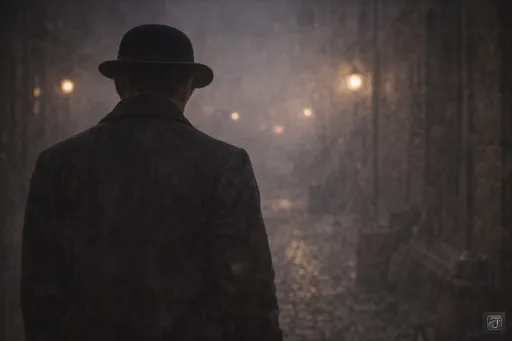
His steps stop.
For a moment, fear crosses his mind.
What am I thinking?
“Violence is not justice.”
“But shock is necessary.”
He begins to build his reasoning.
“This isn’t hatred.“
“Not pleasure.“
“Not revenge.”
“It’s an accusation.“
“If no one will see, then I’ll make them see.”
The words settle firmly in his chest.
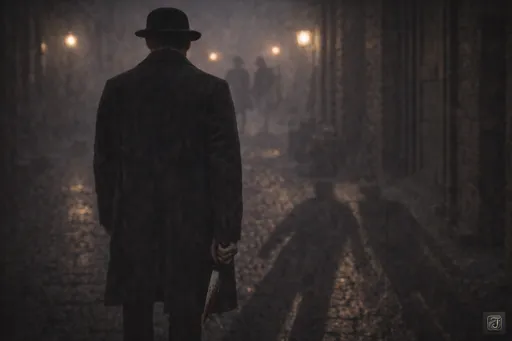
In the fog, the gas lamps flicker.
Shadows stretch across the street.
For a moment, the man’s shadow seems split in two—
the observer and the actor.
He is still standing on the line between them.
He could still turn back.
But the night presses him toward a decision.
From far away, Eliza’s voice drifts through the mist.
“Two shillings.”
The bargaining continues.
The city does not move.
The system does not correct itself.
Only his ideal begins to burn quietly within him.
“Without a shock, no one will wake up.”
The monster does not yet exist.
But the ideal has already begun to take the shape of a blade.
Chapter 2: The Line Between
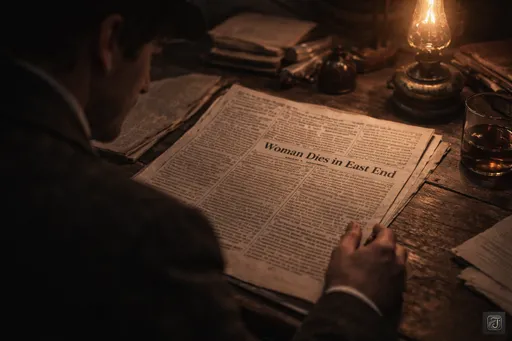
Night.
The man sits at a desk.
A newspaper lies open before him.
“A woman found dead in the East End.”
A small article.
A small treatment.
As though it were nothing more than a trivial incident.
He murmurs to himself,
“This changes nothing.”
In his mind, Eliza’s voice returns.
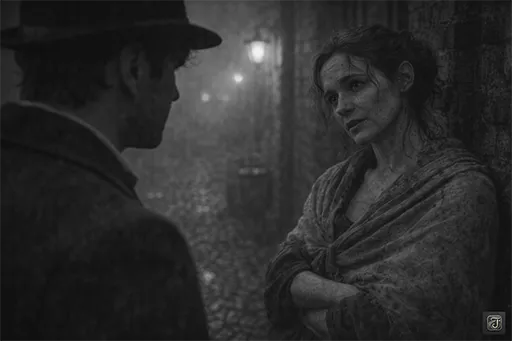
“Of course I’m afraid.”
“But even if I am, no one will protect me.”
“I have to deal with it myself.”
He stands.
He looks into the mirror.
An ordinary face.
No madness.
No explosion of rage.
The only reason.
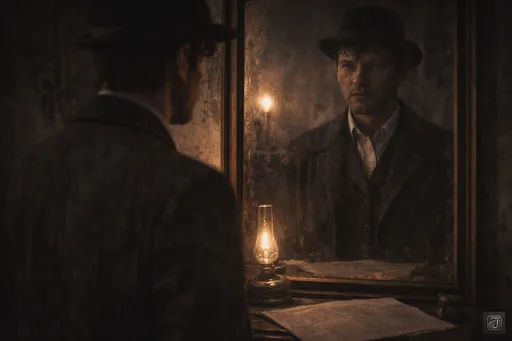
“The city is dull. And dull things do not move unless they are shaken.”
“History changes through shock.”
“Revolutions.”
“Wars.”
“Executions.”
“Then—someone has to take the role of the one who gets their hands dirty.”
He trembles.
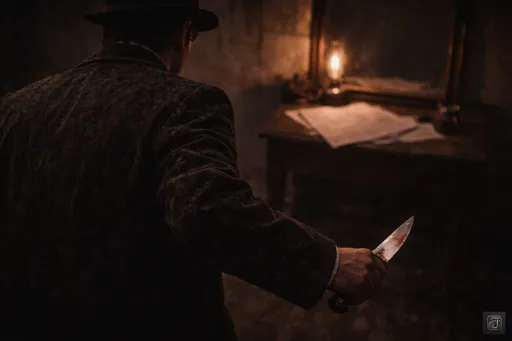
“If I don’t do it, then who will?”
In that moment,
He does not call himself a hero,
but a necessary evil.
And that is the most dangerous thing of all.
For one last instant, he hesitates.
I can still turn back.
But he doesn’t.
He grips the knife.
His ideal takes the shape of a blade.
There is no sound as he crosses the line.
Only a quiet step forward.
Chapter 3: The One Who Writes
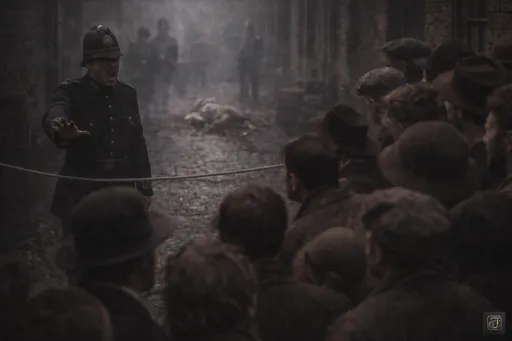
The morning air is cold.
But deeper in the alley, the cold feels different.
A policeman stretches a rope across the entrance, pushing back the onlookers.
“Back up! Don’t interfere!”
Even so, people crane their necks.
They want to see.
They are afraid.
But they want to see.
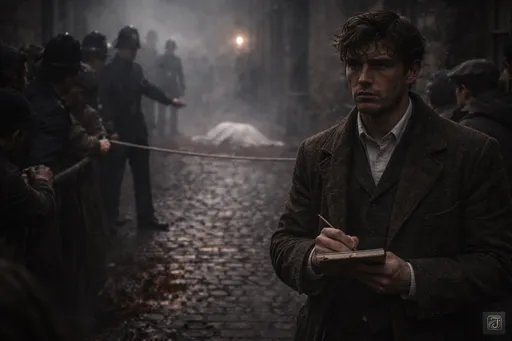
A young reporter stands there, clutching his notebook.
The sole of his shoe steps into blood, slipping slightly on the cobblestones.
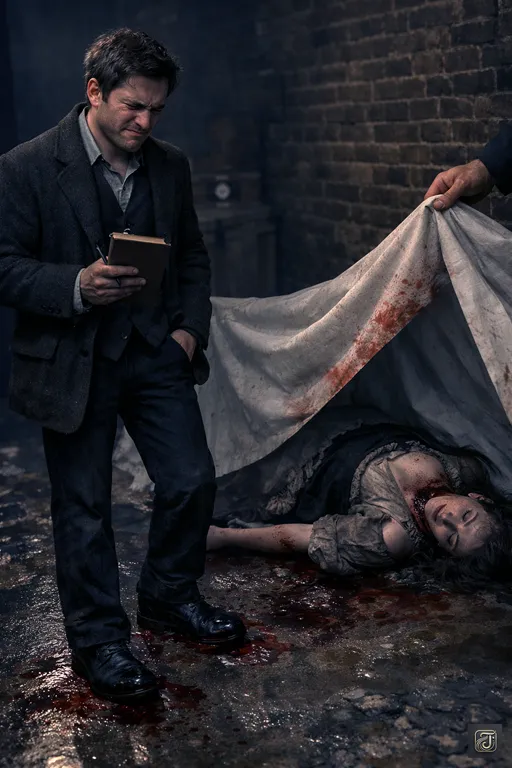
He winces.
The cloth is pulled back.
A woman lies there.
Her name:
Mary Ann Nichols.
Her throat—
slashed open.
The reporter holds his breath.
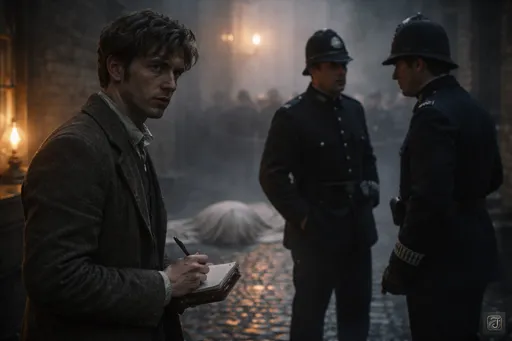
“…It’s awful.”
A policeman mutters under his breath.
“Can you write it?”
The question is not concern.
It’s confirmation.
The reporter nods.
“I’ll write it.”
Nausea rises in his throat.
But at the same time, another set of gears begins turning in his mind.
How to write it.
How to present it.
A “tragedy”?
“Brutal”?
“A fog-shrouded alley”?
Words can become blades.
The question is how sharp to make them.
Behind him, the onlookers whisper.
“Robbery?”
“No… they say it was done by someone with medical knowledge.”
The rumors are already spreading.
The reporter realizes something.
The facts are not yet in place.
But the story is already beginning to take shape.
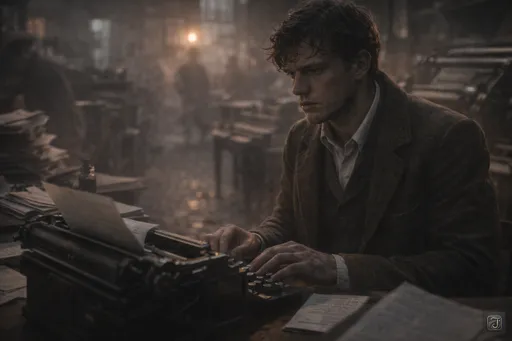
He returns to the newsroom.
The smell of ink.
The clatter of type.
The editor-in-chief looks up.
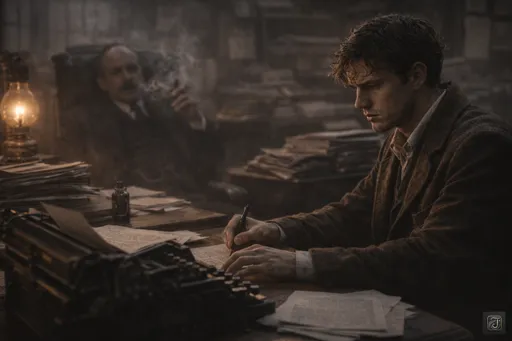
“How was it?”
“…Brutal.”
“Good. Brutal is good.”
The editor answers immediately.
“Readers want brutality.”
The reporter falls silent.
“Should we connect it to social issues?”
He asks it almost cautiously.
The editor raises an eyebrow.
“What do you mean?”
“The East End… the state of the police… the divisions in the system…”
“That’s an editorial. Today, it’s a crime.”
A crime.
Readers want to shiver tonight.
Analysis can wait until tomorrow.
“Write it so it cuts deep.”
The reporter returns to his desk.
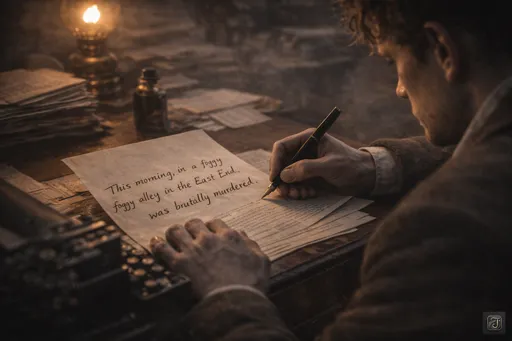
He lays the paper down.
He grips the pen.
His hand is still trembling slightly.
But the moment he begins to write, the tremor fades.
“This morning, in a fog-choked alley of the East End, a young woman was brutally murdered.”
Brutally murdered.
The moment he writes those words, something changes.
Not found dead.
Brutally murdered.
The temperature rises.
The reader’s pulse quickens.
As he writes, he watches himself.
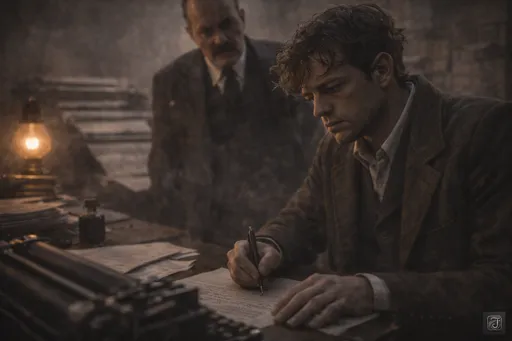
“What am I doing?”
“Am I telling the truth?”
“Or am I feeding fear?”
The editor stands behind him.
“Good. Give it more detail.”
“How far?”
“Right up to the point where the reader wants to look away.”
And who decides where that line is?
For a moment, the reporter pauses.
But the deadline does not.
He keeps writing.
The wound in the throat.
The blood.
The fog.
The loneliness.
The story is finished.
The printing presses begin to turn.
Clank, clank—steady and relentless.
Sheets of paper roll out.
The ink dries.
Newsboys grab bundles.
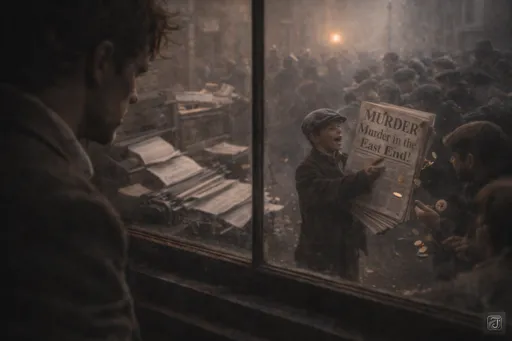
“Murder! Murder in the East End!”
People gather.
Coins drop.
The stack of papers shrinks.
From the window, the reporter watches it all.
His chest churns.
Nausea—and excitement.
Both.
He begins to understand.
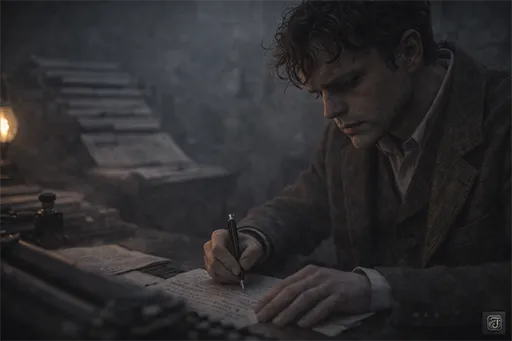
“Fear sells.”
“And if it sells, the paper grows.”
“And if the paper grows, our influence grows with it.”
“And if our influence grows, we can move the city itself.”
“This is a warning.”
He repeats the words to himself.
But the truth inside him is more complicated.
Readers are afraid as they read.
Afraid—and waiting for what comes next.
Next.
The word sends a chill through his chest.
“The case isn’t over.”
”No… it would be worse if it were—”
He shakes the thought away.
No.
That’s not what he wants.
He’s only writing.
Only writing what he’s told to write.
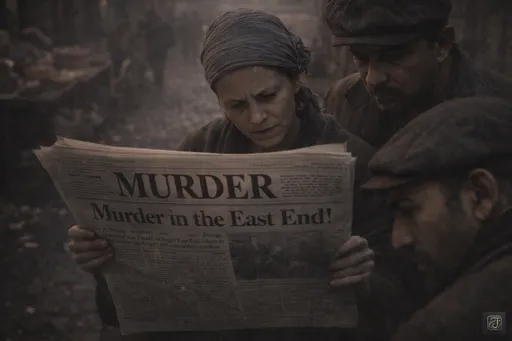
But the city begins to take shape through the pages of the paper.
The moment fear becomes an article, it becomes something shared.
And once shared, it grows.
A woman at the market spreads the newspaper open.
A laborer leans over her shoulder to read.
An immigrant lowers his gaze.
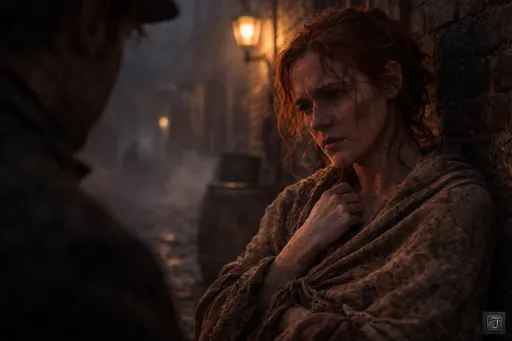
Eliza does not have a paper.
But a customer says,
“Did you read it? That killing.”
She narrows her eyes.
“No.”
“They say her throat was cut.”
The words send a chill along the back of her neck.
Fear lives on, even after it leaves the page.
And as the reporter sits at his desk, he realizes something for the first time.
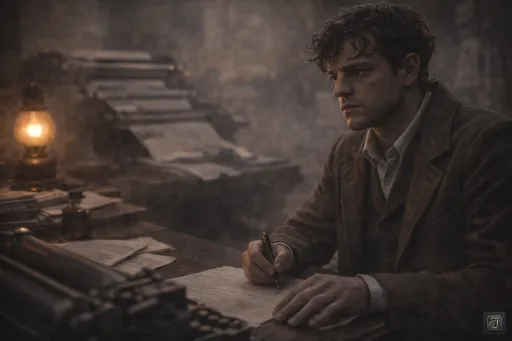
He has not seen the monster.
He is drawing its outline.
There is still no name.
But the outline exists.
And the readers will fill it in with their imagination.
This is the moment fear becomes a commodity.
The social structure is not written yet.
The failures of the system are not discussed.
On the page there is only blood, fog, and mystery.
And that is enough.
At least for now.
The printing press does not stop.
And the city, for the first time, begins to wait for a monster.
Chapter 4: It Spreads
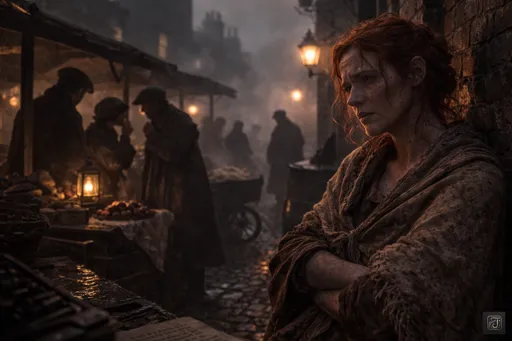
Three days later.
The fog is the same.
The alleys are the same.
But the air has changed.
Voices in the market are lower now.
“They say it’s another woman.”
“Same method, they say.”
They say.
Those words begin to shape the city.
A laborer slaps the newspaper against the table.
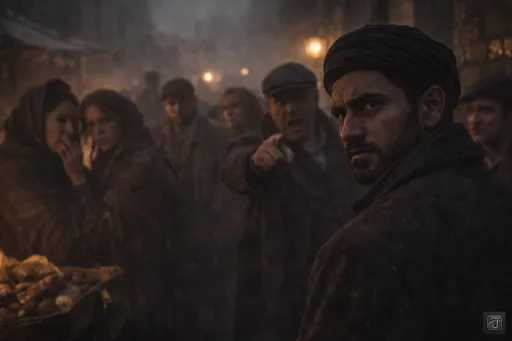
“It’s a doctor’s work.”
”No amateur cuts like that.”
Another man says,
“No. It’s a foreigner.”
”One of those from the East.”
Eyes slowly turn toward the immigrant.
He says nothing.
Silence is treated like guilt.
The market woman cuts in.
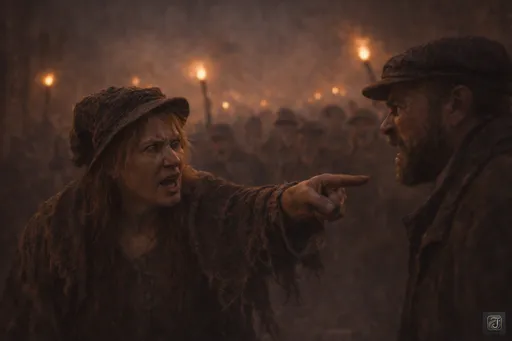
“Do you have proof?”
“Proof can wait.”
”They’re suspicious, aren’t they?”
Suspicious.
A word far more convenient than facts.
Fear does not create understanding.
Fear creates simplification.
Those people.
Those kinds of women.
Words run faster than blades.
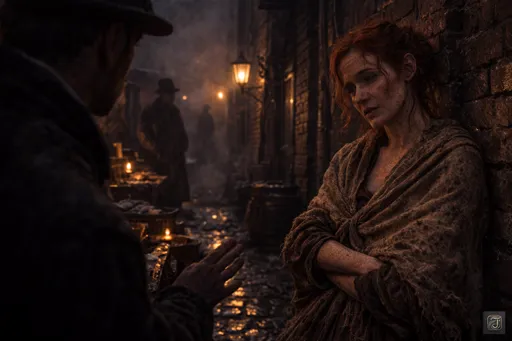
Eliza stands in the alley.
There are fewer customers now.
She has lowered her price.
“One shilling.”
The man shakes his head.
“Isn’t it dangerous? For the likes of you.”
The likes of you.
She lowers her eyes.
“It’s not just us who are in danger.”
But her voice goes unheard.
In the distance, two young men whisper.
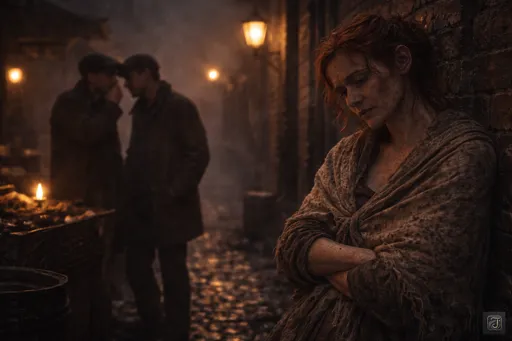
“Isn’t it just prostitutes?”
“They brought it on themselves.”
Eliza pretends not to hear.
But something sinks deep inside her chest.
They brought it on themselves.
It’s a phrase the city uses to feel safe.
If those women are to blame, then at least the rest of us are safe.
If they are guilty, then the system is innocent.
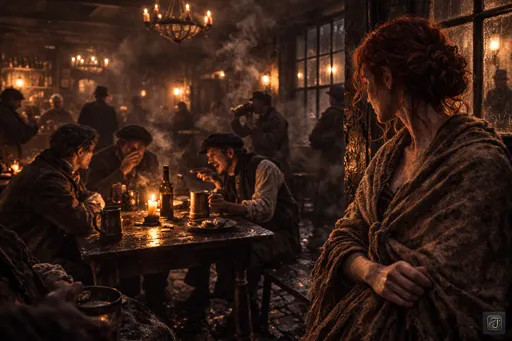
Night.
The tavern is full.
Everyone is talking about the killings.
“Where will it happen next?”
A trace of laughter slips into the words.
They are afraid.
But somewhere beneath the fear, there is expectation.
A new sensation.
Something that tears through the dullness of ordinary life.
A man says,
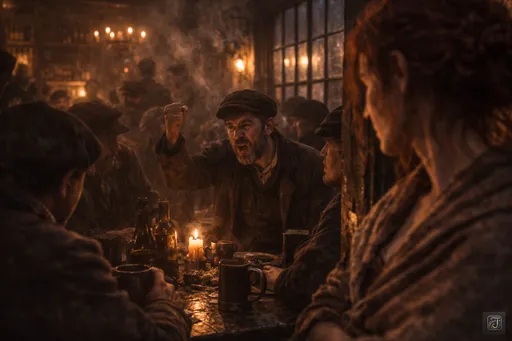
“We should form a vigilante group.”
“Good idea.”
Unity.
Fear creates unity.
But not reason.
The shouting grows louder.
The immigrant is shoved.
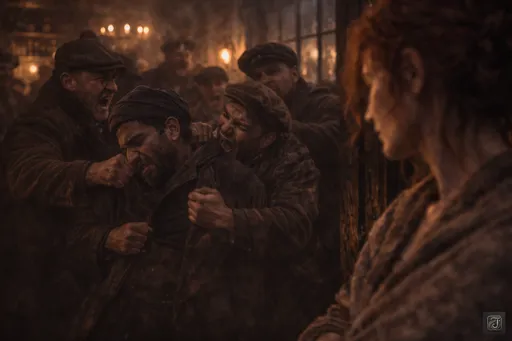
“You did it!”
“No!”
A blow lands.
No one steps in to stop it.
Fear wants a culprit.
Whether it’s the real one doesn’t matter.
All that matters is finding someone to strike.
Someone to carry the weight of everyone else’s fear.
The market woman turns to Eliza and says,
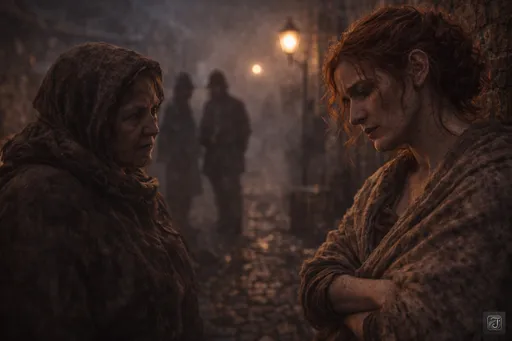
“Stop going out at night.”
“If I stop, I don’t eat.”
“If you die, it’s over.”
Eliza answers quietly.
“Some people are finished even while they’re still alive.”
The market woman falls silent.
The police do not protect her.
Only fear surrounds her.
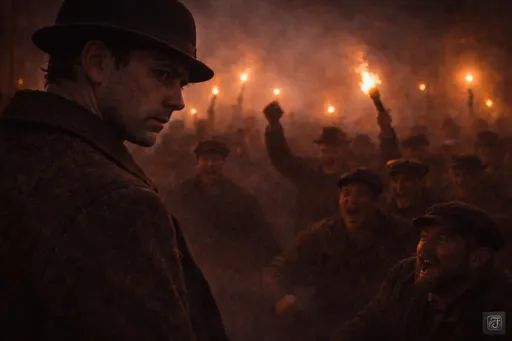
Meanwhile, the man watches the crowd.
His ideal has begun to drift in another direction.
He had imagined something different.
“With a shock,
• the police would reconsider their system
• the newspapers would write about the failures of society
• Parliament would be forced to debate
But what is actually happening now?”
“Newspapers selling fear.”
”Violence against immigrants.”
”Contempt for prostitutes.”
”People avoiding the streets at night.”
“Fear is not revealing the structure.”
”Fear is creating an enemy.”
Something unsettles in the man’s chest.
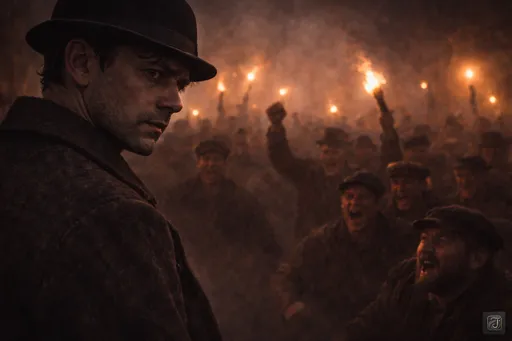
“No…”
He murmurs.
But the voices of the crowd drown him out.
“Catch him!”
“Hang him!”
His ideal has not yet collapsed.
But it is beginning to shake.
He repeats the words to himself.
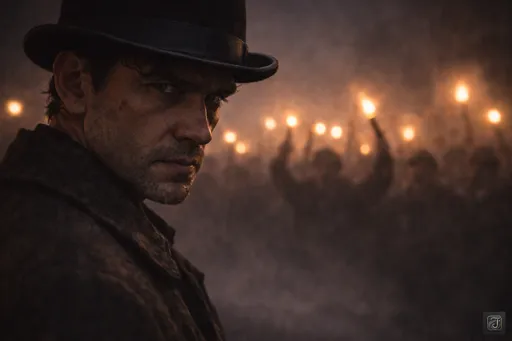
“Not enough.”
”The shock isn’t strong enough.”
“The city is dull.”
”It has to be shaken harder.”
In the fog, the gas lamps flicker.
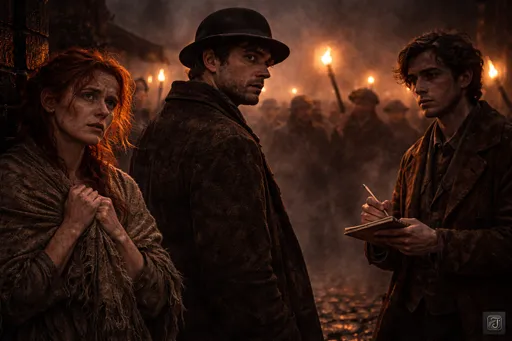
Eliza tightens her grip on the shawl.
The man watches the crowd.
The reporter begins to think about the next headline.
And the city—
The city begins to wait for the monster’s arrival.
The monster does not yet exist.
But it is already being needed.
Fear has found a direction.
And that direction is still beyond anyone’s control.
Chapter 5: A Name
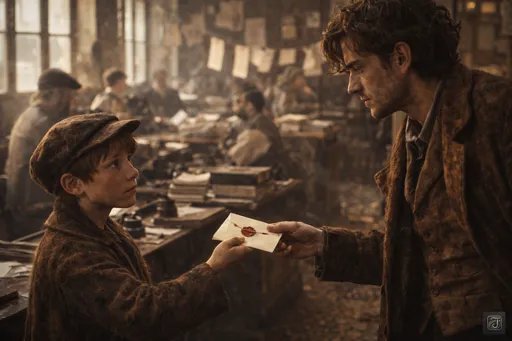
The letter arrived in the early afternoon.
The air in the newsroom carried a faint heat, stronger than usual.
Sales were rising.
The murders were continuing.
The readers were waiting.
A boy holds out an envelope.
“This just came in.”
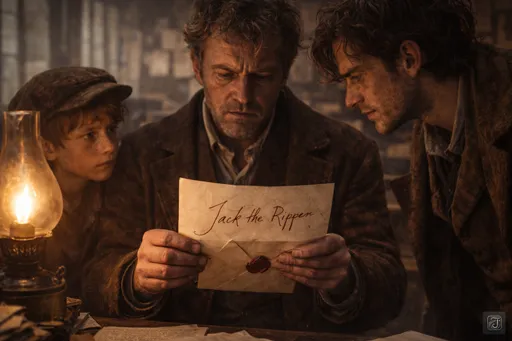
Red ink.
Crude handwriting.
The editor breaks the seal.
The reporter leans in to look.
At the bottom of the letter is a signature.
“Jack the Ripper.”
Silence falls.
The editor smiles slowly.
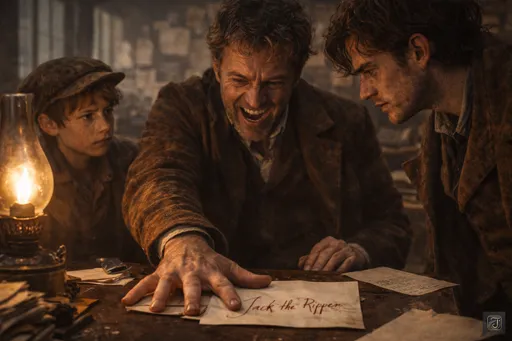
“Told you.”
The reporter says,
“We don’t know if it’s real.”
“Doesn’t matter.”
“There’s a name. That’s enough.”
The editor slams the paper down on the desk.
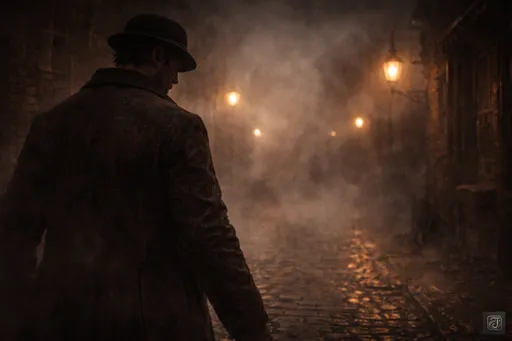
A name.
Until now, the monster had only been an outline—
a shadow in the fog,
a shape made of imagination.
But the moment it was given a name, the monster gained a personality.
It could be called.
It could be spoken about.
It could be imagined.
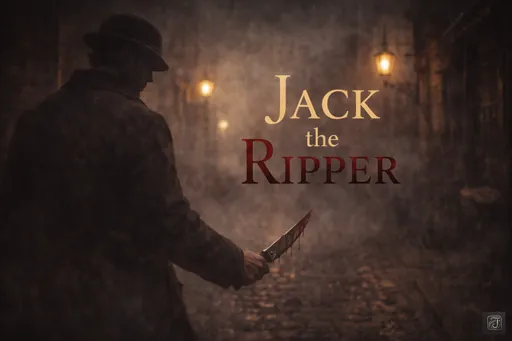
“Jack.”
A human name.
“Ripper.”
A name of function.
When the two are placed side by side, the monster is complete.
The reporter hesitates.
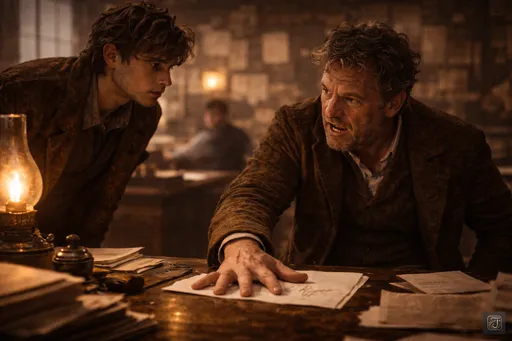
“Are we really going to publish it?”
The editor answers at once.
“Front page.”
“Isn’t that pushing it too far?”
“If we don’t push, no one reads.”
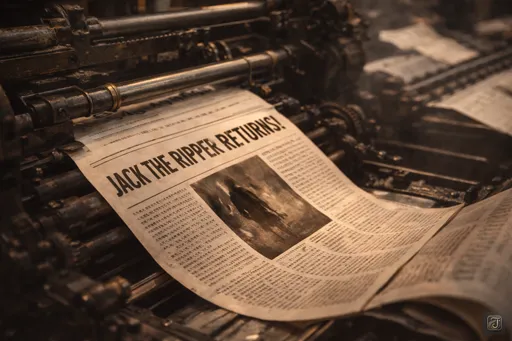
Type is set.
“Jack the Ripper Strikes Again!”
The printing press begins to turn.
Clank. Clank.
Sheets of paper roll out.
Ink multiplies the monster.
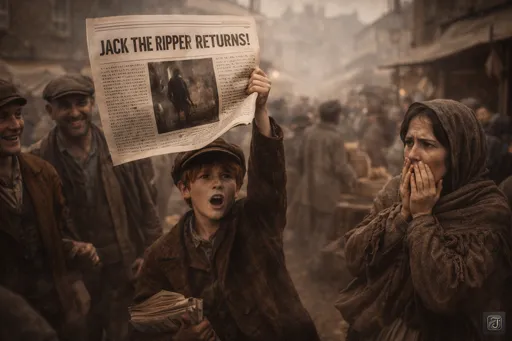
The market.
A newsboy shouts,
“Jack! A letter from the killer himself!”
People gather around.
A laborer laughs.
“So he finally gave himself a name.”
A housewife shivers.
“So he really exists…”
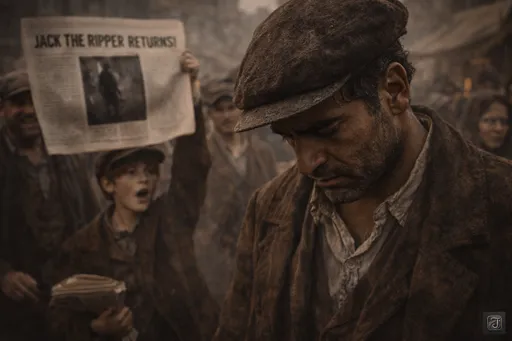
The immigrant lowers his eyes.
Suspicion shifts—just a little—toward another direction.
Because the monster has now been confirmed.
A name is convenient.
Responsibility can be forced onto one person.
The system is protected.
The city breathes easier.
If there is a monster, then everyone else can remain victims.
A customer shows Eliza the newspaper.
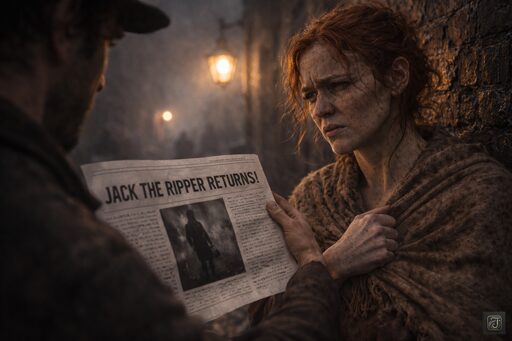
“Look. They’re calling him Jack.”
She narrows her eyes.
“…A name doesn’t matter.”
“Aren’t you scared?”
“Of course I am.”
She answers honestly.
“But knowing his name doesn’t change anything.”
The man laughs.
But there is a tremor in it.
The man grips the newspaper tightly.
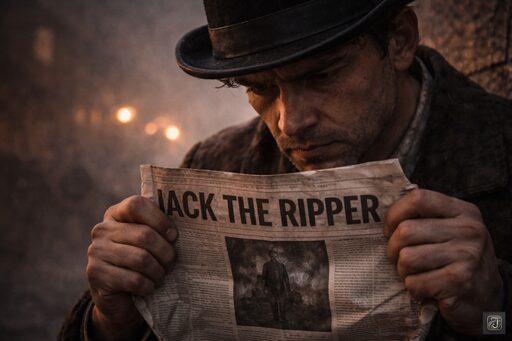
“Jack the Ripper.”
The words stab into his eyes.
”No. I am not a monster.”
”This is an accusation—for the sake of an ideal.”
But the city does not read it that way.
The city wants a monster.
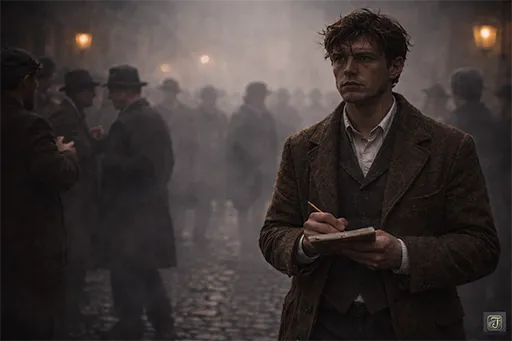
The reporter walks through the city.
Fragments of conversation drift into his ears.
“Jack must be a doctor.”
“No, a nobleman.”
“A foreigner.”
The imagination grows.
The monster grows larger.
The story becomes stronger than reality.
The reporter stops walking.
The name he gave.
The letters he printed.
Now they are moving the city.
For the first time, he wonders.
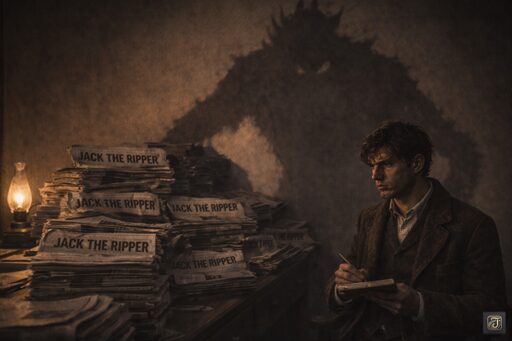
”Did I tell the truth?”
”Or did I simply raise a monster?”
The circulation numbers are certainly rising.
The editor is pleased.
The paper is winning.
And the structure accelerates once more.
The monster becomes complete the moment it gains a name.
But in that same moment, it grows beyond any single person.
Jack is no longer just one man.
Jack becomes the city’s fear.
Fear shifts—from a commodity to a brand.
And the city can no longer turn back.
Chapter 6: Conviction
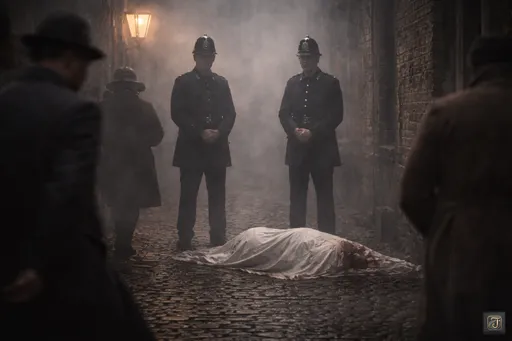
The morning fog is thick.
People no longer gasp in shock.
They simply walk faster.
At the end of the alley,
two policemen stand in silence.
A body lies beneath a sheet.
Her name:
Annie Chapman.
From the back of the crowd, the man watches.
His gaze is calm.
But his heartbeat is fast.
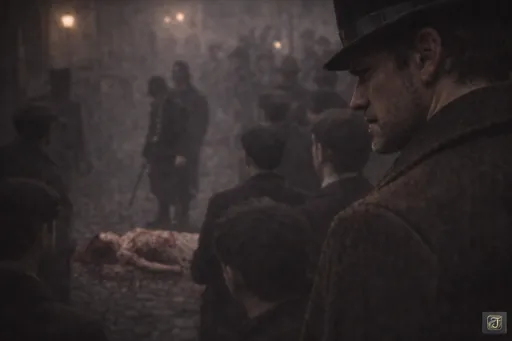
This time—
with a shock like this,
with cruelty like this,
the city cannot ignore it.
The police will rethink their system.
The newspapers will write about the structure.
Parliament will be forced to debate.
He believes it.
This is not pleasure.
This is a necessary evil.
Shock is an alarm—
the sound that wakes a sleeping city.
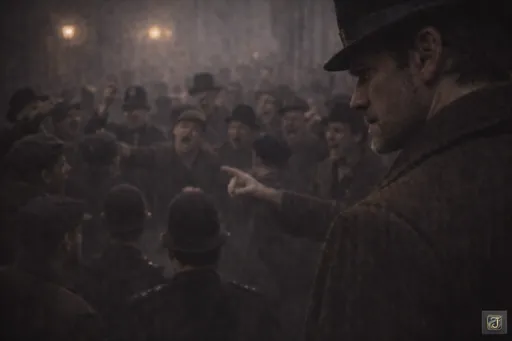
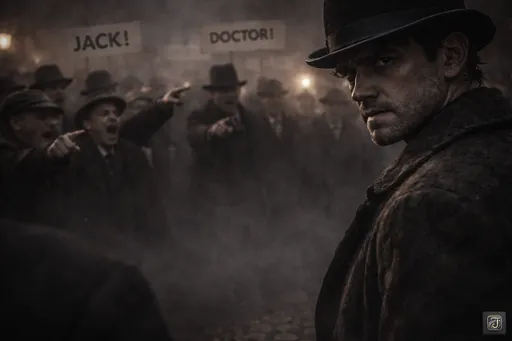
The voices of the crowd echo.
“Jack!”
“Catch him!”
“A doctor!”
“A foreigner!”
The discussion narrows toward the image of the killer.
What kind of man is he?
Where does he live?
What does his face look like?
The man bites his lip.
That’s not the point.
What they should be asking is:
- Why do women have to stand in the streets at night?
- Why are they not protected?
- Why are the police divided?
But no one is talking about that.
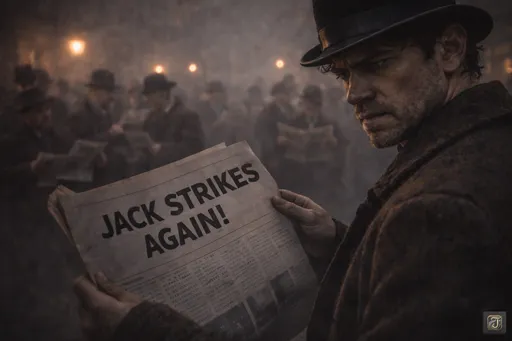
Newspapers are handed out.
The headline is large.
“Jack Strikes Again!”
There is not a single word about the distortions of the social structure.
A faint unease runs through the man’s chest.
Is it still not enough?
Does the city need an even greater shock?
Eliza steps out from the shadows of the alley.
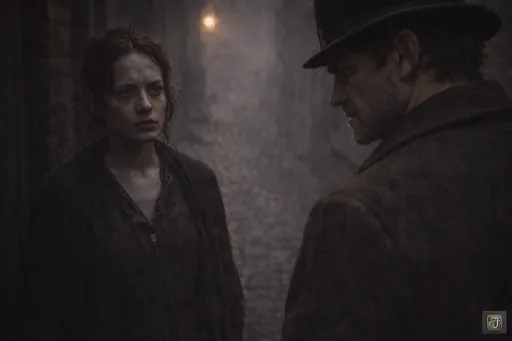
Her face is pale.
“…Did you see?”
The man nods.
“This time, things will change.”
He says it more forcefully than he expected.
Eliza watches him closely.
“What will?”
The question is sharp.
The man searches for words.
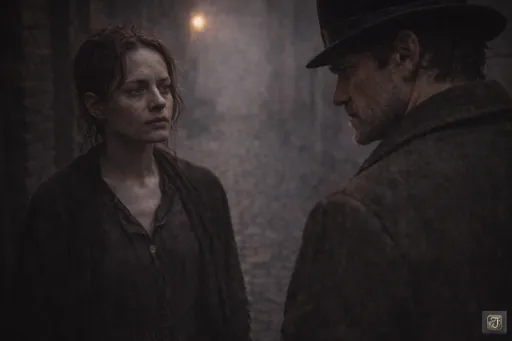
“The system.”
”The police.”
”The newspapers.”
Eliza slowly shakes her head.
“I stood here yesterday.”
“I’ll stand here today.”
“I’ll stand here tomorrow.”
Her voice is calm.
There is no anger.
No resignation.
Only fact.
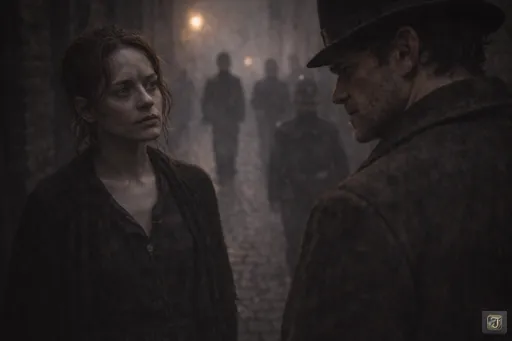
“Nothing changes.”
The words strike the man in the chest.
Nothing changes?
No—that’s not true.
Fear is growing.
The insults are growing.
The number of policemen is growing.
But the place where Eliza stands is the same.
Still unprotected.
For the first time, a small crack appears in the man’s ideal.
Is the shock still not enough?
Or is it moving in the wrong direction?
Laughter rises from a tavern.
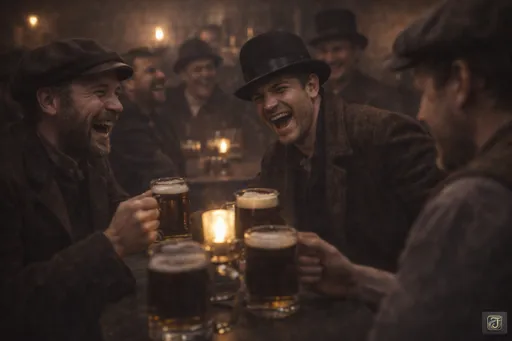
“Jack’s a frightening one.”
Someone says it.
But there is laughter in the voice.
Fear is beginning to turn into excitement.
The man trembles.
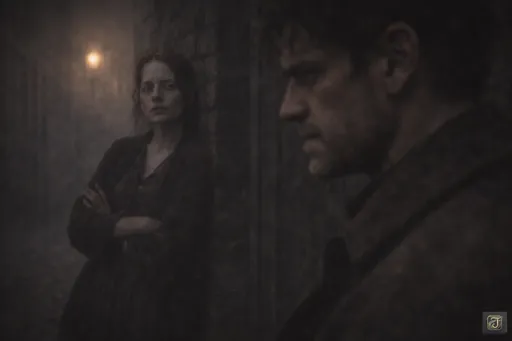
This is an accusation.
But the city is turning it into entertainment.
Eliza speaks softly.
“Hey.”
“What?”
“You look like you know something.”
The man holds his breath.
“…I don’t.”
She studies him for a moment.
“Then fine.”
She leans back against the wall again.
The man watches her.
I’m supposed to be doing this to save her.
But she knows nothing.
And nothing has changed.
The fog thickens.
In the distance, a newsboy’s voice echoes.
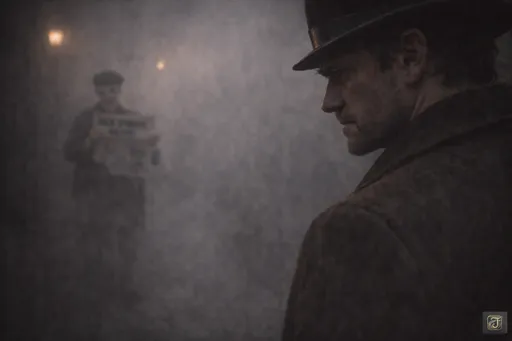 “Jack again! Another murder!”
The shock has reached the city.
Yet no one awakens.
Something shifts inside the man.
The city is dull.
And dullness cannot be shaken by a single shock.
Stronger. Deeper.
It still isn’t enough to wake them.
That thought pushes him to the next step.
His ideal is still alive.
But it is beginning to tilt—
just slightly—toward something dangerous.
The monster is complete.
But the ideal… is not.
Chapter 7: The One Who Stands
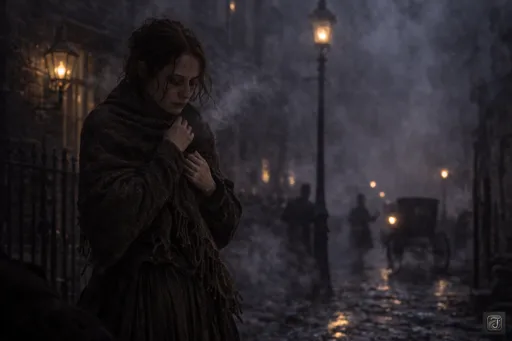
The night is cold.
The cold arrives before the fear.
The fog slips down her collar and numbs her fingers.
The dampness of the cobblestones seeps through the soles of her shoes.
Eliza pulls her shawl tighter around herself.
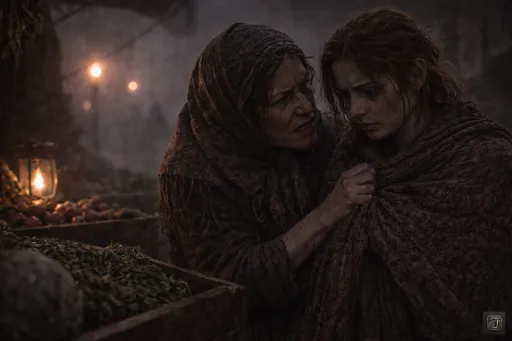
“Stop.”
That’s what the market woman said.
“It’s dangerous now.”
Dangerous.
In this place, that word is used every day.
Dangerous men.
Dangerous streets.
Dangerous nights.
So what?
If she stops—
What happens tomorrow?
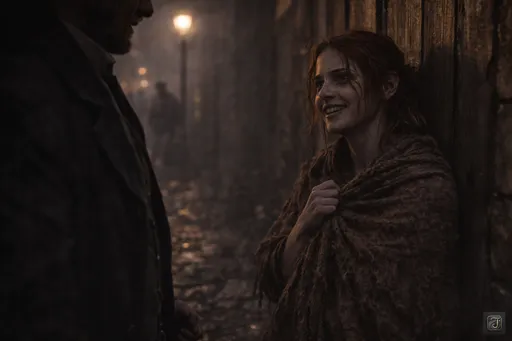
She leans her back against the wall of the alley.
The wooden boards are cold.
A man approaches.
“How much?”
“Two shillings.”
“That’s steep. You might get killed out here.”
Eliza smiles.
“If I’m dead, the price won’t matter.”
The man snorts and walks away.
The rumors have reached her ears.
A woman had her throat cut.
Her insides torn open.
Jack.
She’s heard the name too.
But a name doesn’t fill an empty stomach.
The monster is distant.
Hunger is close.
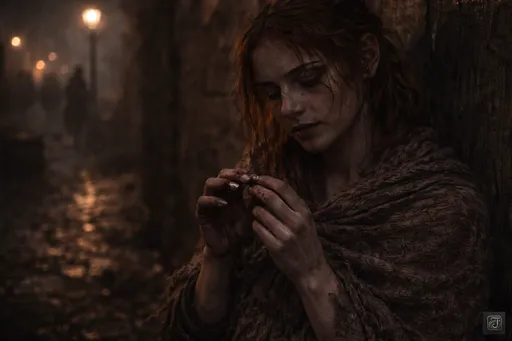
She rubs her fingertips together.
Black grime sits beneath her nails.
It won’t come off.
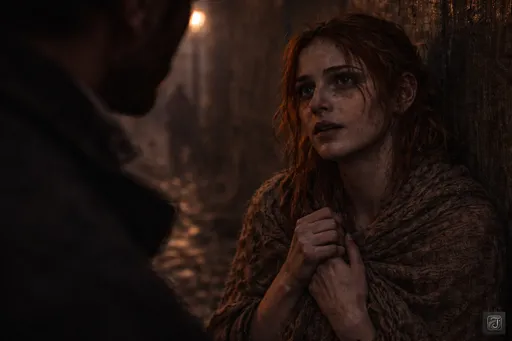
“Aren’t you afraid?”
Another man asks.
Eliza answers honestly.
“I am.”
“But even if I say I’m afraid, no one is going to save me.”
She is afraid.
But even if she admits it, morning will still come.
And when morning comes, the rent will still be due.
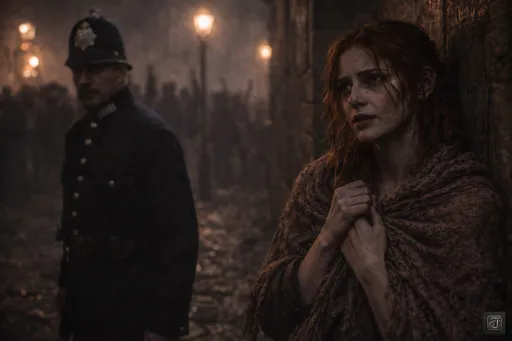
A policeman walks past.
For a moment, his gaze brushes over her.
But he doesn’t stop.
He doesn’t protect.
She is not protected.
There are limits to how many people can be protected.
And she is not among them.
In the distance, a crowd shouts.
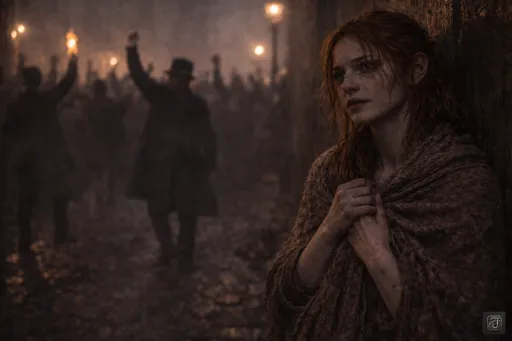
“Catch Jack!”
Shouts.
Applause.
Excitement.
Eliza hears it all.
And simply keeps standing.
A vigilante patrol passes by.
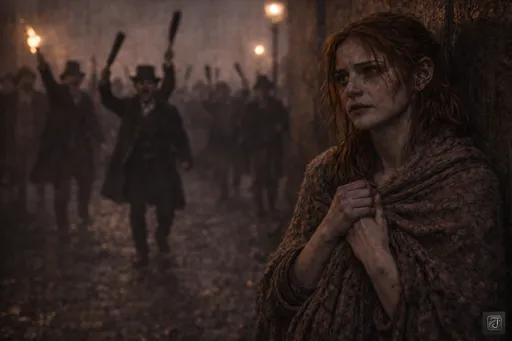
“Go home!”
Home where?
She mutters to herself.
Home is decided by rent.
And rent can’t be paid unless I stand here.
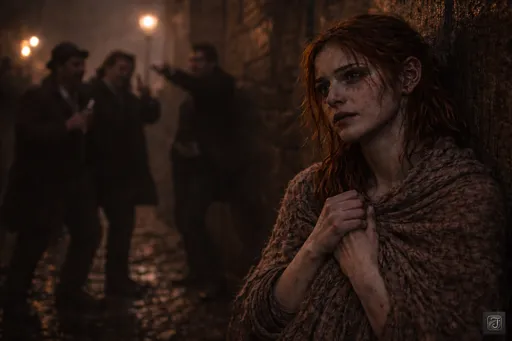
The monster is said to be somewhere out there.
But in her world, monsters are always present.
Drunken fists.
Bargaining voices.
Looks of contempt.
They appear every night.
They have no names.
They never make the newspapers.
She looks up at the sky.
The fog hides the stars.
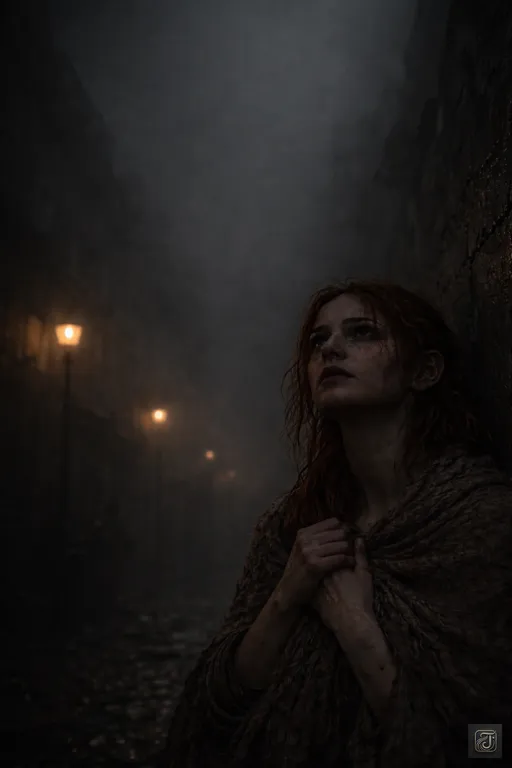
I’m alive. Is that enough?
No, it isn’t. But what else can I do?
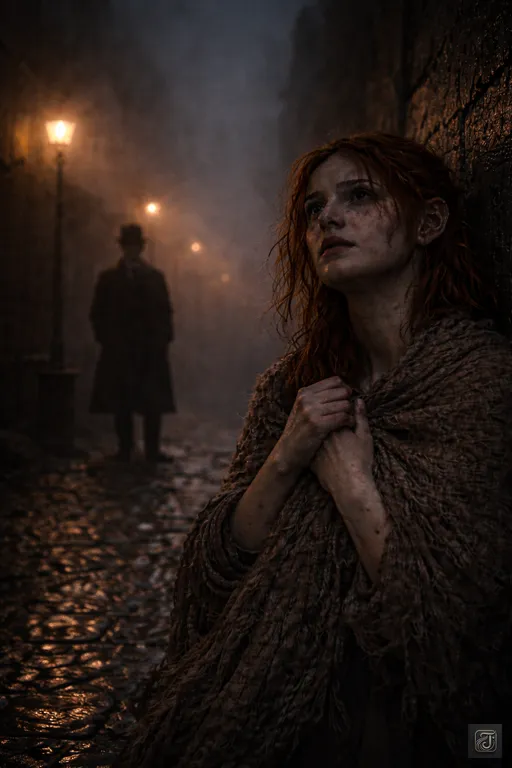
In the distance, a man is standing.
He is looking in her direction.
She cannot tell what he is thinking.
People who think usually just keep thinking.
She only keeps standing.
The night deepens.
The cold grows sharper.
Her feet go numb.
Still, she stands.
There is no other choice.
If she doesn’t stand here, she will simply starve.
Then she murmurs in a voice no one can hear.
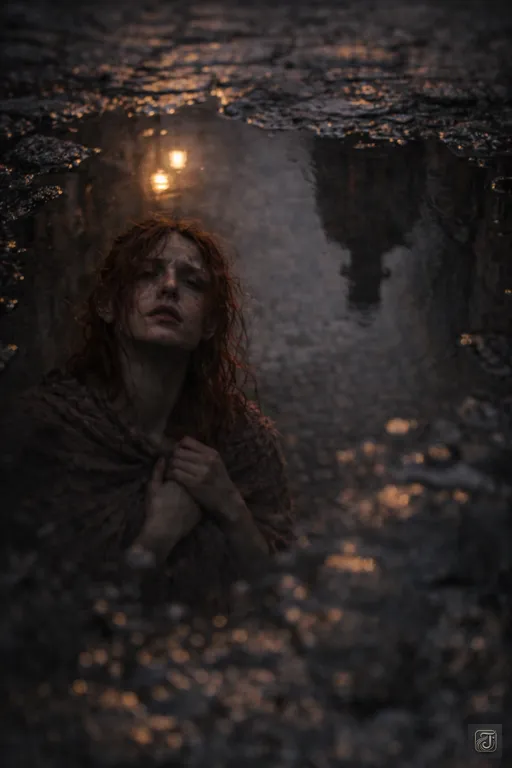
“Monsters have been here for a long time.”
Chapter 8: Interrupted
The night was quiet.
Unnaturally quiet.
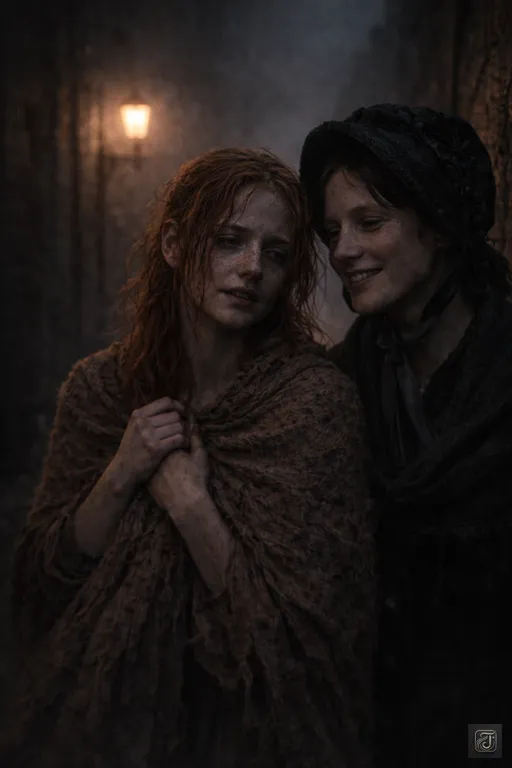
Eliza stood at the corner of the alley beside another woman.
“Cold tonight, isn’t it?”
The woman gave a small laugh.
“Autumn’s the worst. Gets into your bones.”
Her name was
Elizabeth Stride.
Eliza called her Lizzie.
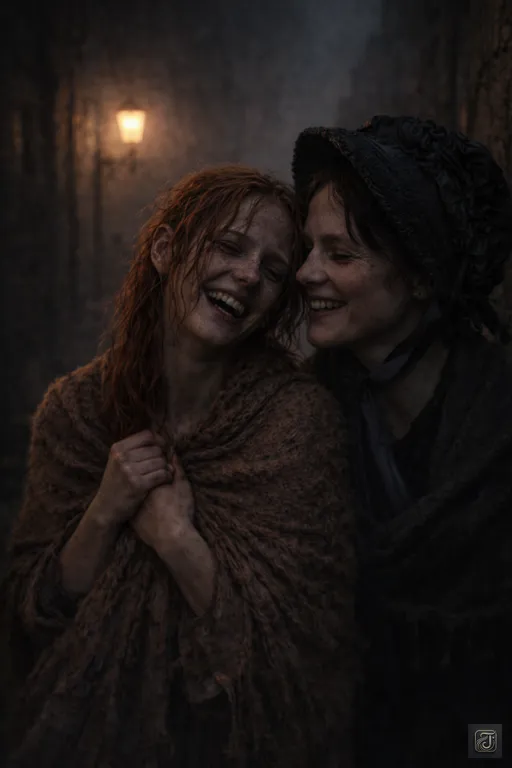
“Did you hear the rumors?”
Lizzie asks.
“About Jack?”
“Yeah.”
“Once something has a name, it gets even scarier.”
“A name doesn’t matter,”
“Hunger’s still hunger. And if the rent isn’t paid, the room’s gone.”
The two of them laugh.
A small, tired laugh.
Drunken voices echo somewhere in the distance.
Torchlight flickers.
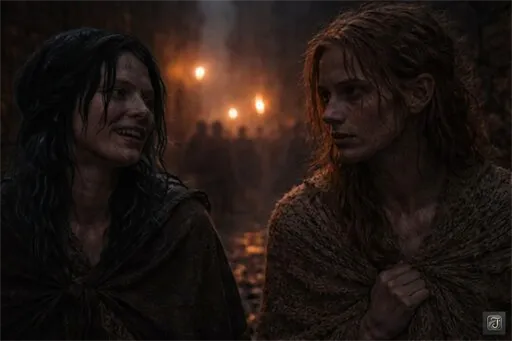
“Catch Jack!”
The shouts are already part of daily life.
Lizzie mutters quietly.
“Hey… if he really is out there.”
“What?”
“Do you think we’re the chosen ones?”
Eliza frowns.
“Chosen by who?”
Lizzie laughs.
A dry laugh.
“By luck.”
Silence.
Torches sway in the distance.
“Chosen as the kind of people no one would miss if we disappeared.”
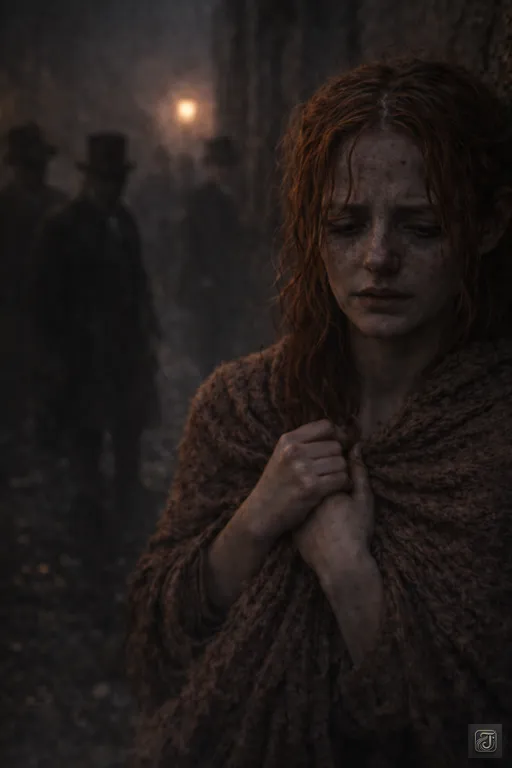
Eliza feels her throat tighten.
Chosen.
She hates that word.
She didn’t choose—
the night,
the alley,
this place she stands.
She was pushed into it.
By poverty.
By rent.
By the eyes of men.
By a system that does not protect.
They were not chosen by a monster.
They were sorted by the city itself.
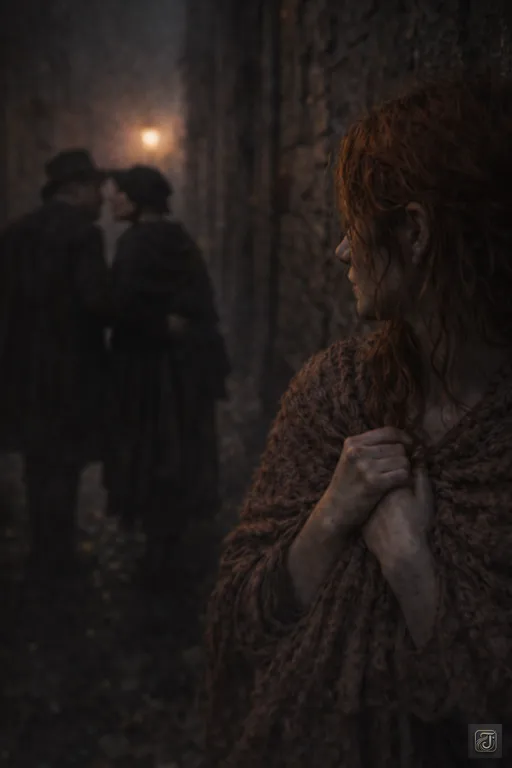
A customer approaches Lizzie.
A brief negotiation.
“I’ll be right back.”
With that, Lizzie disappears into the darkness.
Watching her back fade into the shadows, Eliza thinks quietly.
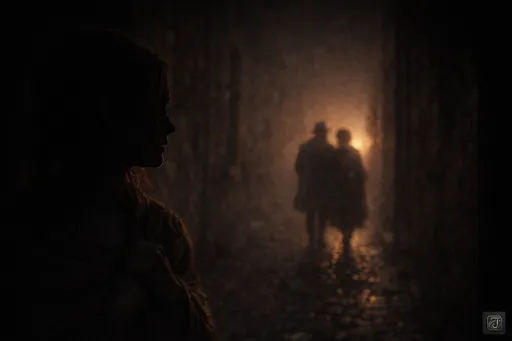
“Whether there’s a monster out there or not doesn’t matter to us.”
“We were never the ones who do the discarding.”
“We were the ones already placed on the side to be discarded.”
Chapter 9: The Crack
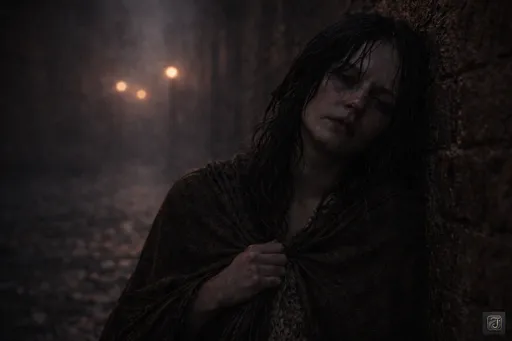
The night was unnaturally quiet.
The fog hung low.
Sounds were distant.
It felt as if the whole world was holding its breath.
Elizabeth Stride
She leaned against the wall.
She wasn’t drunk.
She wasn’t smiling.
She was simply tired.
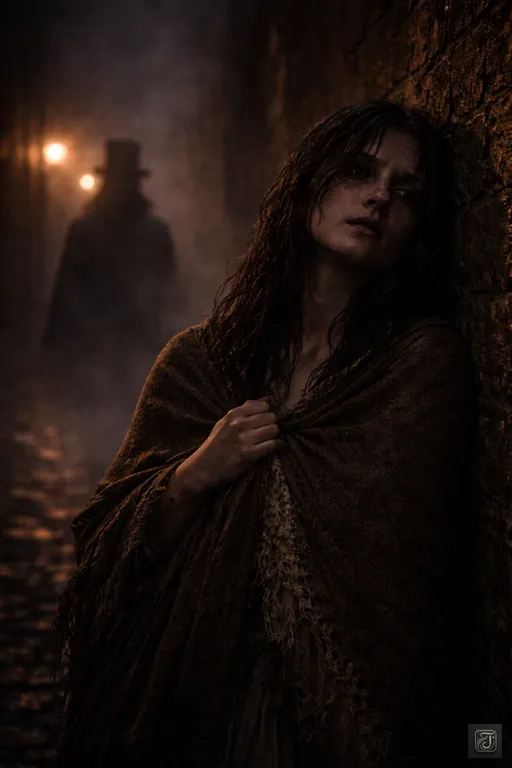
“It’s cold tonight.”
She says it to no one in particular.
From the shadows, the man watches.
As always, with the face of an observer.
His ideal is still alive within him.
Shock.
Awakening.
An accusation against the structure of the world.
The blade was meant to be a tool for that.
He steps closer.
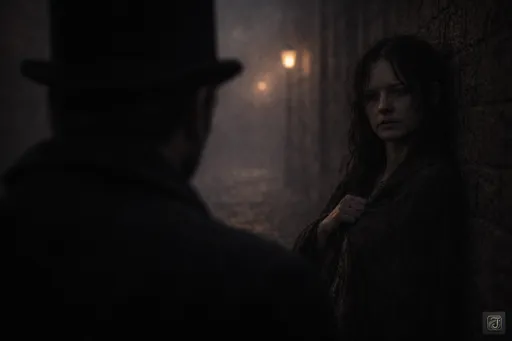
“A customer?”
Stride asks.
The man nods.
Few words pass between them.
She sighs.
“Make it quick.”
The words prick faintly at his chest.
Make it quick.
Ideals take time.
But her night does not.
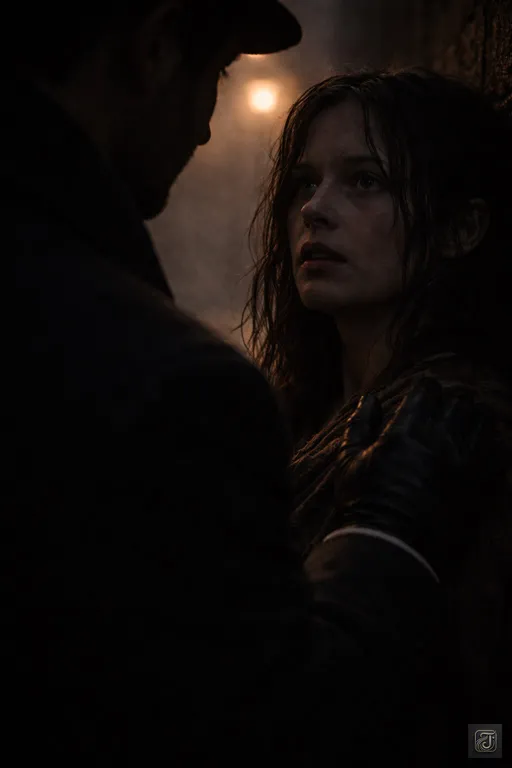
They step into the alley.
Their footsteps are swallowed by the darkness.
He reaches out, touching her shoulder with the same familiar motion.
She turns around.
In that moment—
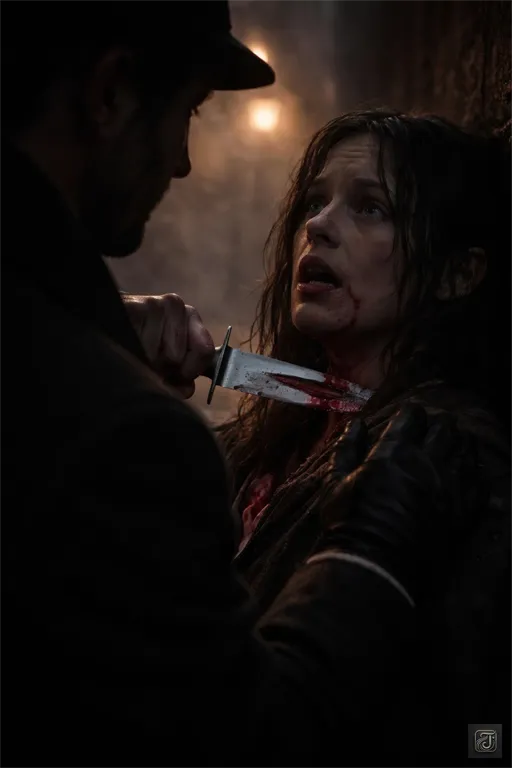
The blade flashes.
Her throat.
A sharp, brief sound.
The blood is warmer than he expected.
He holds her.
Lowers her to the ground.
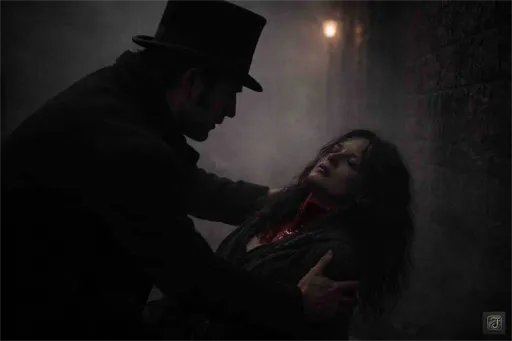
Up to this point, it was the same as always.
Her breathing stops.
His pulse races.
He moves to the next step.
The abdomen.
If the shock isn’t strong enough, it means nothing.
But then—
A small scrap of paper slips from her pocket.
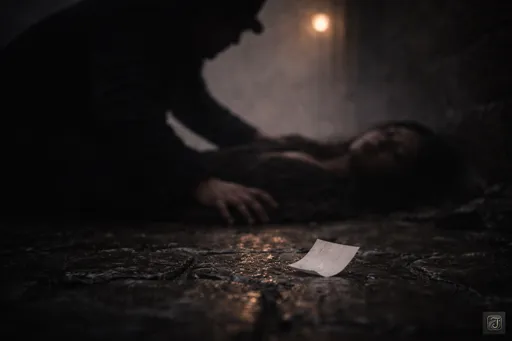
Before it can be soaked with blood, he picks it up.
A name is written on it.
—Eliza.
A short, hurried scrawl.
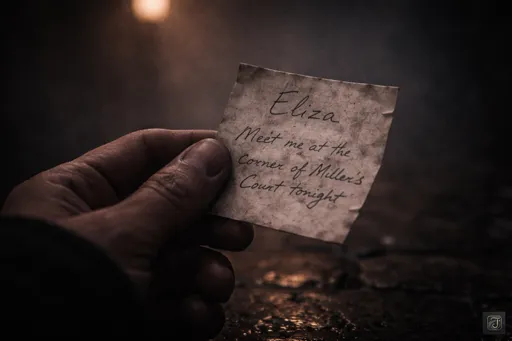
“Tonight, let’s meet at the corner of Miller’s Court.”
The man’s hand stops.
Time seems to fall away into silence.
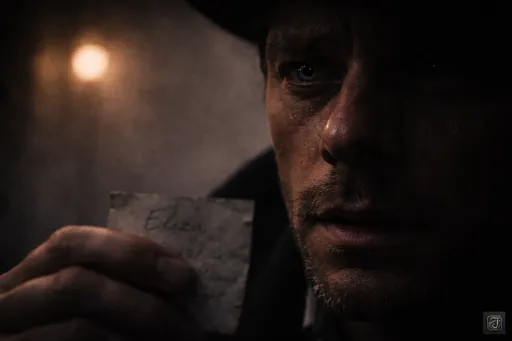
“Eliza…”
Those eyes.
That voice.
Nothing changes.
Her words echo in the alley.
For the first time, he understands that his actions are connected by a line.
Not symbols.
Not structures.
This woman knew Eliza.
His breathing grows uneven.
His ideal trembles.
The hand gripping the blade begins to shake.
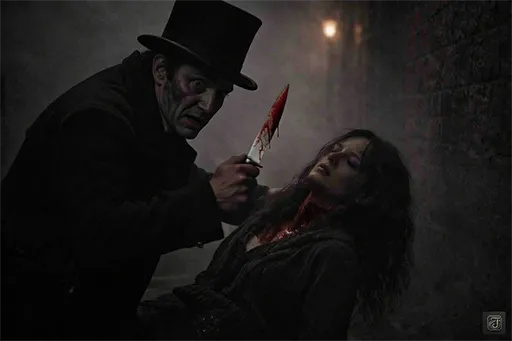
“I can’t… I can’t do it.”
The blade that was meant to move to her abdomen stops.
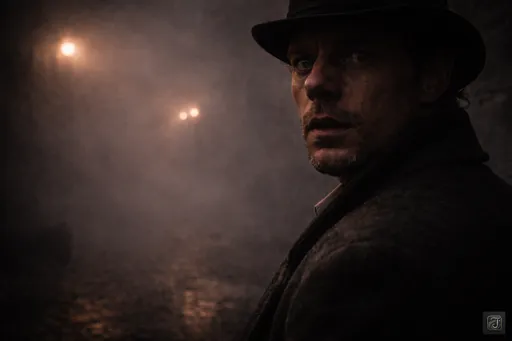
In the distance, the sound of a carriage echoes.
Voices.
Reality returns.
He stands.
Turns back.
Stride’s face is calm.
And he understands.
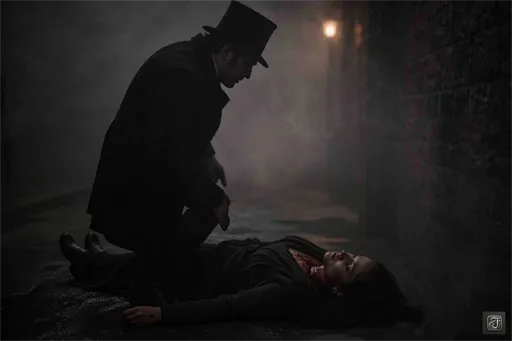
“I’m not at fault. I just didn’t know.”
The blood is already flowing.
The life is already gone.
There is no salvation.
He takes a step back.
Then he leaves the alley.
The fog closes around him again.
Inside his chest, something cracks.
For the first time, his ideal has touched its own stain.
And for the first time, it fractures.
That night,
he cannot sleep.
Eliza’s face rises in his mind.
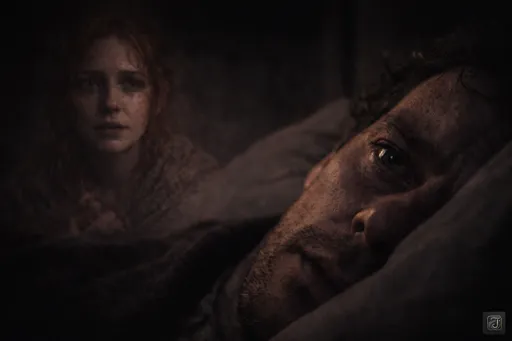
“Nothing changes, does it?”
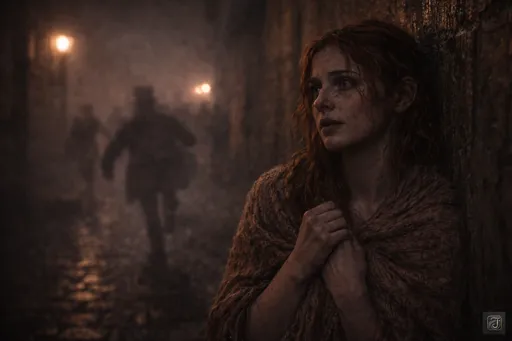
Eliza leans her back against the wall.
Cold.
A few minutes pass.
Or maybe longer.
Time becomes vague at night.
Suddenly, a shout rises in the distance.
People start running.
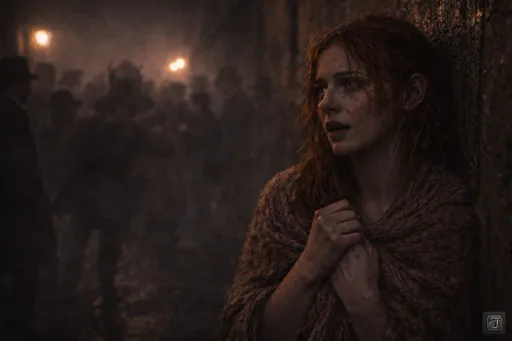
“A woman!”
Eliza’s heart slams in her chest.
Her feet won’t move.
If she moves, it becomes real.
Still, she steps closer.
A crowd.
A shadow lying on the ground.
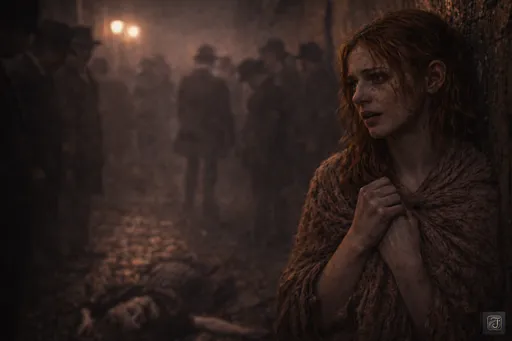
Lizzie.
Blood is flowing from her throat.
But—
That’s all.
Her abdomen is untouched.
Not torn open.
Not mutilated.
Incomplete.
A death that looks as if it was interrupted.
Eliza drops to her knees.
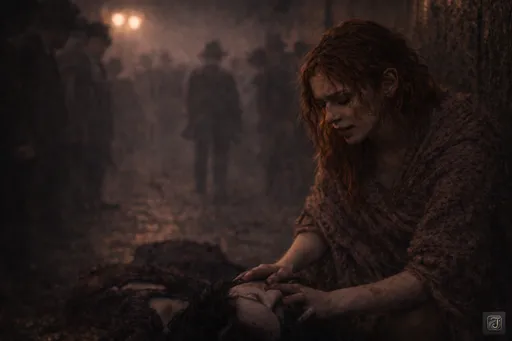
“Lizzie…”
There is no reply.
Someone shouts.
“It’s Jack!”
“He’s back!”
There is no confirmation.
But the conclusion comes quickly.
The monster must have been here too.
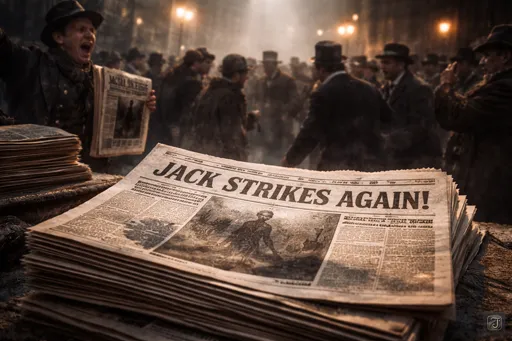
The next morning.
The newspapers scream.
“Jack Strikes Again!”
The crowd trembles—yet buzzes with excitement.
Eliza understands.
She was Lizzie.
But now she is only
“Jack’s victim.”
Her name disappears almost immediately.
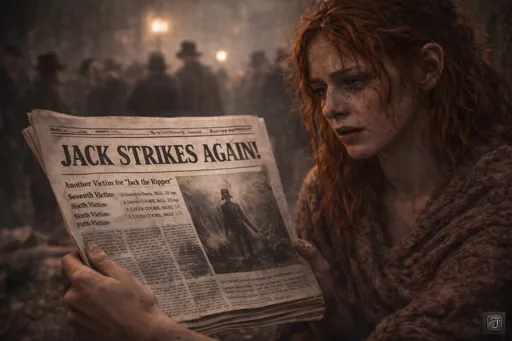
Eliza stares at the paper.
Lizzie’s death was incomplete.
But stories do not allow incompleteness.
It is absorbed into the monster’s story.
On the page, Lizzie is no longer a woman.
She becomes a number.
Evidence.
Fuel.
Eliza thinks quietly.
“The monster isn’t just him.”
“The article takes even their names.”
From that night on, Eliza understands.
The monster is not one man.
The monster is the power that turns death into a story.
Chapter 10: Frenzy
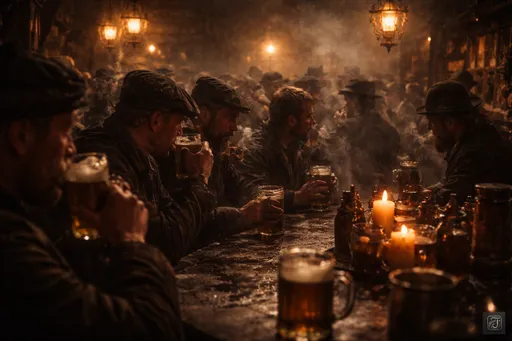
The tavern is full.
The smell of beer.
The smell of sweat.
The smell of fear.
Everyone is talking about Jack.
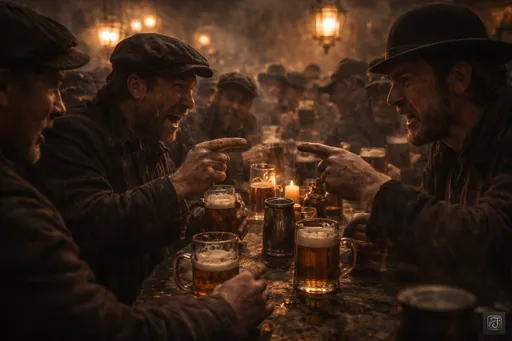
“Where next?”
“Maybe he’ll move west.”
“Nah, he’s still in the East.”
No one has a map, yet everyone is a prophet.
Fear creates arguments.
Arguments create heat.
Heat creates unity.
But it is not reason.
A laborer slams his fist on the table.
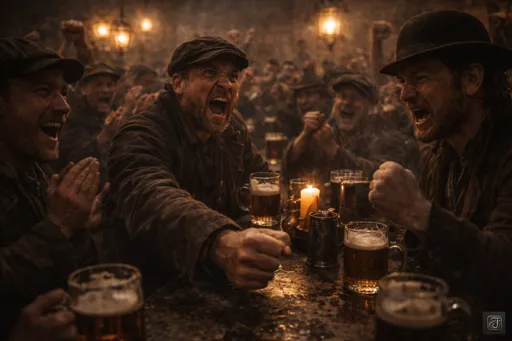
“We’ll form a vigilante patrol!”
Applause erupts.
“We’ll patrol the night!”
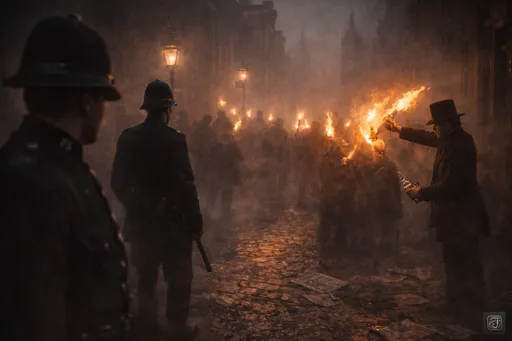
They wear the face of justice.
But their eyes are bright with excitement.
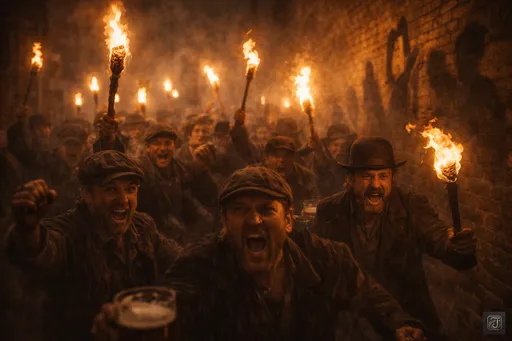
They step outside.
Torches flare to life.
Shadows dance along the walls.
“Catch Jack!”
The shouting shakes the alleys.
Eliza stands there.
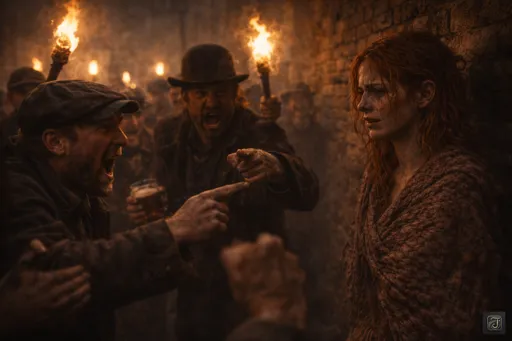
“Go home.”
“This is because of you!”
“Because of us?”
“You’re the ones being targeted!
”If you weren’t here, he wouldn’t show up!”
For a moment, she lowers her eyes.
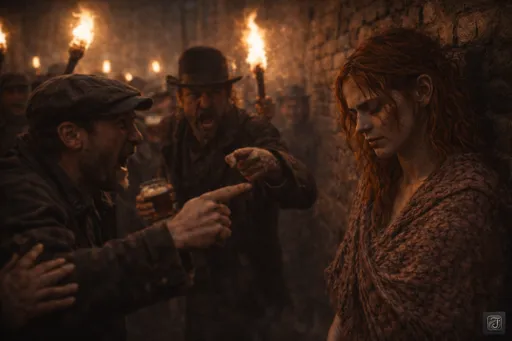
“I’d disappear too—if I could.”
“But I can’t.”
“Who would choose to be a prostitute?”
“We don’t have any other options.”
One of the men shoves her shoulder.
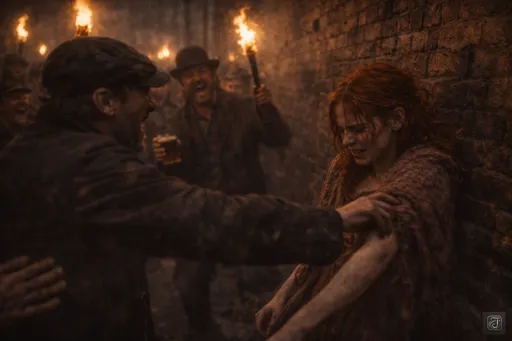
“You’re in the way.”
She stumbles.
Laughter breaks out.
Fear creates unity.
But unity tramples the weakest first.
An immigrant man hurries through the alley.
Three young men surround him.
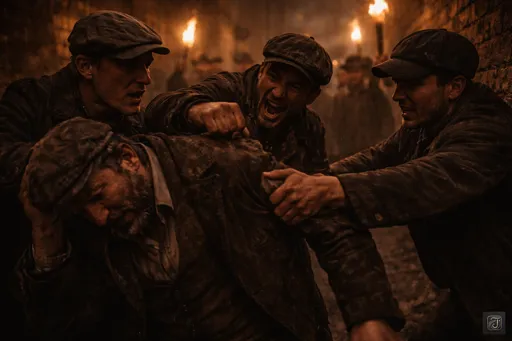
“Where do you think you’re going?”
“Home.”
“Sounds suspicious.”
“I’m not—”
A fist comes down.
No one stops it.
Because suspicious means guilty.
And those who are “hunting the monster” believe they are justice.
From the market, a woman shouts.
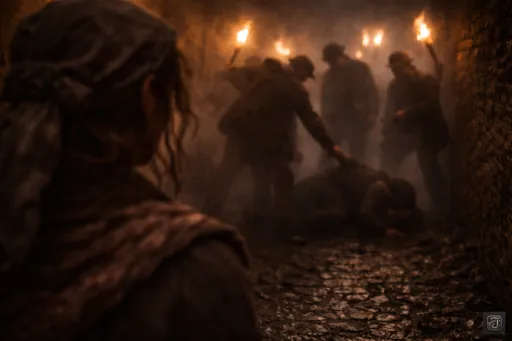
“Stop! He hasn’t done anything!”
But her voice dissolves into the crowd.
Fear becomes a license.
Even striking someone, even hurling insults—
If it’s for protection, it is forgiven.
The man watches from a distance.
This was not what his ideal was meant to become.
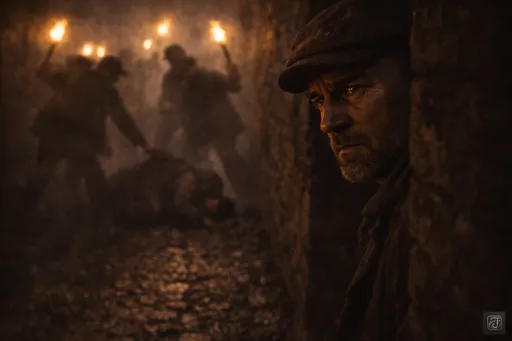
“Awakening.”
”Reform.”
”Debate.”
”But what is happening now?”
”The spread of hatred.”
”A chain of suspicion.”
”Pressure crushing the weak.”
”This isn’t why I dirtied my hands!”
Eliza shouts.
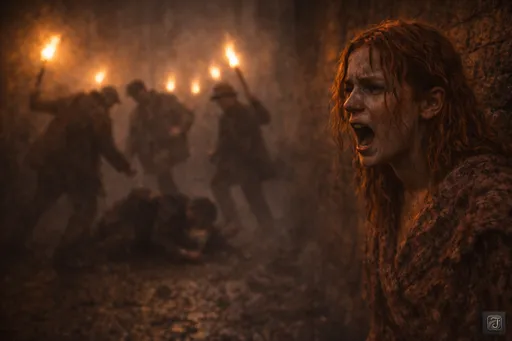
“Stop!”
Her voice is small.
It reaches no one.
She is the monster’s target—and the crowd’s outlet for anger.
Not protected.
Only used.
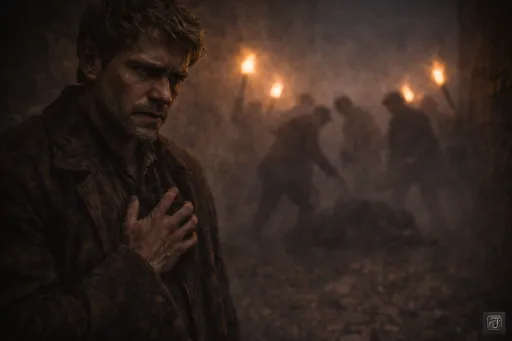
The man’s chest tightens.
This isn’t right.
Yet his ideal has not vanished.
He tells himself:
It’s still not enough.
The city is only confused.
Awakening comes after confusion.
If this shock is used in the right direction…
But he is not the one deciding the direction.
The newspapers are.
The crowd is.
The rumors are.
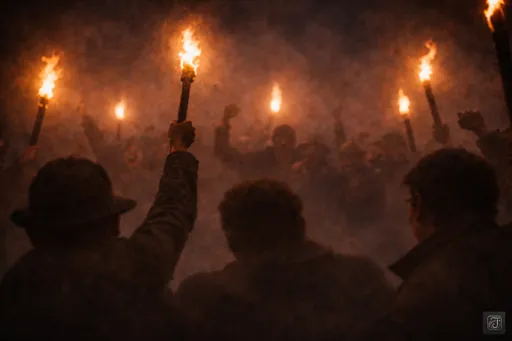
The night deepens.
Torchlight flickers.
Someone shouts.
“Hang Jack!”
Cheers rise.
Cheers—
and laughter mixed among them.
Fear is beginning to turn into excitement.
Eliza steps back into the shadow of the alley.
Her hand gripping the shawl is trembling.
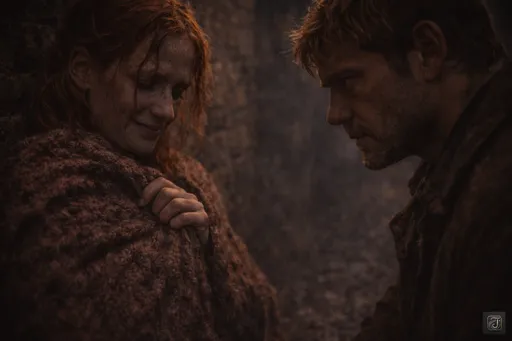
“Are you afraid?”
The man asks.
She lets out a small laugh.
“Of course I am.”
“But that’s all.”
The words pierce the man’s chest.
Afraid—only that.
Nothing has changed.
The city is shaking.
But the structure is not.
The police increase their patrols.
But the system does not change.
The newspapers increase their circulation.
But they do not write about the structure.
The crowd shouts.
But understanding does not deepen.
At some point, fear becomes fuel.
And someone pours that fuel onto the fire.
The monster is moving closer to the center of the city.
There is still another night to come.
And the crowd—
fearing it—
is still waiting.
Chapter 11: Acceleration
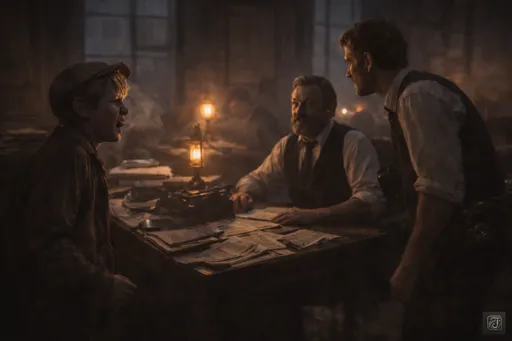
Before dawn.
The boy who bursts into the newsroom is out of breath.
“Another one!”
The editor raises his head.
“Where?”
“Mitre Square.”
The reporter stands.
His chest tightens.
He had a feeling.
The crowd had been waiting.
The newspapers had been waiting.
The city had—been waiting.
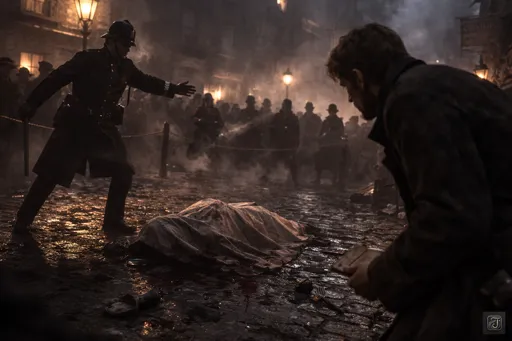
He arrives at the scene.
A policeman shouts.
“Stand back!”
A shape lies beneath the cloth.
Her name:
Catherine Eddowes.
The reporter narrows his eyes.
The throat.
The abdomen.
The method is clear.
A pattern.
No longer coincidence.
Whispers ripple behind him.
“Jack.”
The name needs no confirmation.
The city has already agreed.
The reporter grips his notebook.
His hands are not shaking.
Has he grown used to it—
Or has another feeling taken over?
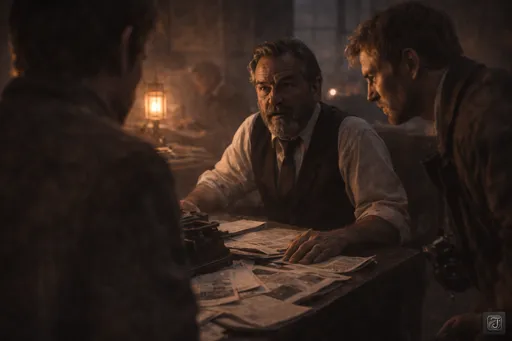
He returns to the newsroom.
The editor asks,
“Well?”
“It’s the same killer.”
The editor’s eyes gleam.
“Good.”
The reporter frowns.
“Good?”
“It’s a series. That makes a story.”
The word lands heavily in his chest.
A story.
People crave a pattern.
A pattern creates anticipation.
Anticipation sells papers.
The editor continues.
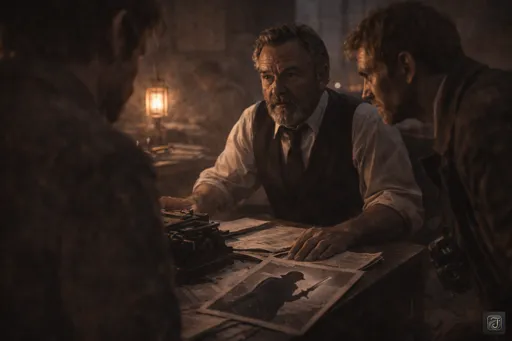
“Add an illustration.”
“An illustration?”
“A shadowy man. Let the blade catch the light.”
“Even if it isn’t fact, imagination sells.”
Silence.
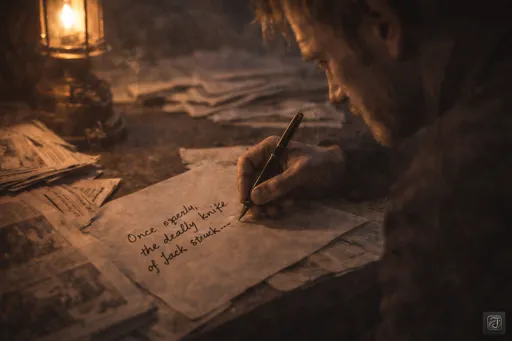
The reporter sits at his desk.
He grips his pen.
He begins to write.
“Once again, the deadly blade of Jack has struck—”
Deadly blade.
The words no longer hesitate.
He already knows what the readers want.
Fear sells.
If it sells, the paper grows stronger.
If the paper grows stronger, it can move the city.
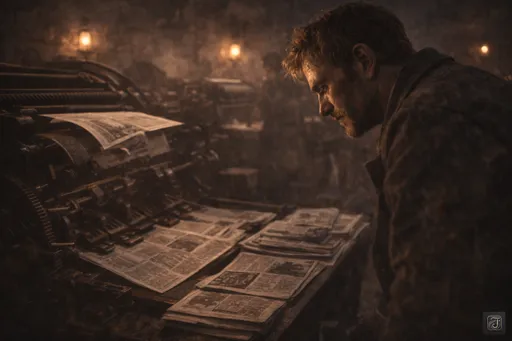
“This is a warning bell.”
He tells himself again.
But deep inside, another voice whispers.
How many times must the bell be rung?
The printing press begins to turn.
Clank. Clank.
The circulation rises.
A struggle breaks out in the market.
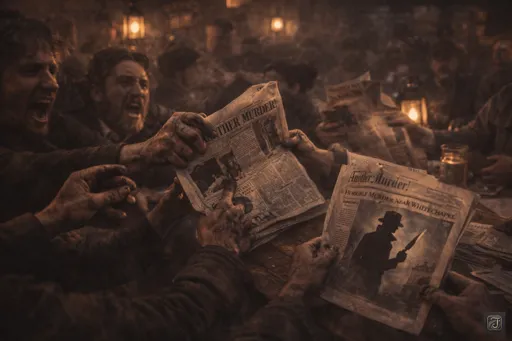
“Let me see!”
“Where next?”
The paper passes from hand to hand in the tavern.
Fingers turn black with ink.
The crowd’s eyes gleam.
Fear → circulation → influence → more fear.
The cycle of money and fear is complete.
The monster was born in blood.
But it grows through print.
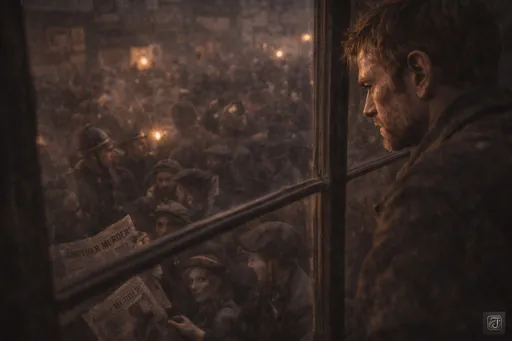
The reporter looks out the window.
The murmur of the market.
Suspicion toward immigrants.
The way people look at the prostitutes.
All of it is being amplified through the pages of the paper.
For the first time, he understands it clearly.
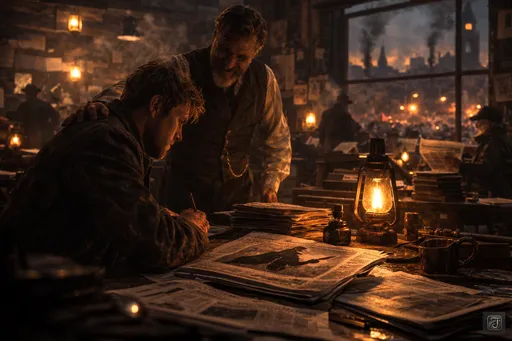
“I’m not exposing the monster.”
”I’m making it bigger.”
But he cannot stop.
Because if he stops, he loses.
Other papers will sensationalize it.
Readers will drift away.
Competition shows no mercy.
The editor pats his shoulder.
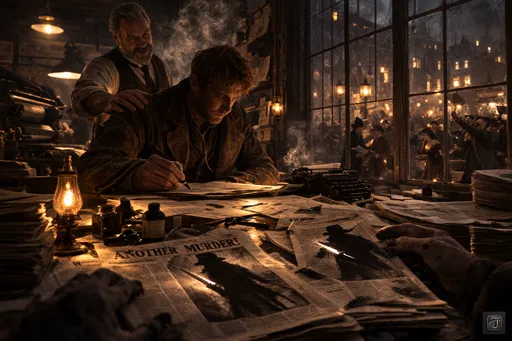
“Good work again.”
The words are both praise—and a chain.
The city is excited now.
Fear is beginning to smell like entertainment.
Someone laughs in a tavern.
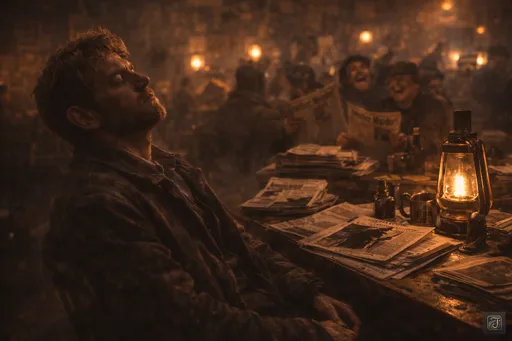
“Jack still hasn’t been caught.”
Laughter.
And mixed within it—expectation.
The reporter sits at his desk and closes his eyes.
Is this a warning bell… or an accelerator?
The answer is already on the page.
The gears have begun to turn.
And the more they turn, the stronger they become.
Another one will come.
No one says it aloud—
But the city is waiting for it.
Chapter 12: Collapse
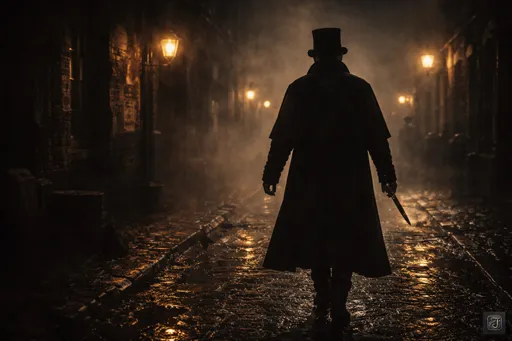
That night was too quiet.
The fog was thin.
There was no wind.
The man walked.
His own heartbeat sounded unusually loud.
The ideal was still alive inside him.
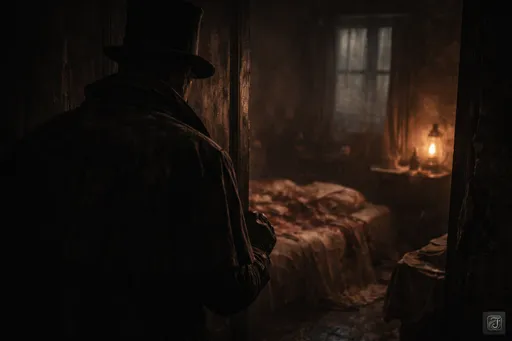
“The city is dull.”
”It needs a shock.”
”If the shocks continue, it won’t be able to ignore them.”
He believed that.
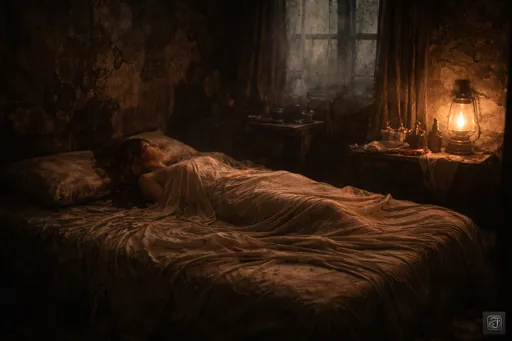
But the sight inside the room went beyond his own reasoning.
The woman’s name was
Mary Jane Kelly.
The room was small.
The walls were thin.
The window was clouded.
And the scene spread before him was more brutal than any before.
He stood there, frozen.
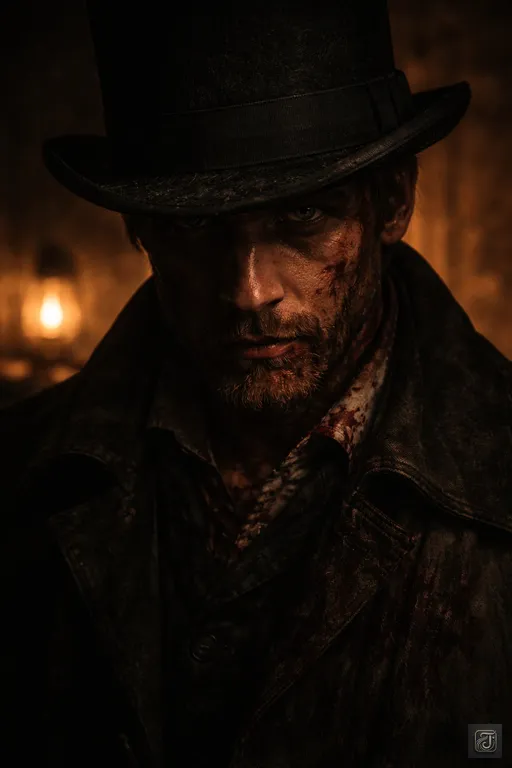
“Was this really necessary?”
”Did my ideal demand this much?”
The next morning—
Crowds gather.
Newspapers fly from hand to hand.
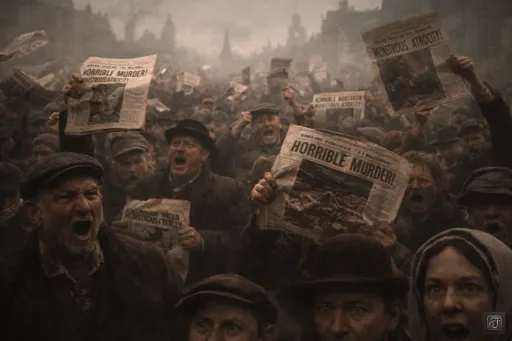
“This is the worst!”
“A monster!”
Their voices tremble.
But deep in their eyes there is another light—
excitement.
“Did you see it?”
“Did you read it?”
“What’s next?”
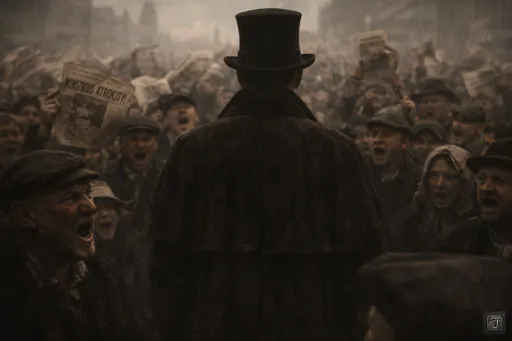
Next.
That single word pierces the man’s ears.
Next.
Everyone speaks as if it’s already certain that it isn’t over.
He stands motionless among the crowd.
And then he sees Eliza.
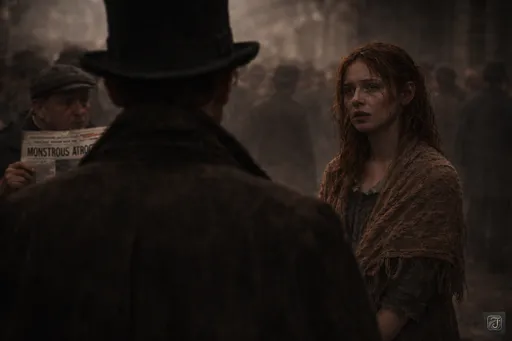
She stands a short distance away, beside a customer holding a newspaper.
Her face is pale.
But she is alive.
Not protected.
Nothing has changed.
For the first time, he sees his own actions from the outside.
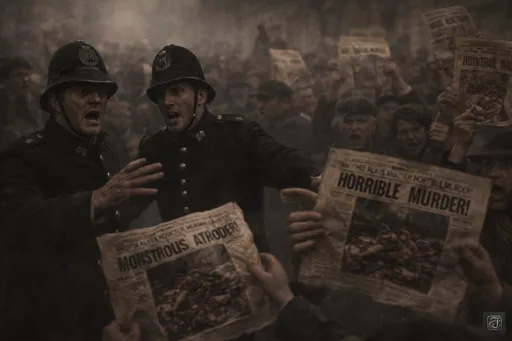
The police are scrambling.
But the system does not change.
The newspapers shout from the front page.
But they do not write about the structure.
They write what excites the readers.
The crowd trembles.
But they do not understand.
Fear has spread.
But no awakening has come.
Inside him, the ideal begins to waver.
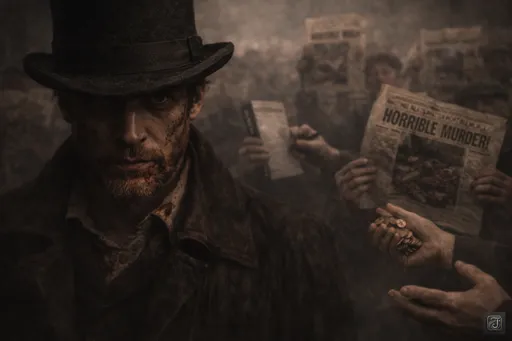
“This was meant to be an accusation.”
”But what is happening now?”
The monster is growing.
Beyond his intentions.
The monster now stands at the center of the city.
And the reporters are turning it into money.
The true face of fear is not the blade.
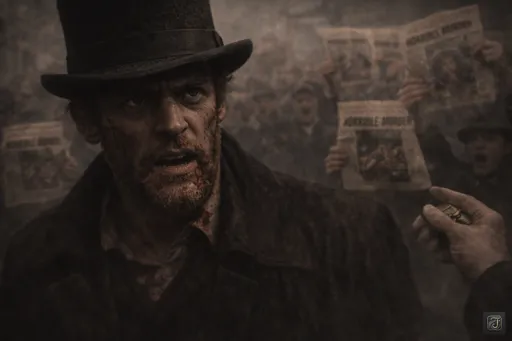
”The blade is only a tool.”
”The true face of fear is the gaze that demands it.”
”The mouths that talk about it.”
”The print that inflames it.”
”The hands that buy it.”
He trembles.
“I haven’t destroyed the structure.”
”I’ve fed it.”
”The ideal was never the blade.”
”The blade devoured the ideal.”
Eliza suddenly looks at him.
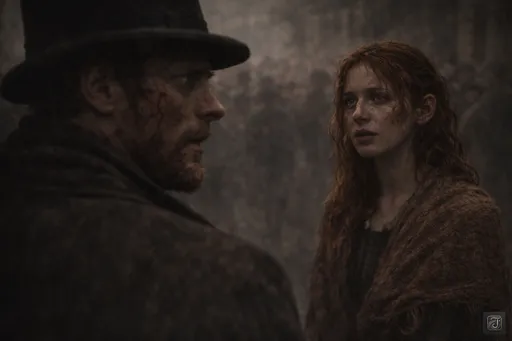
Their eyes meet.
She does not know who he is.
Just another passerby.
But her eyes ask a question.
”Has anything changed?”
There is no answer.
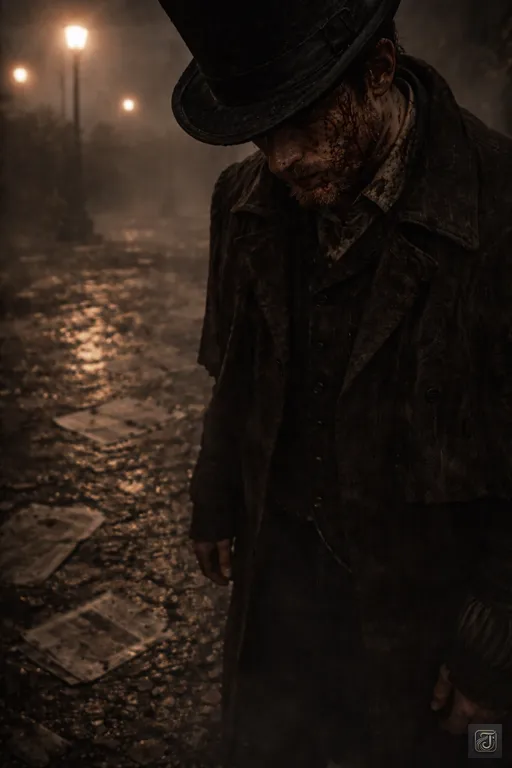
“Why doesn’t anything change?”
”Why doesn’t anyone see?”
Then he understands it himself.
“Violence does not become a question.”
”Violence becomes a stimulus.”
”Stimulus creates desire.”
”Desire strengthens the cycle.”
His ideal has been swallowed by the city’s appetite.
The fog drifts.
The gaslight flickers.
For the first time, he looks down at his own feet.
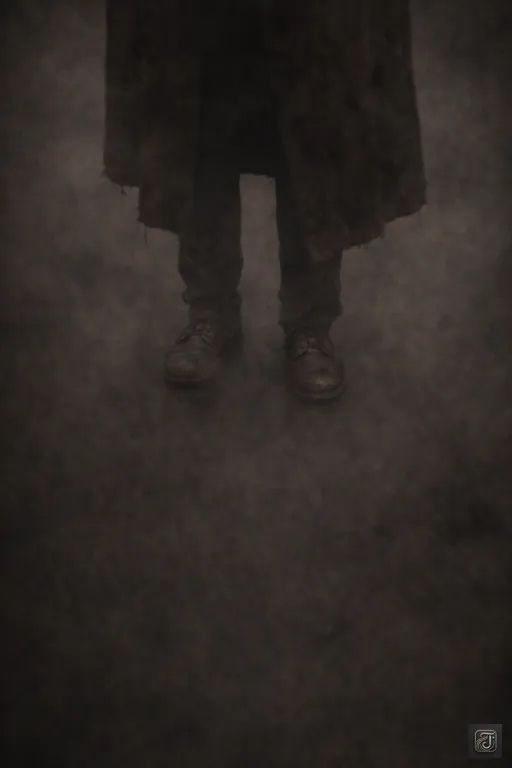
It isn’t blood.
It’s emptiness.
The shock was enough.
But awakening never came.
The monster is complete.
Yet reform never begins.
And he understands.
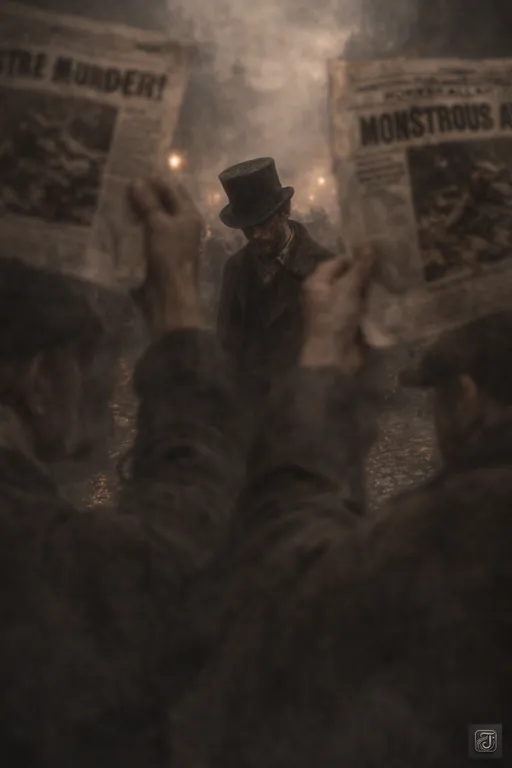
“The city is using the monster.”
“With a monster,
• people can believe they are normal
• the system can remain innocent
• the problem can be pushed onto one ‘abnormal individual’
The ideal collapses.”
Quietly.
Without a sound.
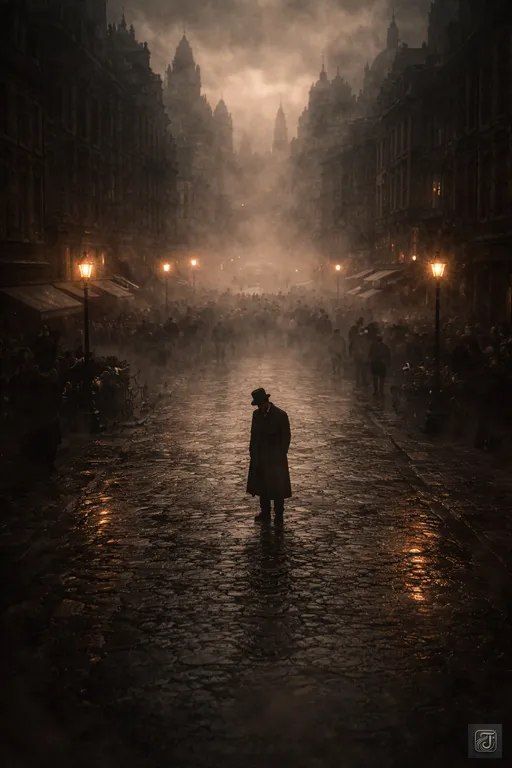
“The monster was never me.”
”The monster was the city itself—using fear.”
He steps back from the crowd.
And for the first time, he thinks.
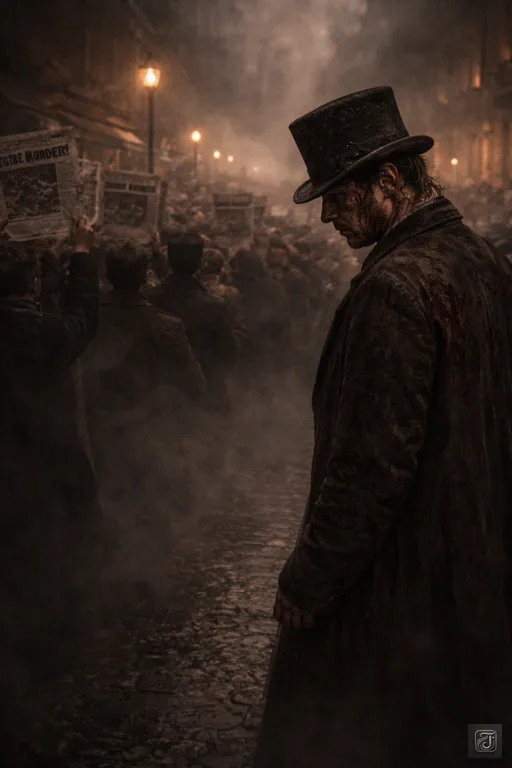
“Should I stop now?”
“But if I do… what happens to everything I’ve done?
What about the women who have already been sacrificed?”
His ideal is dying.
The city is alive.
And fear is still selling.
Chapter 13: Becoming Used to It
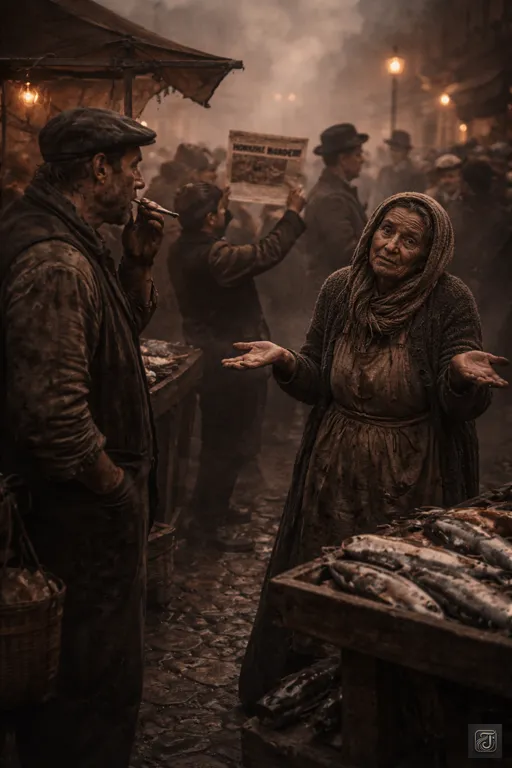
At first, people trembled.
Then they shouted.
Now—
they are waiting for the next one.
A market woman says,
“Another one?”
A laborer replies,
“Still not caught?”
There is anger.
But no heat.
When fear continues long enough, it changes shape.
A fresh blade is sharp.
But if you see it again and again, it dulls.
The tavern.
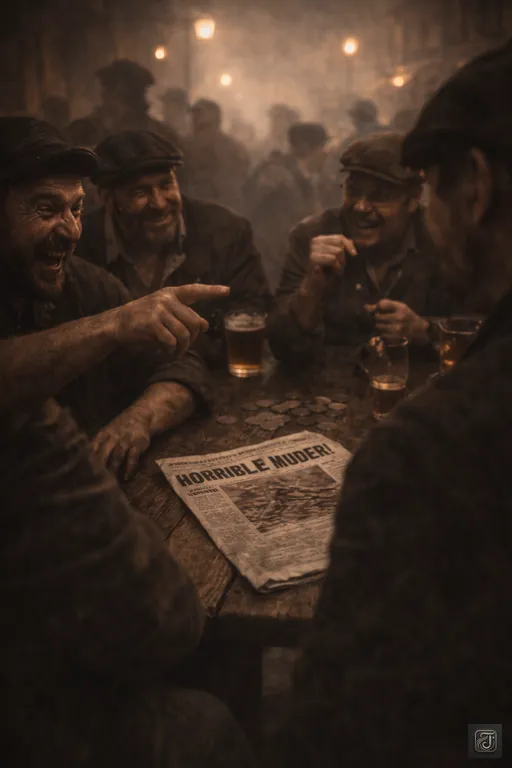
“Where do you think the next one will be?”
Someone asks.
The voice no longer trembles.
They guess locations like a wager.
Laughter mixes in.
They are afraid—
But they are also bored.
The monster is beginning to turn into entertainment.
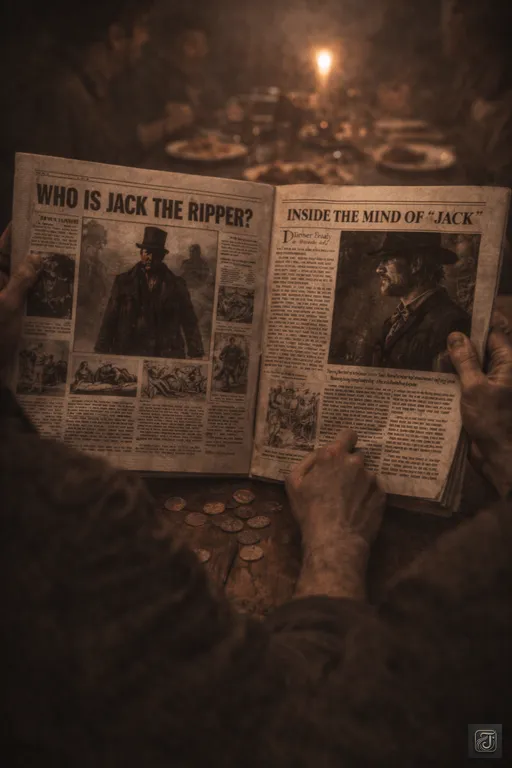
The newspaper circulates.
A special feature.
A list of past murders.
Illustrations.
Analysis.
“The Mind of Jack.”
People turn the pages—
afraid as they read.
But then the paper closes.
“Time for dinner.”
Life goes on.
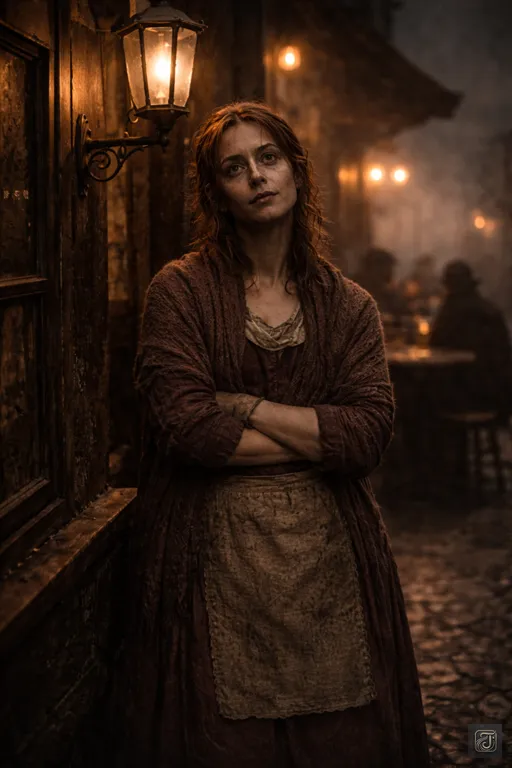
Eliza is standing.
The night is cold.
The customers have returned.
The man says.
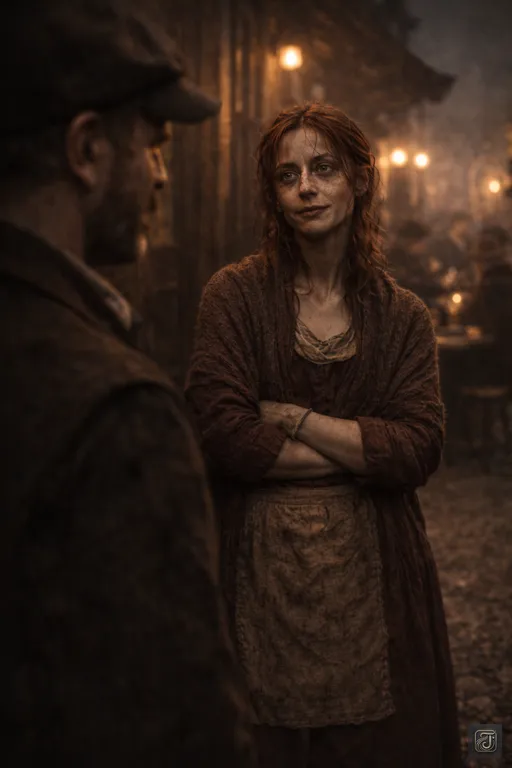
“Still here, huh,”
“I am.”
“Aren’t you afraid?”
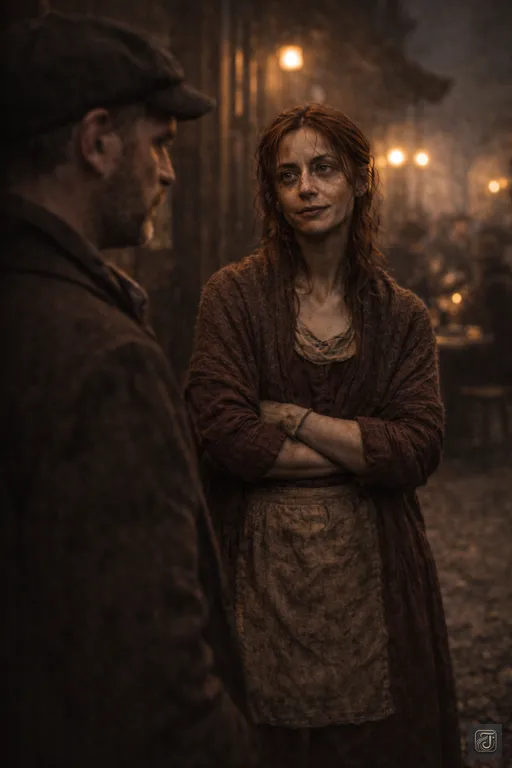
“I am.”
“But it’s only fear.”
“I’m afraid, but unless I die, the night will always come.”
“Fear won’t save me.”
“It won’t protect me.”
“It just comes back every day.”
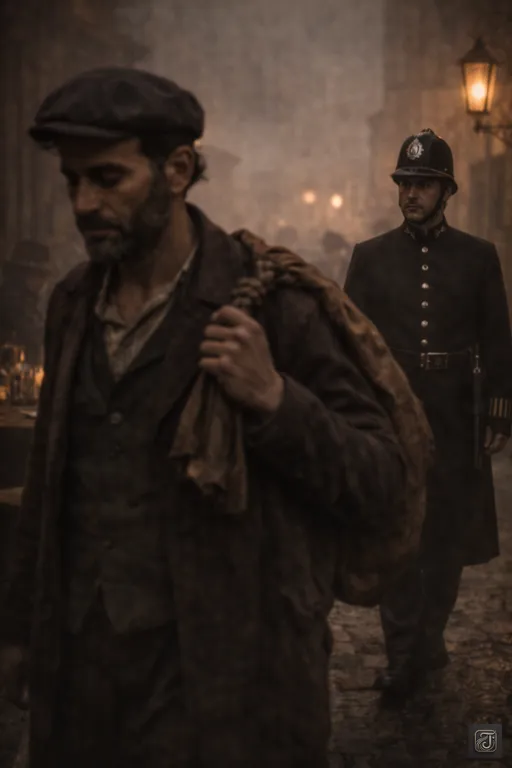
An immigrant man passes by.
Fewer eyes follow him than before.
Because the monster is now “confirmed.”
Once there is a name, suspicion decreases.
The city is beginning to regain its balance.
Fear becomes manageable.
The police continue their patrols.
But their steps are no longer tense.
They have grown used to it.
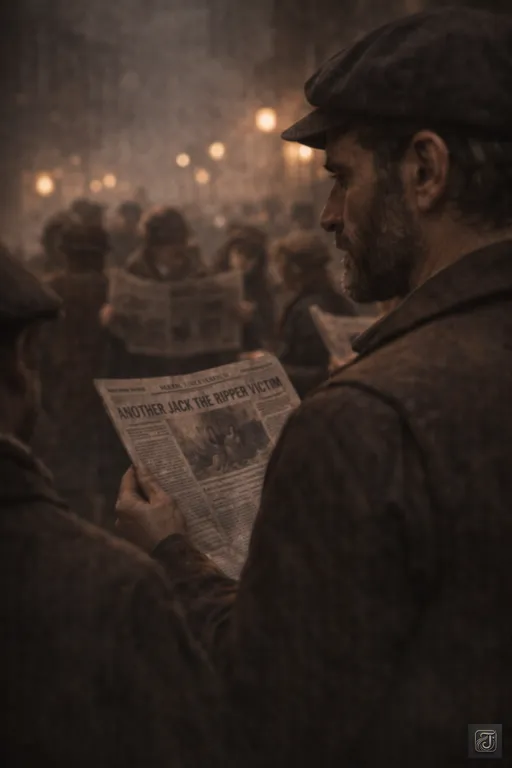
The newspapers keep selling.
But the headlines gradually grow smaller.
The shock weakens.
Stronger shocks become necessary.
Among the crowd, the man watches.
He no longer carries a blade.
He only observes.
People have grown used to it.
The monster has become part of everyday life.
“That case.”
People talk about it.
But it no longer stops their lives.
Fear is consumed.
And once it is consumed, people begin to crave the next one.
He understands now.
The city adapts to stimulus.
Shock does not last.
An ideal cannot stand on shock alone.
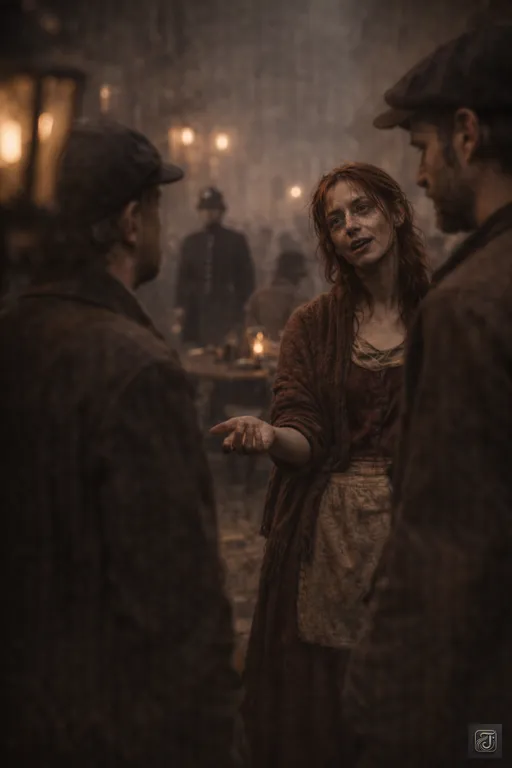
Eliza is speaking with a customer in the distance.
The sound of bargaining over a price.
Her voice is the same as it was on the very first night.
Nothing has changed.
Not the police system.
Not the structure of the newspapers.
Not the vulnerability of women.
Not the darkness of the city.
The monster has grown enormous.
But the structure has not moved an inch.
Inside the man, the last flame is beginning to fade.
And he understands.
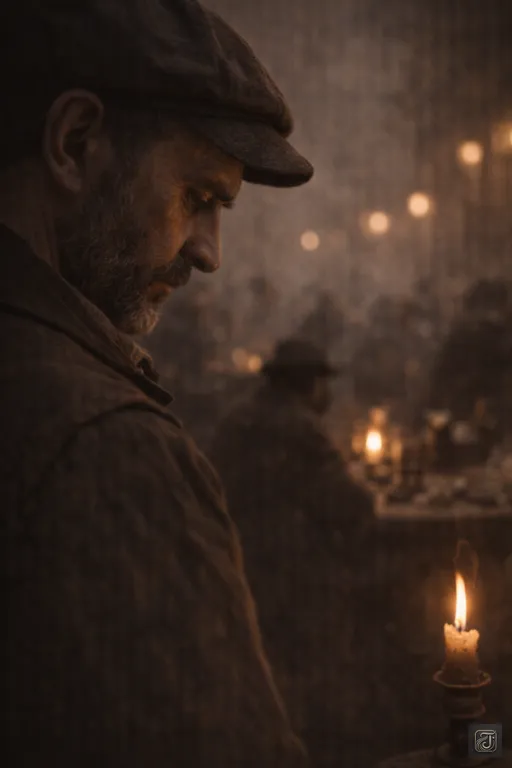
“Fear does not create revolution.”
“Fear creates a cycle.”
“The cycle creates profit.”
“Profit strengthens the structure.”
“My ideal was drowned by that structure.”
The crowd laughs.
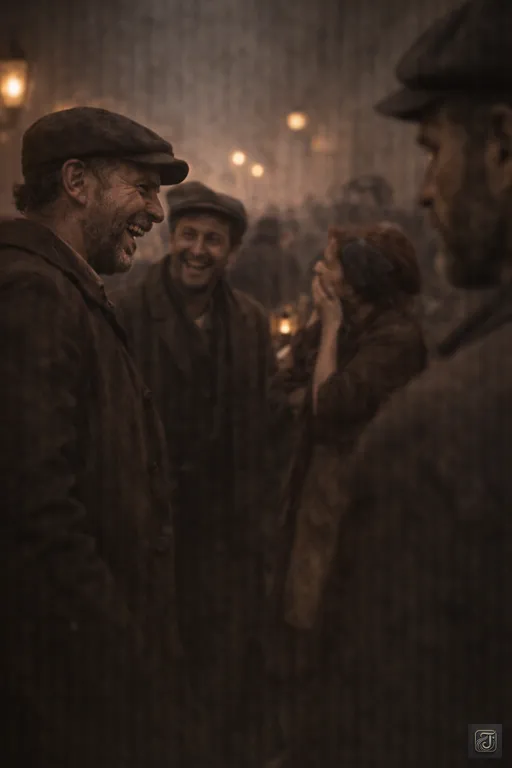
“It was quite a commotion back then.”
They speak in the past tense—
even though it isn’t over.
The monster is still alive.
But the story has already been consumed.
The man closes his eyes.
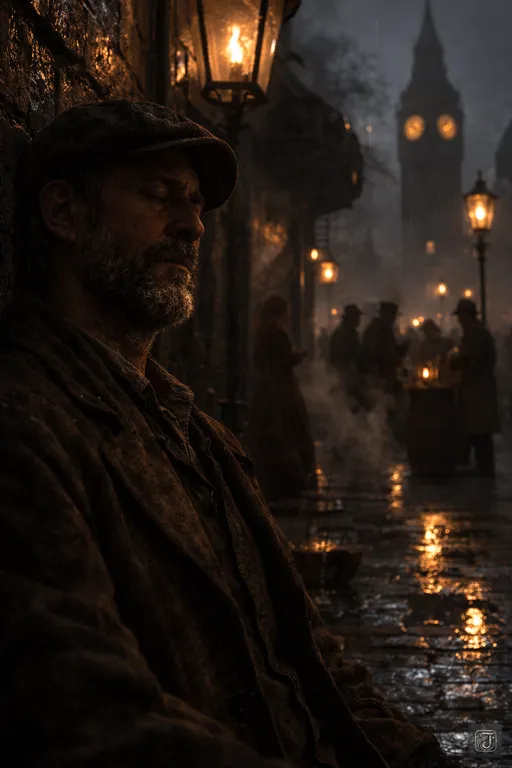
“The shock was enough.”
“But no awakening came.”
“What will come next?”
Chapter 14: Silence
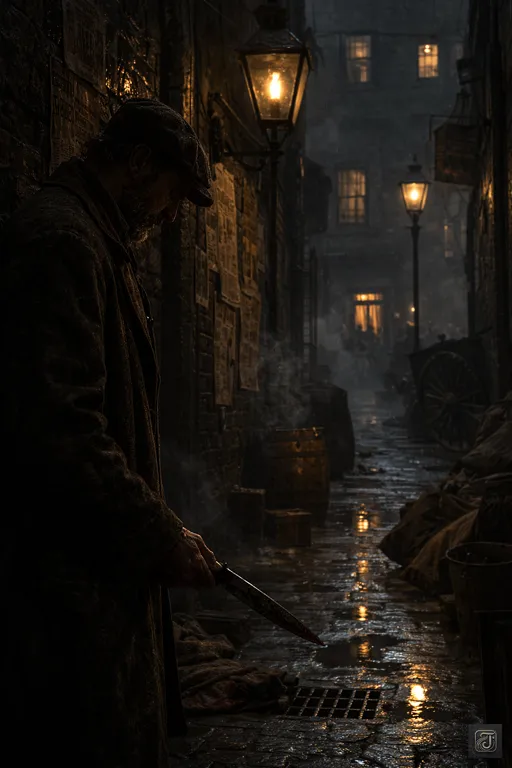
The night was quiet.
So quiet
it was as if nothing had ever happened.
The fog was thin.
The gas lamps were steady.
The alley carried its usual smell.
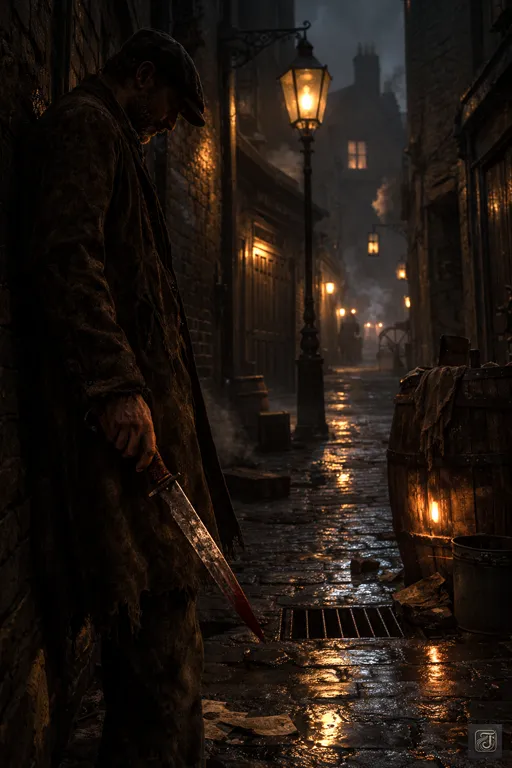
The man stands there.
A knife in his hand.
But it no longer means anything.
Once, it was different.
It was a tool for an ideal.
A shock meant to awaken people.
A blade meant to rouse a sleeping city.
Now it is only metal.
Cold.
Metal that has lost its meaning.
In the distance, Eliza’s voice can be heard.
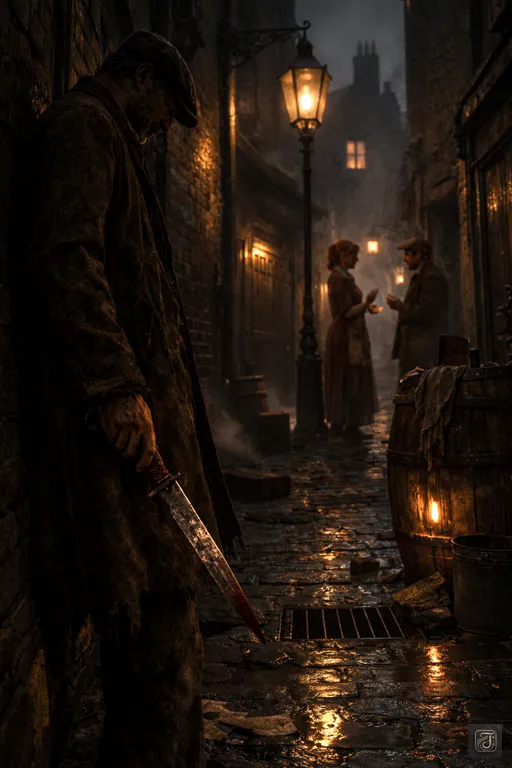
“Two shillings.”
The sound of bargaining.
A sigh.
Footsteps.
Ordinary life.
The night is so normal that it is hard to believe a monster once roamed these streets.
The man understands.
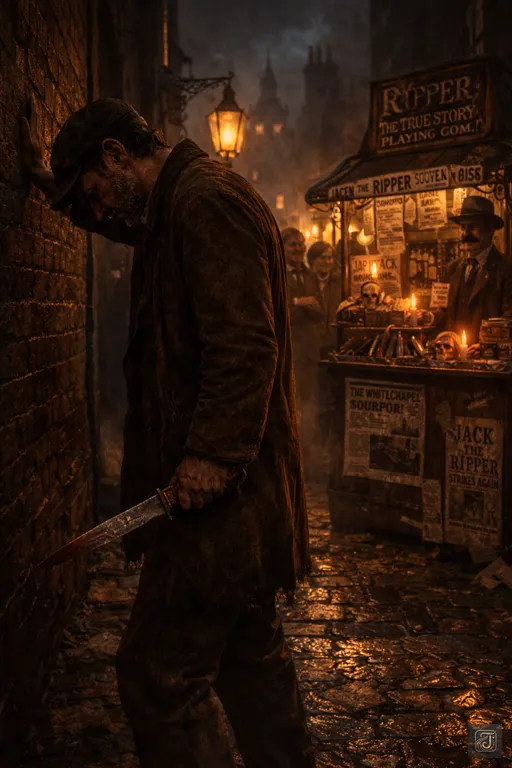
“The city adapted.”
“Fear was consumed.”
“The monster became a story.”
“But she is still standing.”
“Still unprotected. Nothing changed.”
He places his hand against the wall.
His breathing is rough.
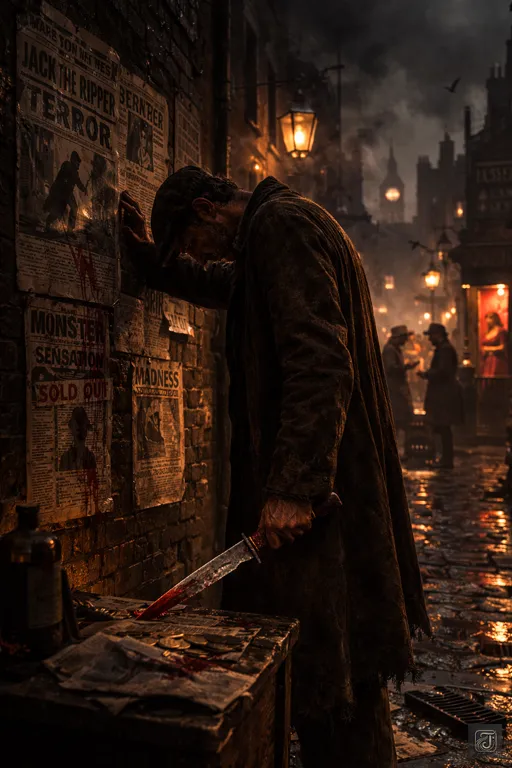
“What was it that I actually did?”
“I wanted awakening.”
“I wanted to expose the weakness of the system.”
“I wanted to stop the newspapers from stirring things up.”
“I wanted to illuminate the darkness of the city.”
“I wanted people to face the vulnerability of women.”
“But what actually happened?”
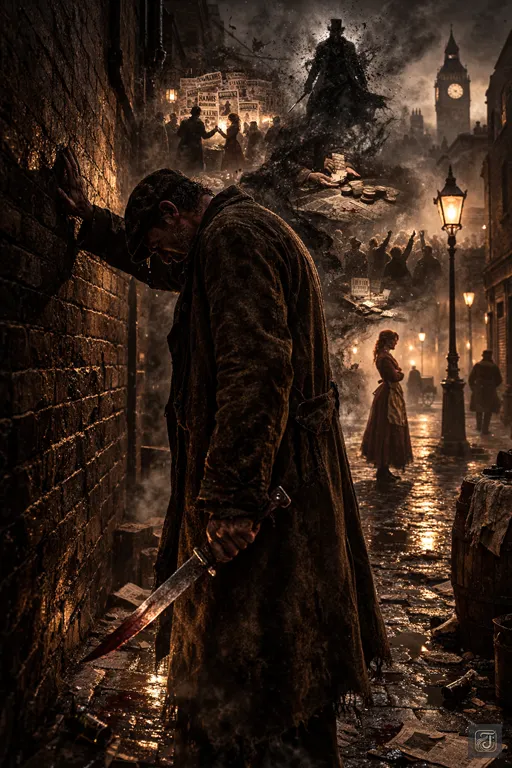
The birth of a monster.
Branding.
Frenzy.
Consumption.
Familiarity.
He dismantles his own logic piece by piece.
“Violence does not become a question.”
“Violence becomes a stimulus.”
“Stimulus creates desire.”
“Desire strengthens the cycle.”
He stares at the blade.
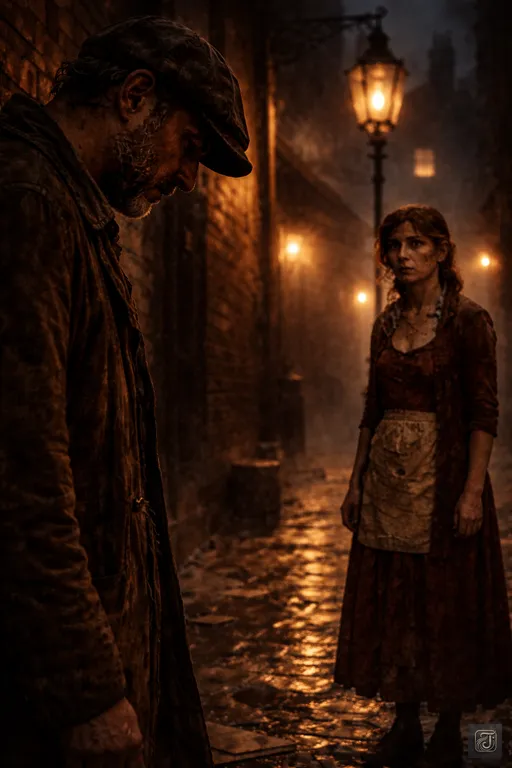
“This blade didn’t change the structure.”
“It changed emotions.”
“Fear and excitement.”
“Nothing more.”
Eliza suddenly looks at him.
Their eyes meet.
Just for a moment.
She does not know who he is.
Just a man.
Just a shadow.
But her eyes reflect everything.
Nothing has changed.
That truth.
Something inside his chest quietly collapses.
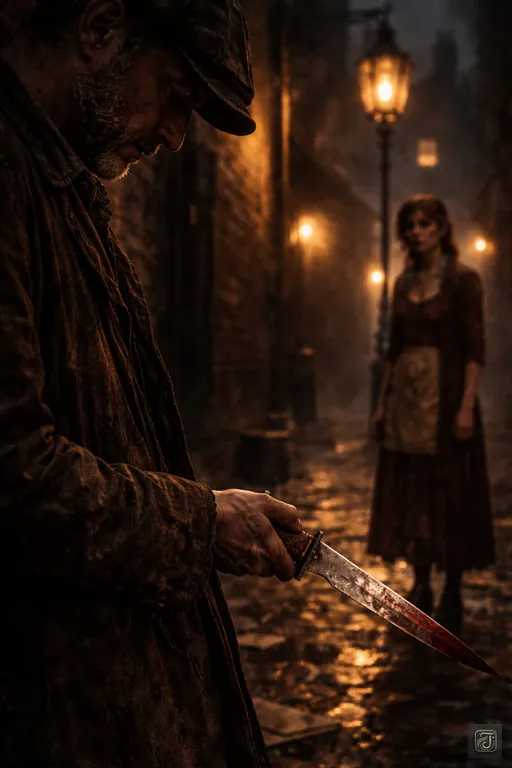
“The ideal ends.”
“No revolution comes.”
“Parliament does not move.”
“The newspapers keep turning.”
“The crowd waits for the next one.”
He slowly sinks to his knees.
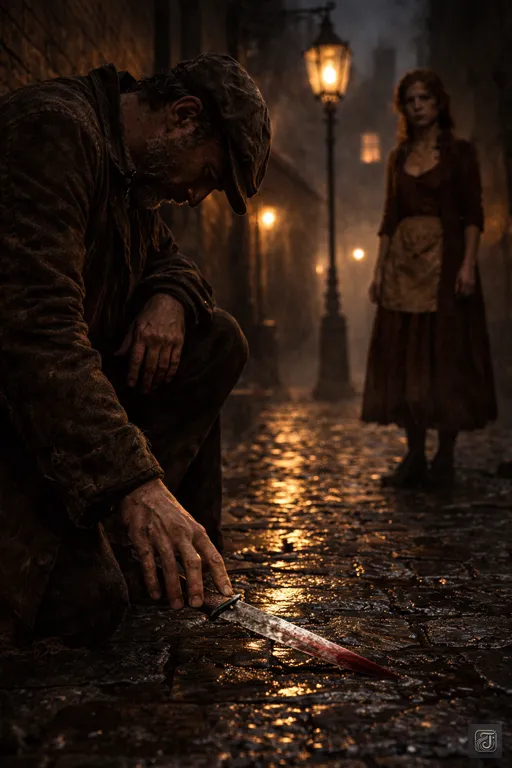
“This is no longer needed.”
He places the blade on the cobblestones.
The sound echoes—
dry, brief.
That is all.
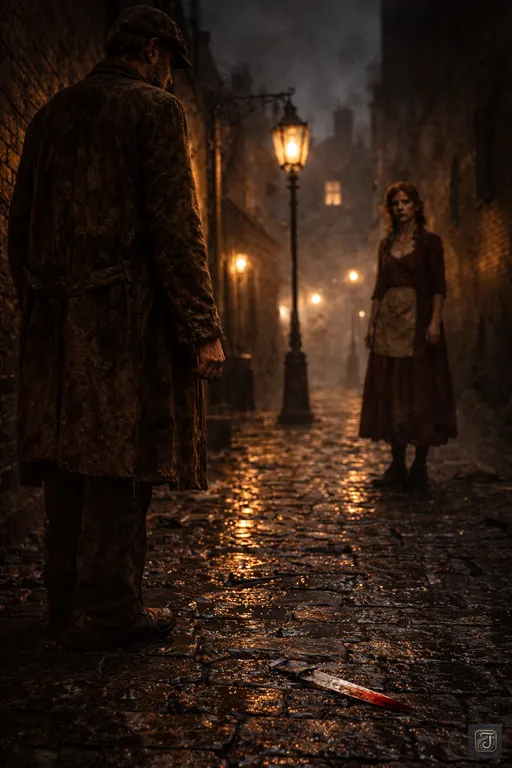
The world does not stop.
No one turns around.
The monster will disappear.
But the structure will remain.
He stands.
He will not confess.
He will make no declaration.
If he speaks, the monster will live longer.
Silence is the final choice.
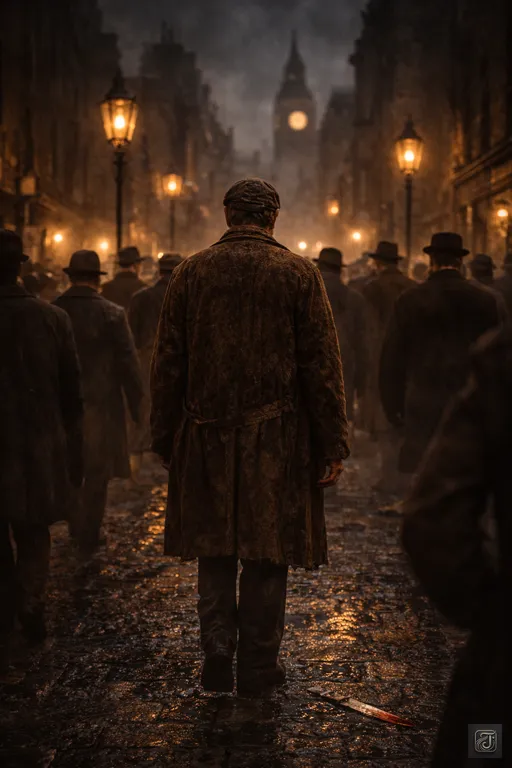
He walks into the crowd.
With an ordinary face.
With an ordinary stride.
The ideal is dead.
But the city, the poverty, the systems, the prejudice—are still alive.
The night continues.
Eliza’s voice can be heard again.
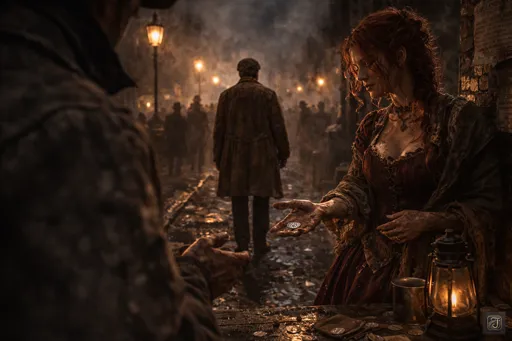
“Two shillings.”
Her voice is the same as it was on the first night.
Even without the monster, the night does not change.
He does not look back.
Only silence remains.
Chapter 15: Continuation

The morning light coming through the newsroom window is cold.
The smell of ink.
The rustle of paper.
The metallic sound of type.
Just as always.
The young reporter sits at his desk.
In front of him lies a report about another crime.
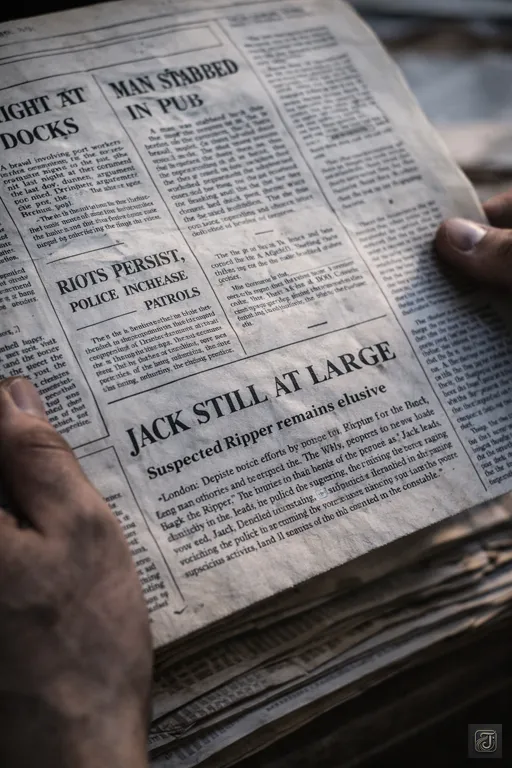
A fight at the docks.
A stabbing in a tavern.
Small violences.
Jack’s name is not on the front page today.
It’s lower down.
Smaller.
“Still at large.”
The editor says,
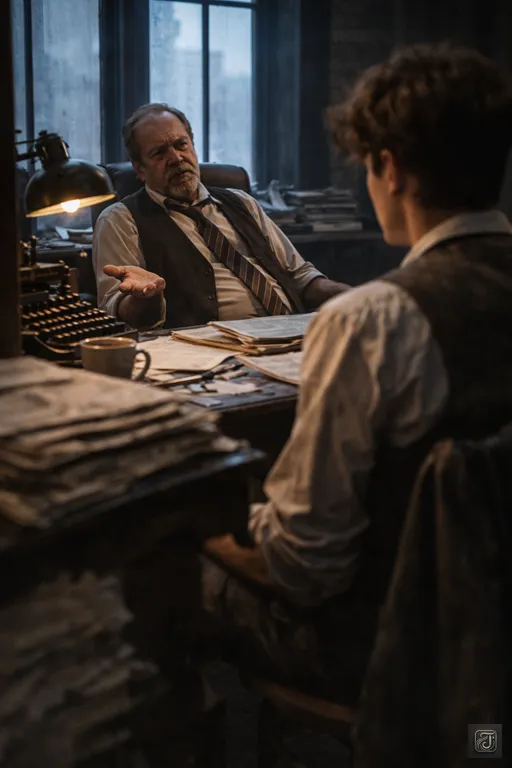
“We’re moving on to the next story.”
“He hasn’t been caught yet.”
“So what.”
“Readers get bored quickly.”
Bored.
The word sinks quietly into his chest.
Fear is consumed too.
Strong shocks sell.
But to keep selling, you need a new shock.
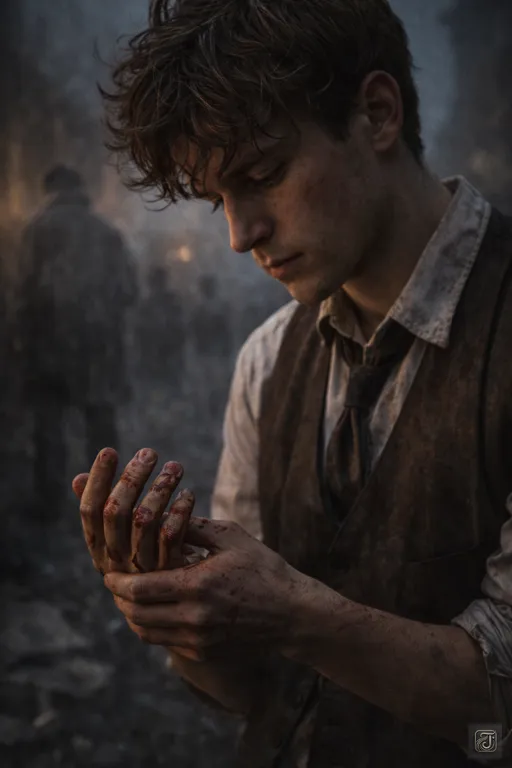
The reporter remembers.
The first crime scene.
The trembling.
The nausea.
And the excitement.
But now he no longer trembles.
Has he grown used to it—
or has something been worn away?
The editor slaps the paper on the desk.
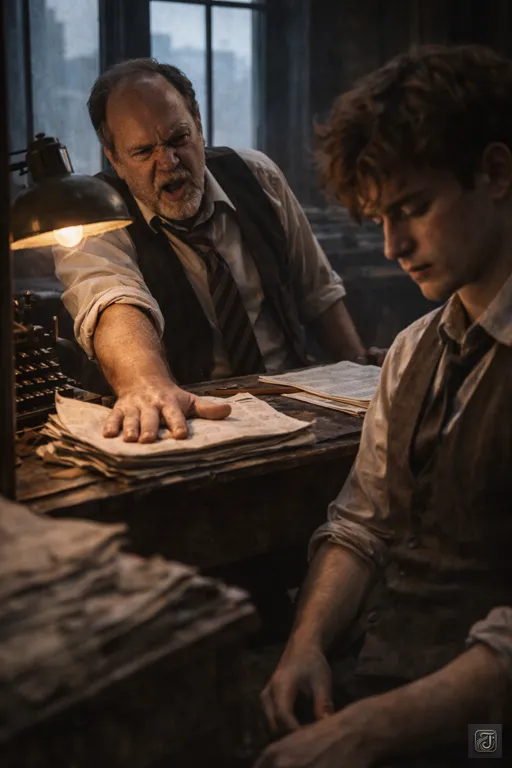
“Write it stronger.”
“What?”
“The emotion. The anger. The fear.”
For a moment, the reporter closes his eyes.
If you stir fear, it sells.
If it sells, the paper grows stronger.
If the paper grows stronger, its influence grows.
And if its influence grows—
But what actually changed?
The police system hasn’t truly changed.
Neither has the poverty in the East End.
Nor the women who stand in the night.
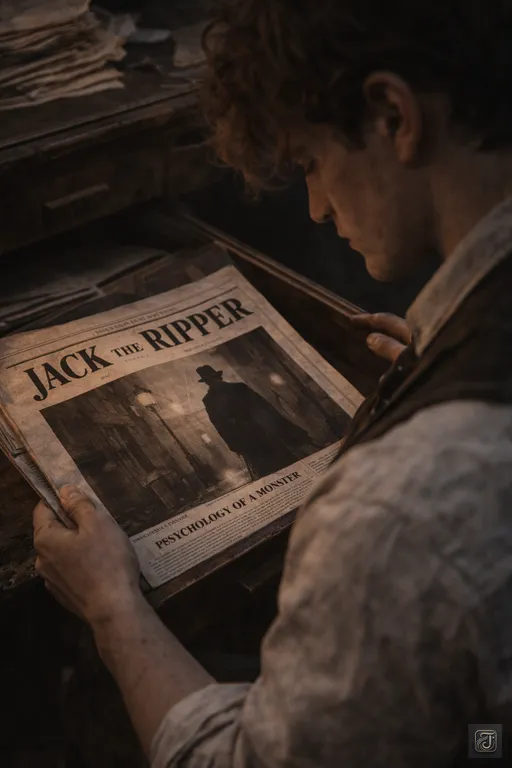
He opens the drawer.
Inside is that special edition.
“Jack the Ripper.”
Large type. A shadowy illustration. The psychology of the monster.
He stares at it.
I thought I was exposing something.
But the city loved the monster.
As long as there is a monster, people can believe they are normal.
The structure remains innocent.
The problem can be pushed onto one man.
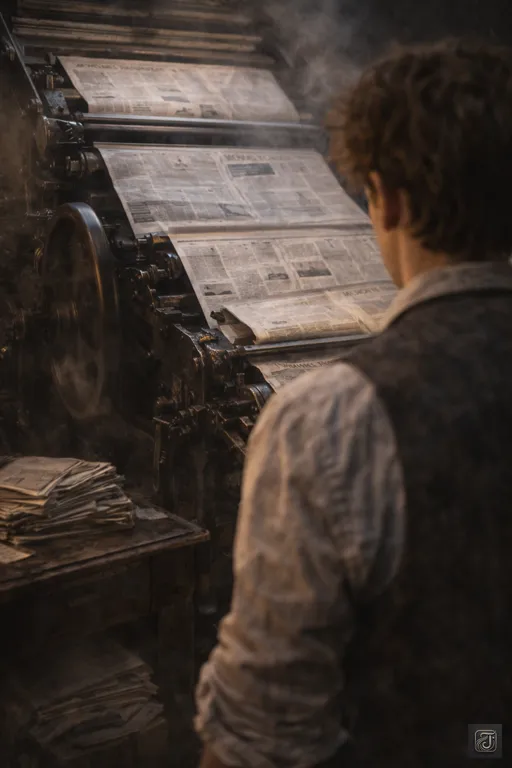
He puts the paper back.
The printing press begins to turn.
Clank. Clank.
It does not stop.
Even if the monster disappears, the press keeps running.
Another crime. Another fear. Another headline.
The newsboy shouts.
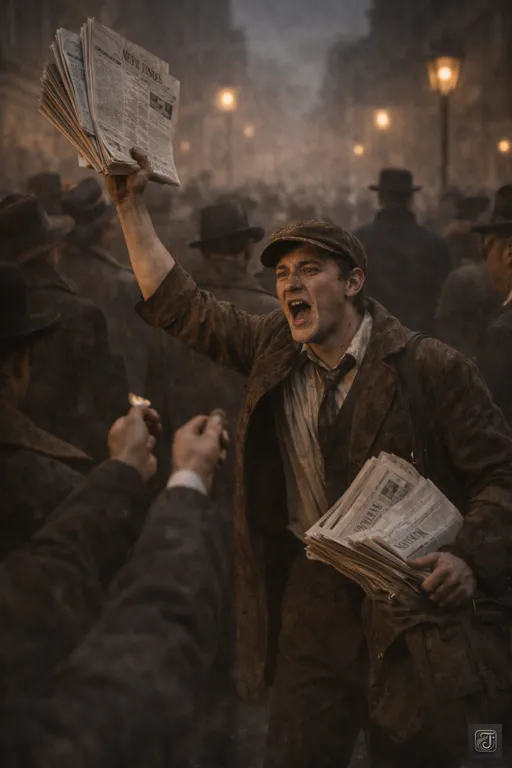
“Latest news!”
People gather. Papers disappear. Coins fall. The cycle continues.
The reporter looks out the window.
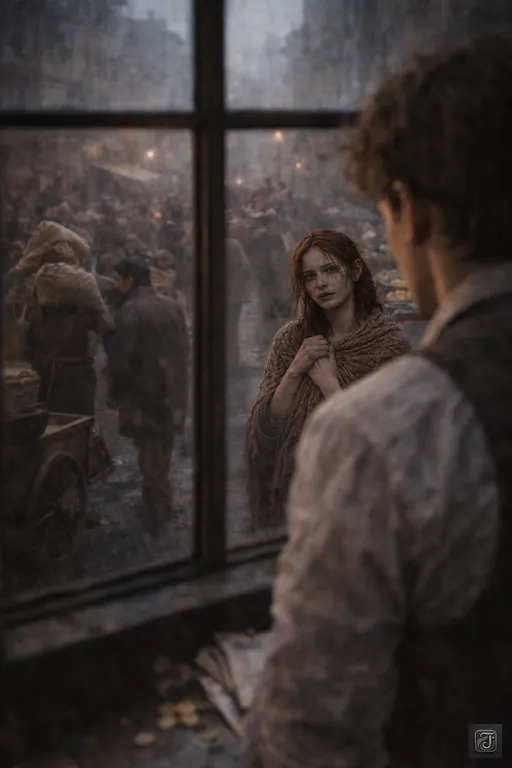
The market is moving. Workers walk. Immigrants carry their loads.
Eliza is standing there.
The monster is gone.
But she is still standing.
For the first time, he understands.
“The monster is the exception.”
“The structure is the everyday.”
“And the everyday is stronger than print.”
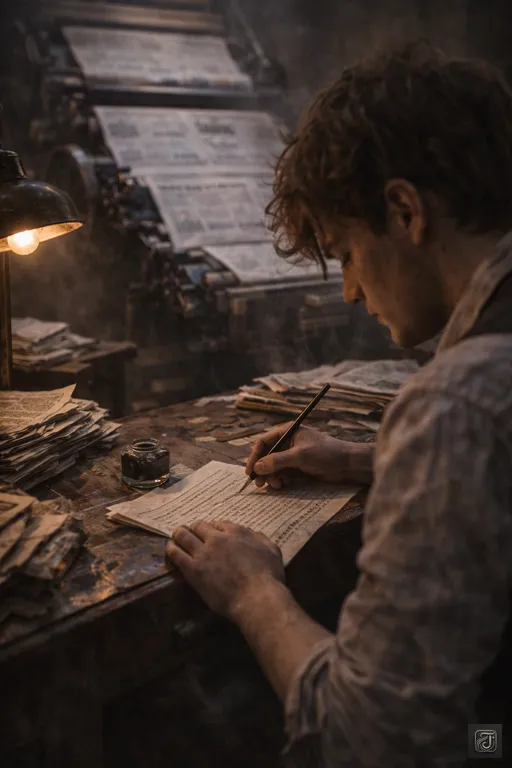
He begins writing a new article.
His hand moves smoothly.
There is no hesitation now.
He does not stop.
He cannot stop.
The printing press turns.
The city reads.
Fear changes shape.
The structure continues.
Epilogue: What Remains
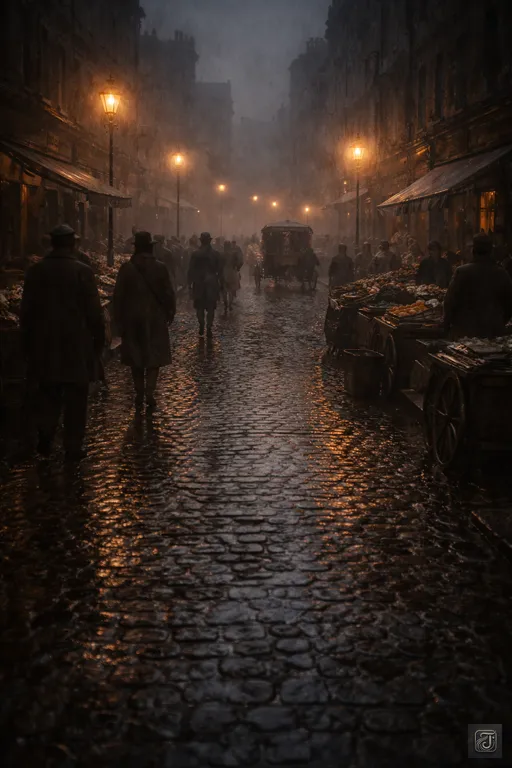
Several years have passed.
The fog still hangs low, the cobblestones remain wet, and the nights are cold.
But the air is different.
The monster’s name is no longer shouted.
In a tavern, a young man laughs.
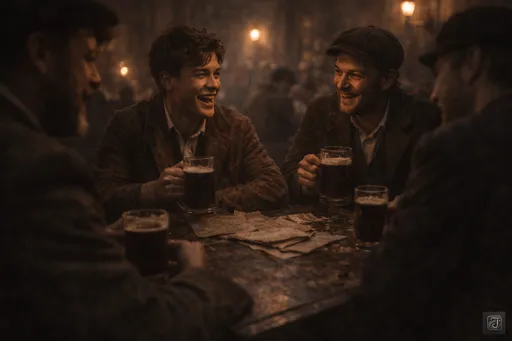
“Did you know? A long time ago there was this guy—Jack.”
“Yeah, that serial killer.”
“They say it was terrifying.”
“They say? I was just a kid back then.”
Laughter breaks out.
It was frightening once.
But now it’s just a story.
At the market, a woman arranging fish says,
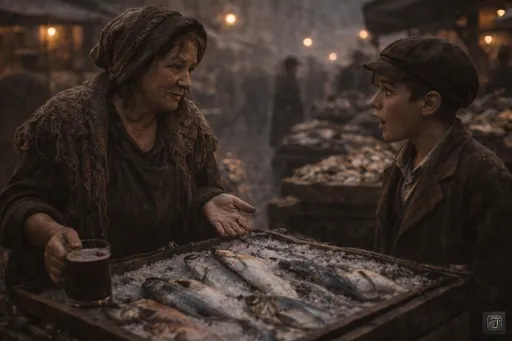
“It was quite a commotion.”
A young vendor widens his eyes.
“Was he really real?”
“He was. But that’s all in the past now.”
The past.
The monster becomes the past.
And the past is safe.
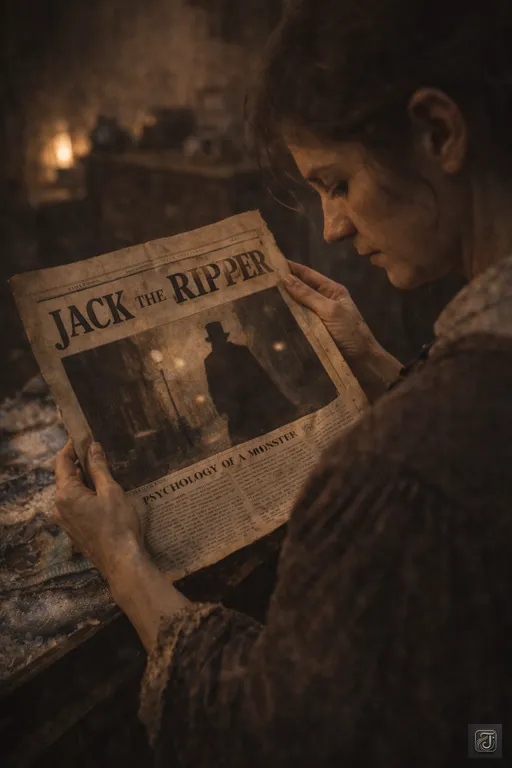
A housewife pulls out an old newspaper clipping.
Yellowed paper.
A bold headline.
“Jack the Ripper.”
She reads it.
What did she feel back then?
Fear.
Yet her hand never stopped turning the pages.
Waiting for the next one.
Remembering that, she lowers her eyes slightly.
Fear is sweet from a distance.
Stimulus is strongest when you are in a safe place.
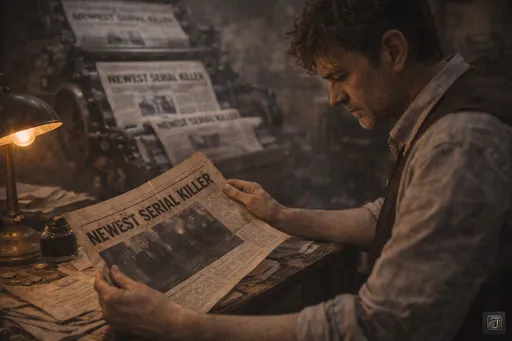
The newspaper office.
The young reporter is no longer young.
The desk is the same.
The printing press is the same.
The crimes now have different names.
He quietly opens a drawer.
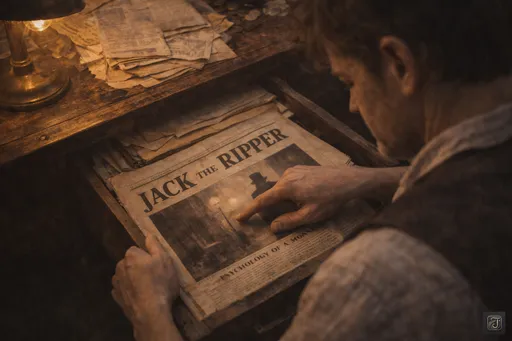
That special edition.
The monster has no face.
But the shadow remains.
He traces the printed letters with his finger.
“The monster disappeared.
But circulation grew.
The newspapers became stronger.
The structure—if anything—became more refined.”
Quietly, he puts the paper back.
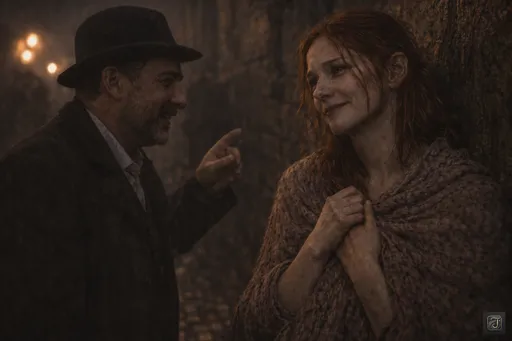
Night.
Eliza is still standing.
A little older now.
The light in her eyes has softened.
But the night is the same.
“Still scared?”
A customer jokes.
She answers,
“I am.”
“But I’m still alive.”
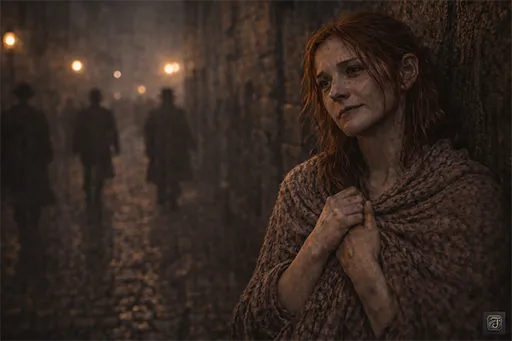
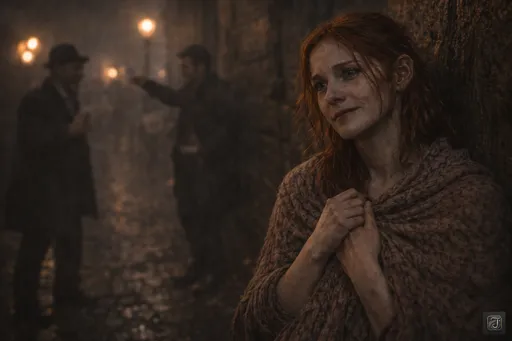
The monster is gone.
But her reality has not changed.
She is still unprotected.
The system has not truly changed.
The city has grown.
But the shadows have grown with it.
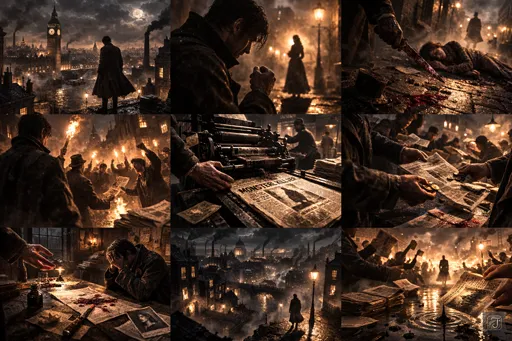
In the distance, someone says,
“It was frightening back then.”
“But it was interesting.”
The words ripple quietly through the air.
Fear becomes entertainment.
The monster becomes a myth.
But the truth remains.
Fear does not come from outside.
It does not walk toward us from beyond the fog.
Fear lives within.
The urge to make someone evil in order to feel safe.
Eyes that seek stimulation.
Voices that inflame it.
Hands that buy it.
An ideal cannot be saved by violence.
Violence does not become a question.
It becomes a stimulus.
Stimulus creates desire.
And desire strengthens the cycle.
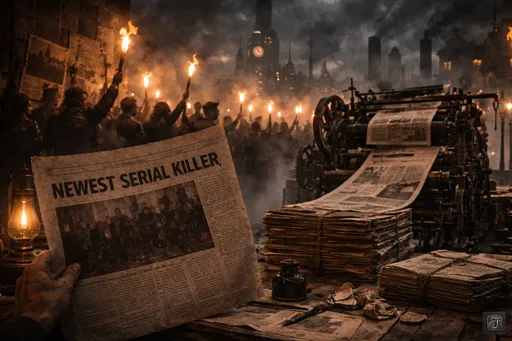
A monster is never completed by one person alone.
What completes a monster is:
• the crowd that demands it
• the print that inflames it
• the society that consumes it
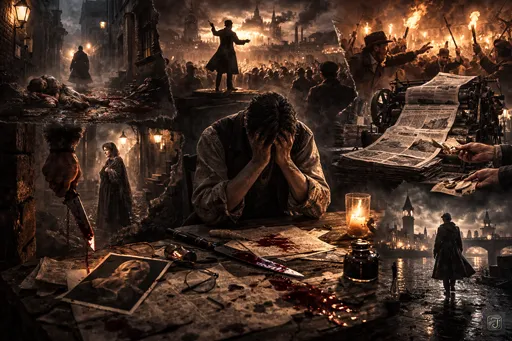
He realized:
“I took on the role of the monster to change this city.”
“I believed that unless someone became the monster, people would never awaken.”
“I didn’t kill because I wanted to. I thought there was no other way.”
“I only wanted to save Eliza.”
“But in the end, I created another monster.”
“And the one who created that monster… was no one else but me.”
The fog slowly settles over the city.
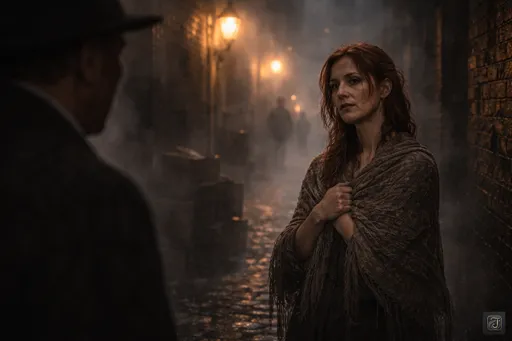
Eliza stands in the alley.
A customer says,
“You’re still here?”
“I am.”
She replies.
Her voice does not tremble.
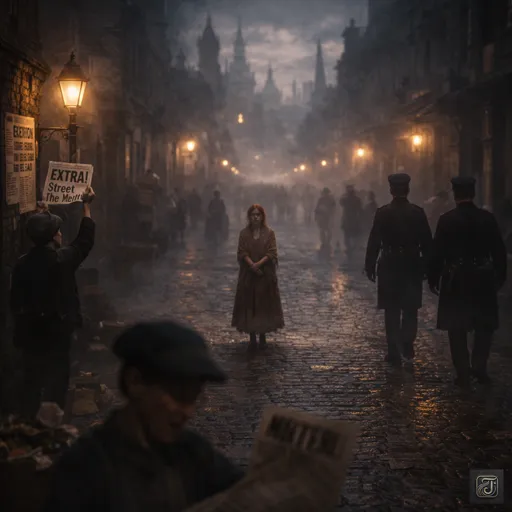
The monster is gone.
But the night is not.
The rent is not gone.
Hunger is not gone.
Contempt is not gone.
Nothing has changed.
Not the police system.
Not the structure of the newspapers.
Not the place women are forced to stand.
Her night still continues.
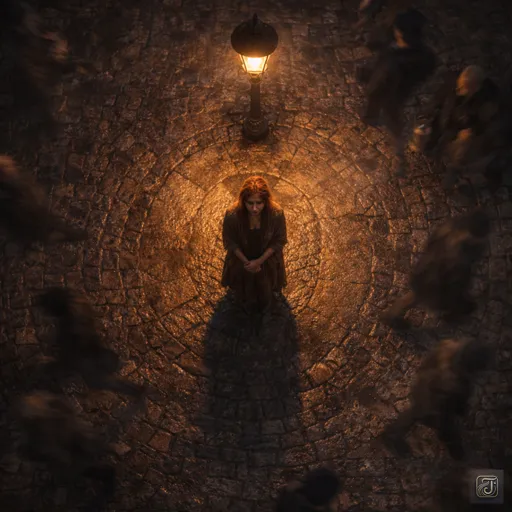
“Did nothing really change?”
She pauses for a moment.
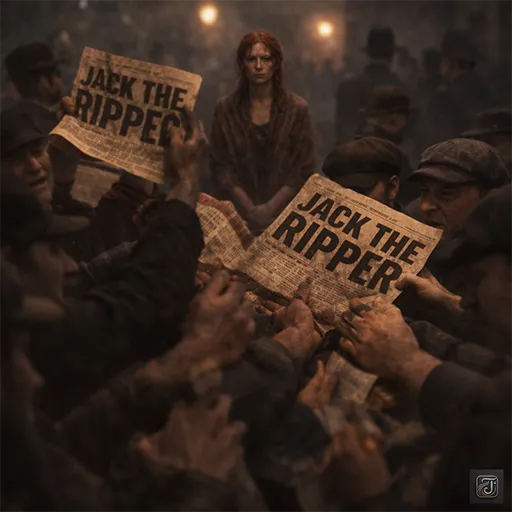
That night.
Lizzie’s blood.
The crowd’s shouting.
The newspaper headlines.
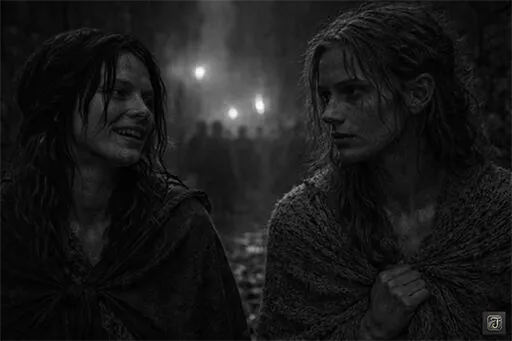
“Do you think we’re the chosen ones?”
Those words return to her.
Chosen?
No.
Just discarded.
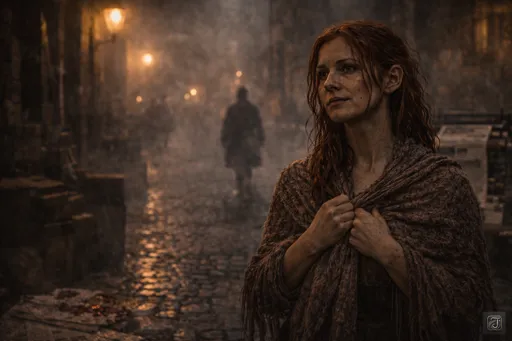
She slowly tightens her grip on the shawl.
Until now, she had always been made to stand there.
By poverty.
By rent.
By men.
By the system.
But tonight, for the first time, she thinks.
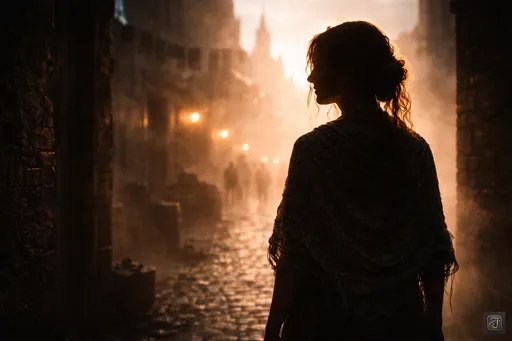
“Whether I stand here or not—that’s my decision.”
“I may never be saved. Nothing may ever change.”
“But I will still stand.”
“Why? Not because I was chosen.”
“Because I choose.”
“I choose to stand in this night. I choose to live in this city.”
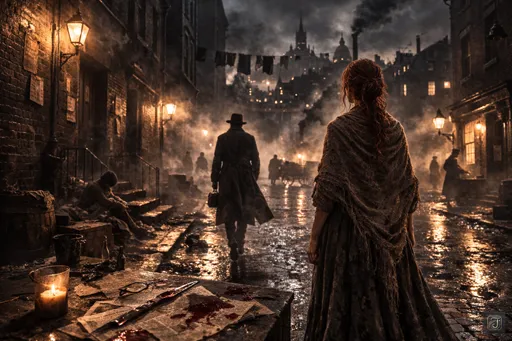
She straightens her back.
The man passes in front of her—
not as a monster,
but simply as one citizen among many.
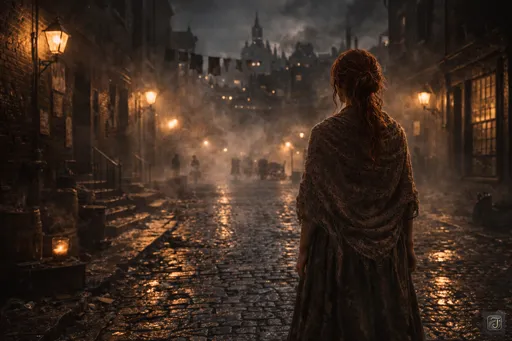
The monster vanished from the city and left his name in history.
But her name did not remain.
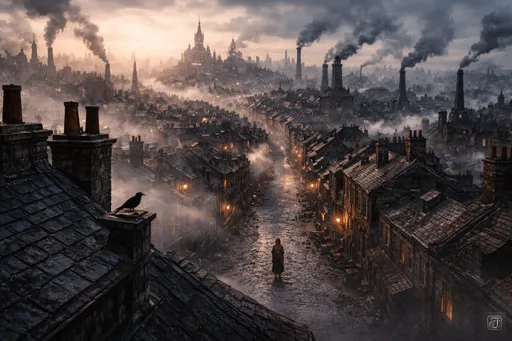
And still, she keeps standing.
Not because she was chosen.
Not because she was saved.
But because she did not disappear.
Alone in the night of the city.

“Still, I will go on living.”
——The End——
Author’s Afterword
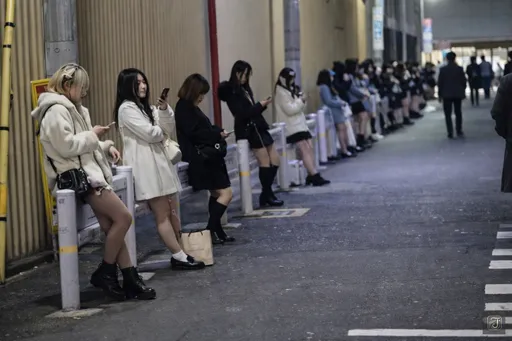
This story is based on events in 19th-century London.
But while writing it, I found myself asking the same question again and again:
Is this really a story about the past?
Even in present-day Tokyo, similar scenes are reported.
Around Okubo Park, women standing on the streets to solicit customers have become a social issue. News reports repeatedly show arrests and crackdowns.
Legally speaking, prostitution is a crime.
But I cannot help asking a different question.
Are these women truly the problem?
A prolonged economic slump.
A weakening currency that shows no sign of stopping.
Prices that continue to rise.
For young people with little experience or specialized skills, society is not always a forgiving place.
Who would willingly choose to stand in a dark alley at night?
If other options truly existed, most people would not stand there.
Crackdowns will likely continue.
Arrests will likely continue.
But if the structure of society itself does not change, the people who stand in the night may never disappear.
A monster is never created by one person alone.
That is the world this story tried to portray.
And perhaps—
it is a world that has not changed as much as we would like to believe.
When women stand on the street at night, what is the reason?
• Because they cannot earn money.
• Or because the social structure that surrounds them offers them no other choice.
Which do you think it is?
Author: Fuji
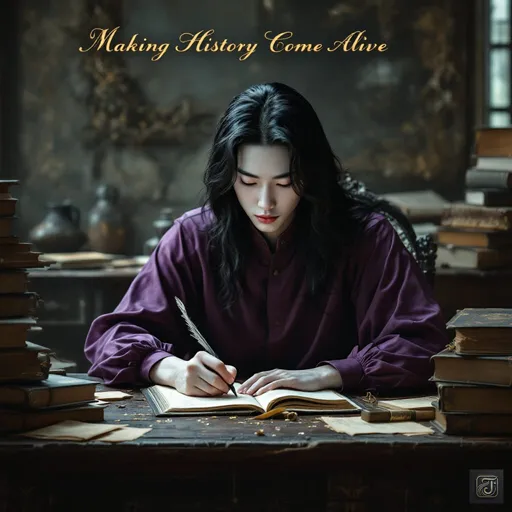
Human history is truly complex, isn’t it?
There are countless websites introducing historical figures and events, but many of them are just plain explanations—not exactly exciting to read.
On the other hand, reading books takes a lot of time and effort.
That’s where I come in.
Through “stories that are more engaging than explanations and shorter than books,” I aim to bring the world’s history and humanity’s records to you in a more accessible and interesting way.
If my stories inspire you to love history a little more, I’d be absolutely thrilled!
If you found this article helpful or enjoyable, please consider supporting me with a cup of coffee!👈Click☕🙏
I’m a passionate blogger who loves diving deep into human history and sharing captivating stories about remarkable figures and events from the past.
My blog combines engaging storytelling with beautiful illustrations, making history accessible and enjoyable for everyone.
Currently, I write my blog while managing a full-time job.
Balancing both limits the time I can dedicate to research, writing, and illustrations.
With your support on Ko-fi, I can reduce the time spent on my main job and focus more on blogging, allowing me to increase the frequency of updates and bring you even more captivating stories.
Whether it’s a one-time coffee or a regular contribution, every bit goes directly into making history engaging and fun for my readers.
Thank you for joining me on this journey through time. Let’s uncover the past together!
If you found this article insightful, please consider supporting me ona cup of coffee!👈Click☕🙏

Comment